


Renaissance Revival Sideboard
A renaissance revival sideboard brings heavy architectural presence and deep historic carving into a room, offering both commanding display space and solid storage.
What a Renaissance Revival Sideboard Is
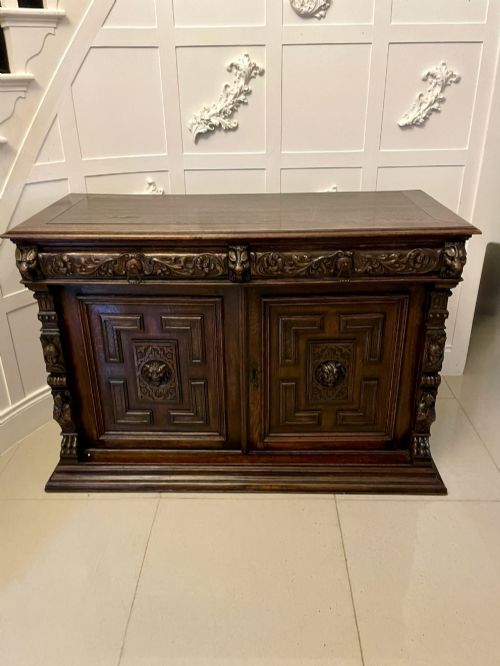
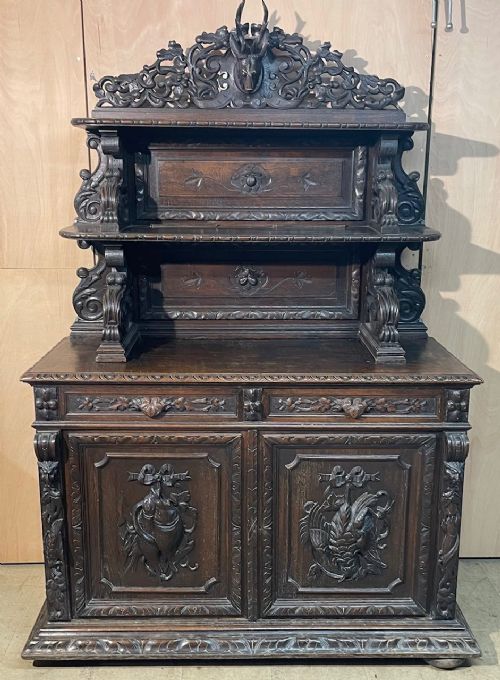
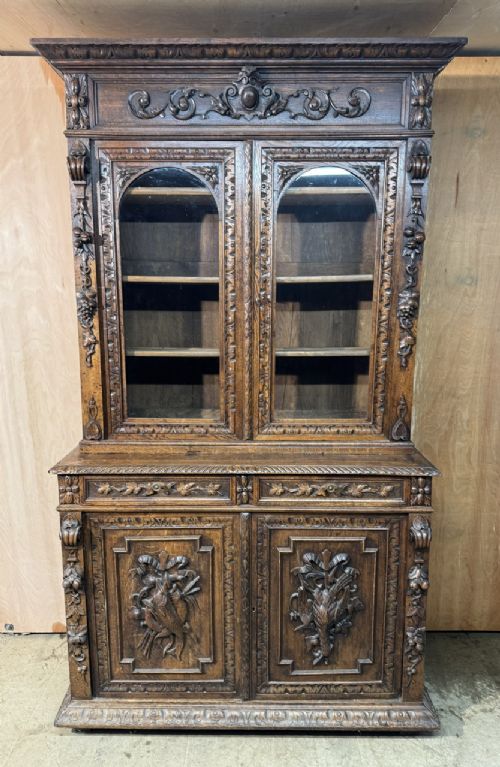
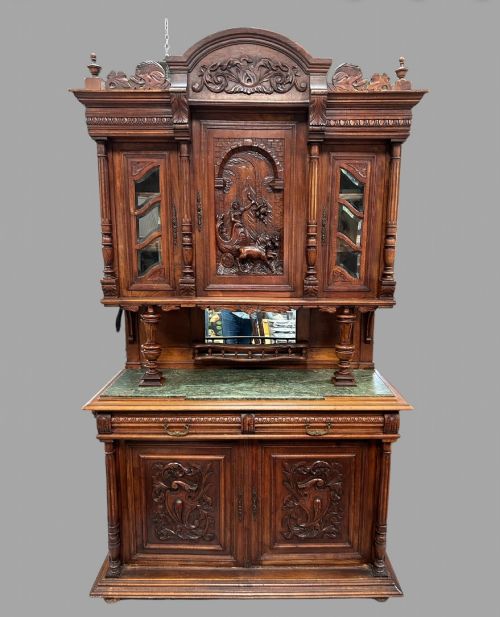
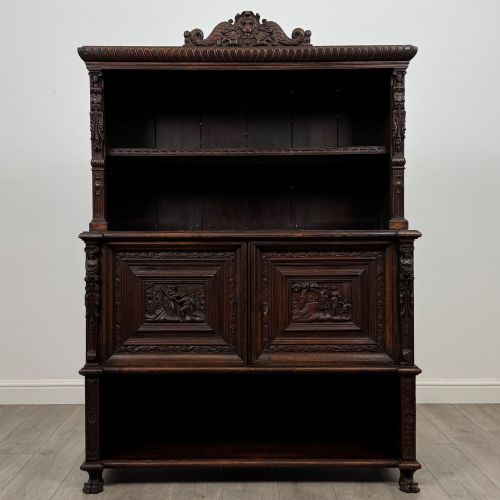
A renaissance revival sideboard is a substantial piece of case furniture rooted in nineteenth century historicism, drawing heavily on sixteenth century architectural motifs. These pieces dominate a room with deep relief carving, panelled doors, and often an upper mirrored superstructure.
The versions most frequently met on this page date from the Victorian era and the later nineteenth century, spanning periods around eighteen fifty and eighteen eighty. They appear primarily in carved oak, alongside examples in walnut.
Forms range from grand pedestal sideboards to mirrored designs and dresser hybrids, reflecting the nineteenth century taste for revivalism. Such pieces served both practical dining storage and theatrical display in period interiors.
Materials and Construction
Makers constructed these sideboards predominantly in solid oak and walnut, sometimes employing bleached oak or incorporating contrasting materials like mother of pearl inlay. Glass and mirror glass appear in upper sections and doors to lighten the heavy timber mass.
Retail Price Guide 2026
Typical UK retail prices for renaissance revival sideboard, calculated from the Sellingantiques database of over a million retail prices indexed since 2003. This retail price guide relies exclusively on Sellingantiques data; no external sources or auction records are used, so the figures do not describe the wider market.
Materials documented across these pieces include oak, bleached oak, walnut, brass, mirror glass, and mother of pearl.
Judging Quality and Execution
The distinction between standard production and the finest work lies in the depth and crispness of the carved ornament. Superior examples display spirited, undercut foliage and figures rather than shallow, mechanical stamping.
Timber selection and grain continuity across large panel doors separate ambitious cabinet work from simpler output. The integration of structural cornices and applied mouldings dictates the overall architectural success of the piece.
The Renaissance Revival Sideboard Glossary
- Pedestal sideboard
- A large dining room storage piece featuring cupboards or pedestals flanking a central recess. This form provides substantial foundational weight and surface area.
- Superstructure
- The upper tiered section rising above the main sideboard top, often containing mirrors and shelves. It was designed for displaying fine ceramics and silver.
- Relief carving
- Ornament carved to project from a flat background surface, creating depth and shadow. This technique defines the rich surface texture of nineteenth century revival furniture.
- Inlay
- The technique of embedding contrasting materials, such as mother of pearl, flush into the wood surface. It adds luminous detail to dark walnut panels.
Frequently Asked Questions
What is a renaissance revival sideboard?
A renaissance revival sideboard is a large nineteenth century dining room cabinet decorated with historic architectural motifs and deep wood carving. These pieces reflect Victorian historicism through grand proportions and classical detailing.
They function as both heavy storage furniture and decorative display focal points for formal dining spaces.
How were these sideboards used?
Dining rooms utilised these large cabinets for storing silver, linen, and serving dishes within the lower cupboards and drawers. The upper surfaces and mirrored superstructures held displayed porcelain and glassware.
Their substantial presence also projected domestic status and architectural taste in Victorian homes.
How do I fit one in a room?
These sideboards require considerable floor space and solid wall support due to their grand proportions and heavy timber construction. They anchor a large dining room or high-ceilinged hallway effectively.
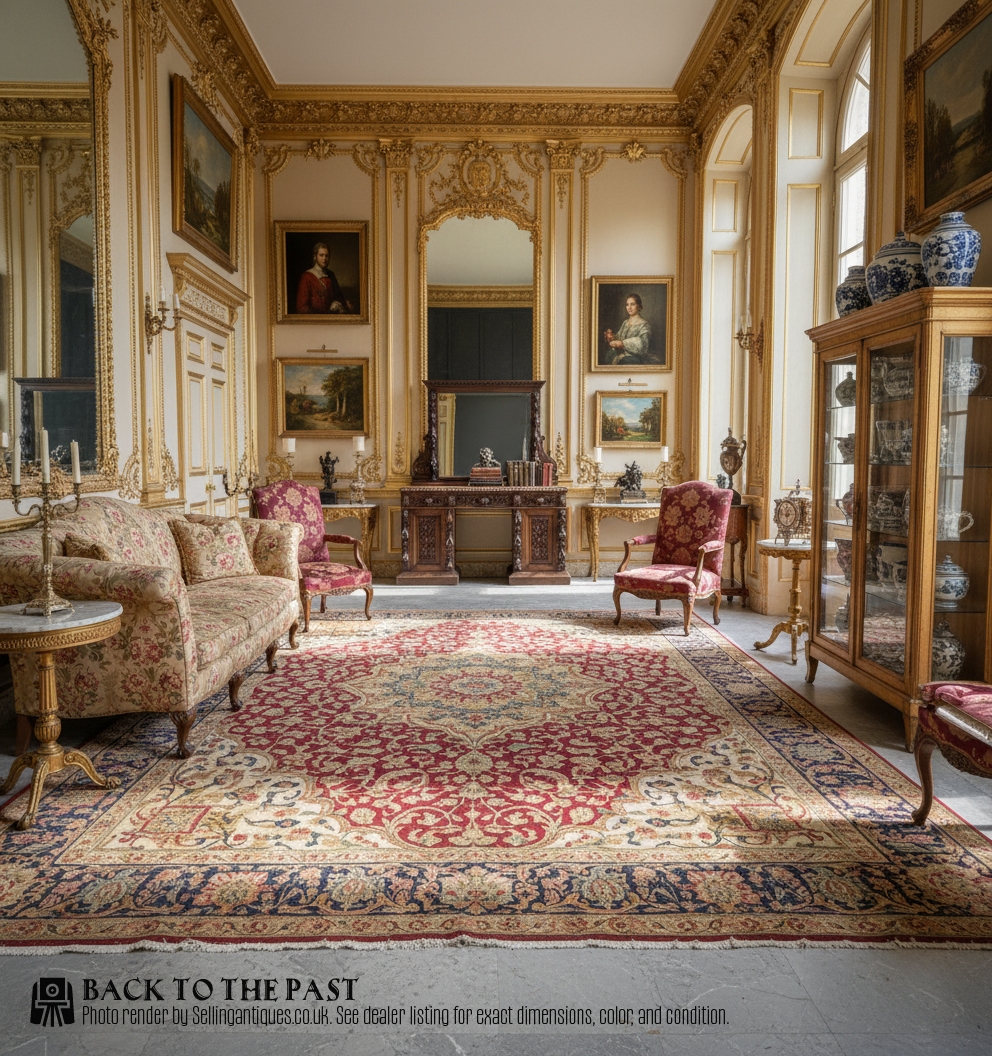
Pairing them with plain walls allows the deep oak or walnut carving and mirror glass to command the interior.
How do I date these pieces?
Dating relies on stylistic markers and timber choices spanning the nineteenth century, particularly Victorian periods around eighteen fifty and eighteen eighty. The presence of specific revival details points to these decades.
Construction methods within the drawers and interior carcass confirm the nineteenth century manufacturing period.