


Renaissance Revival Coffer
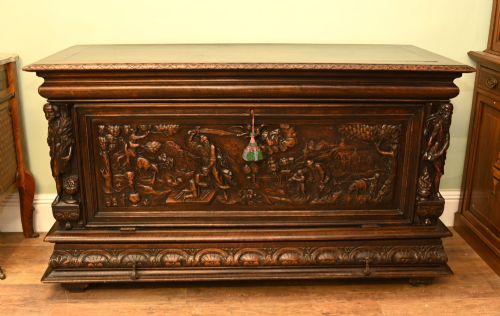
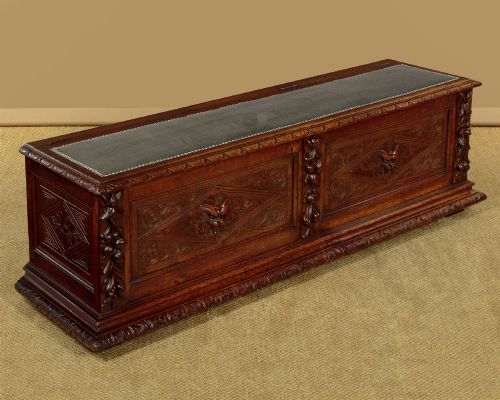
These renaissance revival coffer examples combine heavy timber construction with elaborate historical carving to anchor an entrance hall or living space.
Renaissance Revival Coffer
A renaissance revival coffer represents the nineteenth-century passion for heavy, carved storage furniture styled after earlier European eras. These pieces take the form of chests, coffers, hall benches, settlers, and smaller table caskets built to command attention in a room.
The versions most commonly met on this page date from the Victorian period, spanning the nineteenth century with dates recorded around eighteen hundred through to nineteen hundred. They are typically fashioned as dual-purpose seating and storage, or as dedicated chests and cabinets.
Makers drew heavily on Italian and Gothic design traditions, incorporating architectural mouldings and deep relief carving into domestic seating. They bridge the gap between utilitarian storage and theatrical interior decoration.
Materials and construction methods
The primary structural timber across these pieces is oak, frequently partnered with walnut and fruitwood for finer decorative elements. These hardwoods provide the necessary strength for heavily carved panels and robust bench frames.
Surface decoration relies on intricate hand carving, complemented in specific examples by contrasting inlays of ebony and bone. Metalwork details in brass and iron appear as hinges, locks, and structural reinforcement.
Joinery is traditional and heavy-duty, designed to support the weight of solid timber lids, high backs, and seated occupants. Surfaces are finished to highlight the natural grain and deep tones of the walnut and oak.
Listings feature oak and walnut as dominant materials, accompanied by brass, iron, and bone inlay across Victorian and eighteenth-century styles.
Assessing quality and execution
Quality in a renaissance revival coffer rests entirely on the depth and crispness of the carving, alongside the selection of timber. Superior pieces display finely detailed relief work rather than shallow, mechanical stamping.
The choice of materials sets the hierarchy, with dense walnut and figured oak commanding greater visual presence than secondary pines. Elaborate embellishments, such as bone and ebony inlay work found on smaller caskets, elevate the complexity of the piece.
The Renaissance Revival Coffer Glossary
- Cofer
- A large chest used for storing valuables or clothing, often hinged at the top. It serves as the foundational form for many heavy storage benches.
- Settle
- A wooden bench with a high back, solid arms, and enclosed storage beneath the seat. It provides draught-proofing in historical hallway settings.
- Inlay
- A technique where contrasting materials are inserted into recessed cavities on the timber surface. Bone and ebony are typical contrasting agents in this style.
- Relief carving
- Sculpture where the figures project from a background plane. This technique defines the architectural panels of nineteenth-century revival furniture.
Renaissance Revival Coffer: Frequently Asked Questions
What is a renaissance revival coffer?
A renaissance revival coffer is a nineteenth-century storage chest or bench inspired by historical European design. These pieces utilise heavy timbers and elaborate carving to recreate sixteenth-century aesthetics.
They function as both decorative focal points and practical containers for household goods. Their sturdy build suits them to heavy daily use in hallways and living rooms.
How were these chests used?
Historically, such chests held textiles, valuables, and household documents securely under lock and key. Many variations combined this storage function with a bench seat for hallway use.
In modern interiors, they serve similar purposes while anchoring a room with dark wood tones. They work well at the foot of a bed or along an entrance wall.
What woods are commonly found?
Oak and walnut dominate the construction of these items, providing both durability and a dark, rich colour palette. Fruitwood also appears in specific decorative elements.
Secondary woods like pine support internal structures, while ebony and bone provide contrasting inlay details. Each material contributes to the heavy, substantial character of the revival style.
How do I date these pieces?
Dating relies on examining construction marks, timber shrinkage, and the style of the revival ornament. Most pieces date from the nineteenth century, particularly the Victorian era.
Makers of this period reinterpreted historical motifs rather than producing genuine early pieces. Tool marks and fastener types help distinguish nineteenth-century manufacturing methods from earlier eras.