
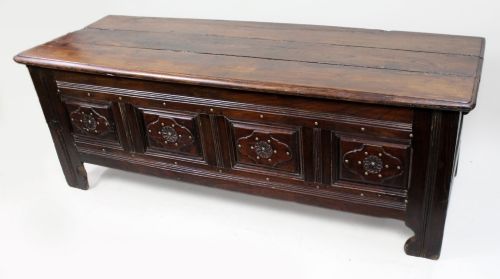
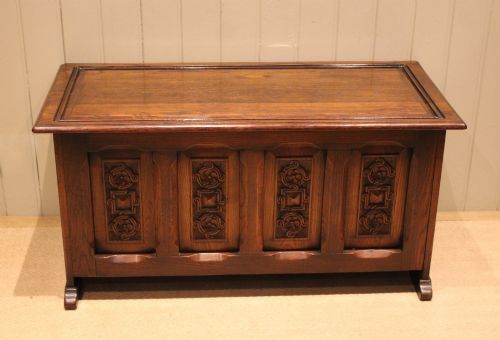
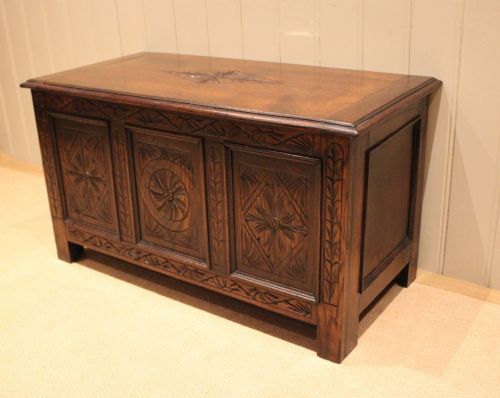
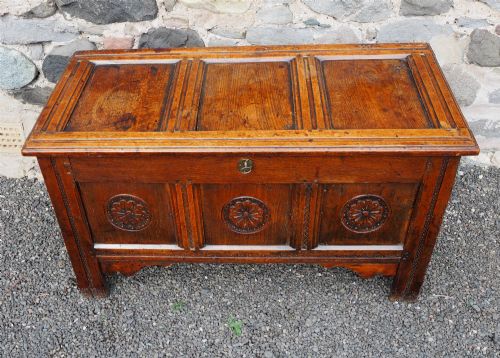

Carved Panel Storage Trunk
These carved panel storage trunk examples offer sturdy utility and historic joinery, bringing centuries of practical craftsmanship straight into a modern hallway.
Carved Panel Storage Trunk
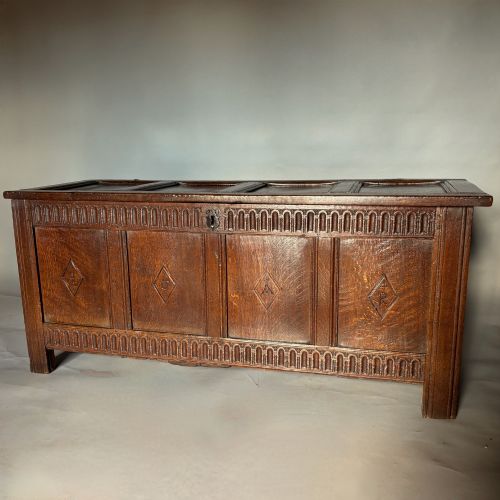
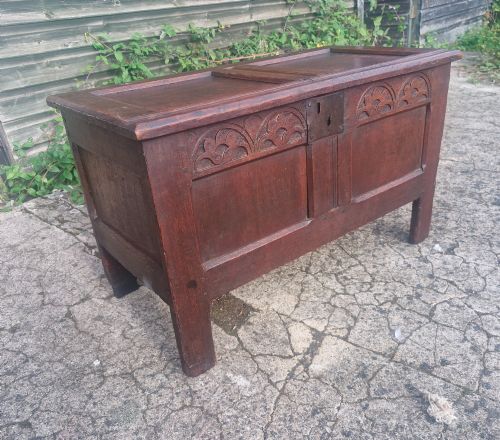
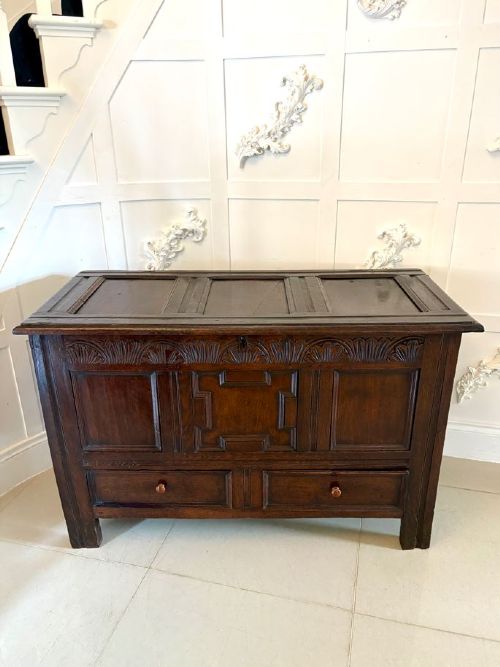
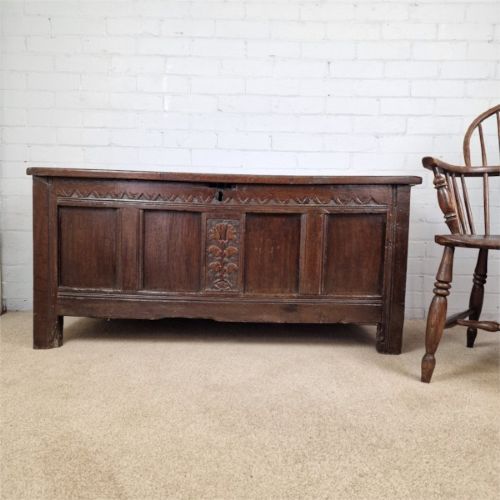
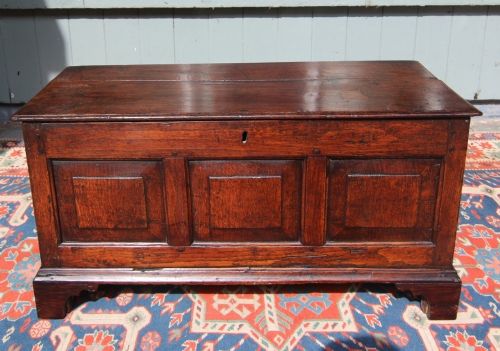
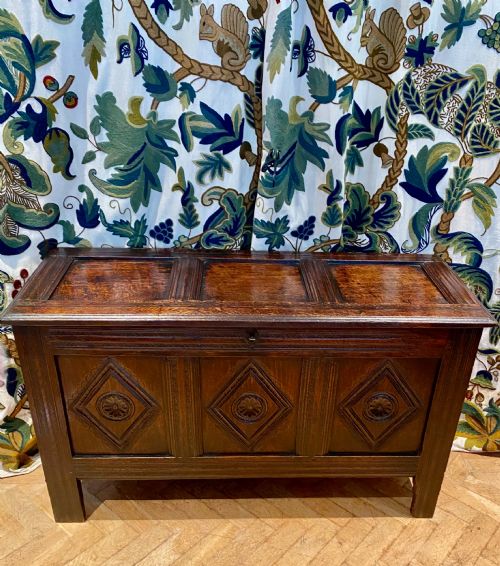
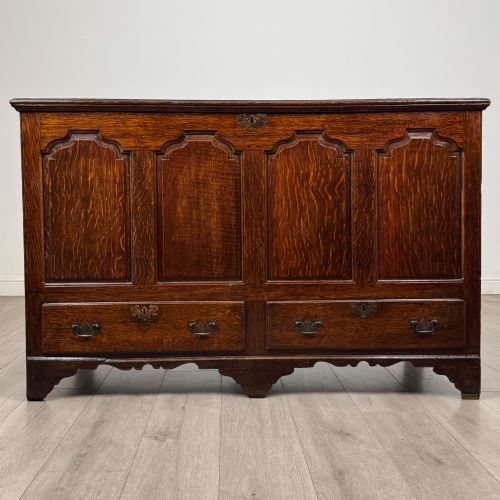
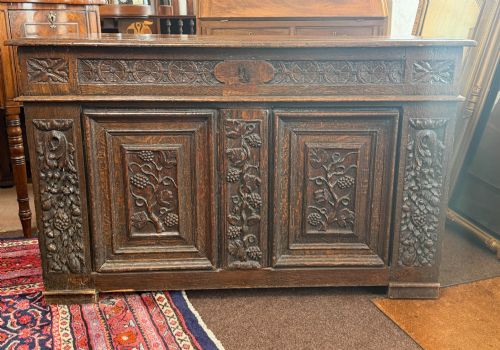
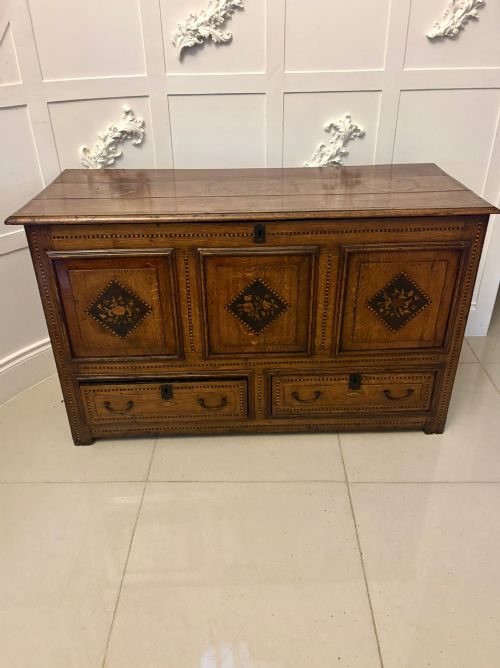
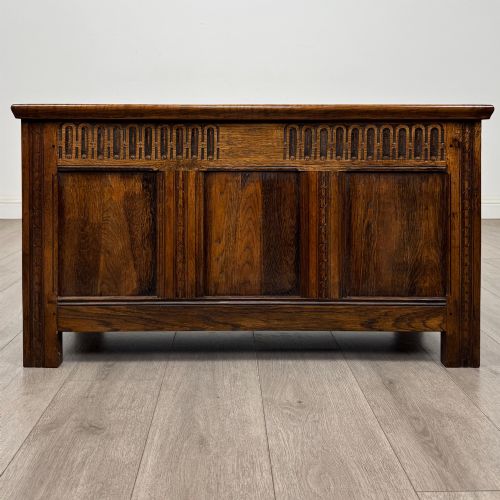
A carved panel storage trunk provides heavy timber storage, originating as domestic furniture designed to hold linens, valuables, and provisions in historic households. The forms on this page include coffers, mule chests, and blanket boxes built for daily utility.
Buyers most frequently meet seventeenth century and eighteenth century examples constructed in regional British workshops, alongside later revival pieces from the early twentieth century. Oak dominates the selection, joined with pegged frames and embellished with carved fronts.
How they were made
Carpenters constructed these pieces using solid oak boards joined by mortise and tenon frames, secured with wooden pegs rather than modern fixings. Panels were allowed to float within grooves to accommodate natural expansion and contraction of the timber.
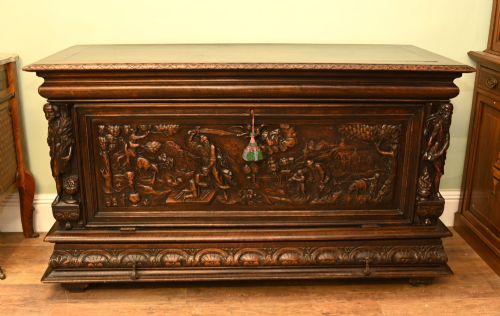
Carvers applied geometric, floral, or figural motifs directly onto the front panels using gouges and chisels, occasionally incorporating marquetry inlay, brass hinges, or iron mounts for additional structural reinforcement.
Listings feature solid oak, walnut, and mahogany chests spanning from the seventeenth century through to the Edwardian period.
What varies in quality
Quality rests in the crispness of the hand-carved decoration and the integrity of the original joined timber frame rather than surface polish. Pieces retaining their original lids, hinges, and uncompromised base structures command greater appreciation from collectors.
Early examples displaying crisp period motifs and untouched patination sit distinctly apart from later revival items where the timber and carving lack the natural wear of centuries of domestic use.
The Carved Panel Storage Trunk Glossary
- Cofer
- A traditional wooden chest used for storage, typically featuring a hinged lid and panelled construction.
- Mule chest
- A storage chest fitted with one or more drawers beneath the main compartment, combining the functions of a coffer and a chest of drawers.
- Marquetry inlay
- Decorative patterns formed by fitting contrasting pieces of wood veneer into prepared recesses within the solid timber surface.
- Joined oak
- Furniture constructed with framed panels locked together by mortise and tenon joints, representing a major advancement in seventeenth century carpentry.
Carved Panel Storage Trunk: Frequently Asked Questions
What is the difference between a coffer and a mule chest?
A coffer is a simple chest with a top-opening lid, designed primarily for bulk storage.
A mule chest incorporates one or more drawers at the base beneath the main compartment, offering easier access to smaller items.
How can I tell a seventeenth century trunk from a later revival piece?
Seventeenth century examples exhibit hand-riven timber, irregular peg placement, and authentic wear patterns from centuries of use.
Revival pieces from the twentieth century often display machine-cut uniformity and cleaner, sharper internal joints without period patina.
Where were most of these oak chests made?
The majority originate from regional British workshops, particularly in England and Wales, utilising native English oak.
Occasional pieces reflect continental European provincial traditions, featuring walnut or mahogany construction.
How do I care for a historic carved wooden trunk?
Keep the wood away from direct heat sources and radiators to prevent the dry timber from splitting.
Apply a traditional beeswax polish sparingly to nourish the surface and maintain the natural finish.