




Dark Walnut Trunk
A dark walnut trunk is a robust storage piece offering deep timber tones and traditional craftsmanship for practical home organisation.
Dark Walnut Trunk
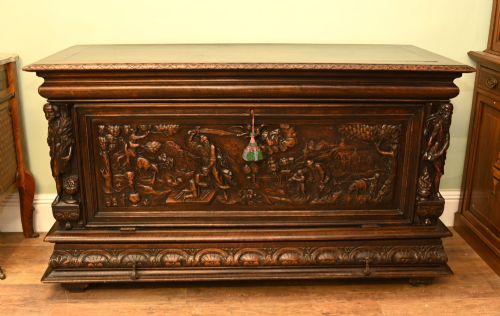
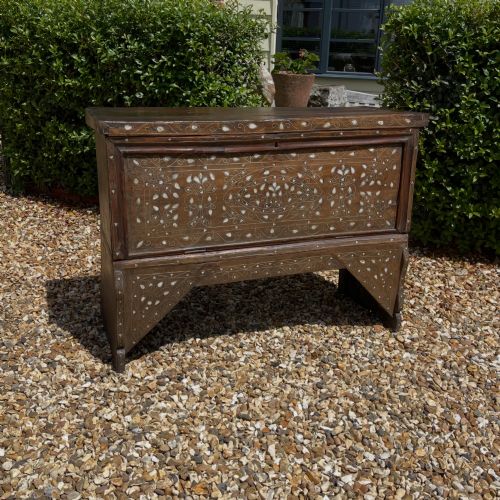
The pieces available originate across diverse European traditions, displaying regional carving and inlay work. Surviving examples range from seventeenth-century continental cassones to nineteenth-century French and Syrian storage items.
Domestic chests and coffers serve as functional furniture while displaying the deep grain patterns characteristic of walnut. These containers range from heavy carved coffers to simpler nineteenth-century hinged storage boxes.
How they were made
Construction relies heavily on solid walnut timber, sometimes supported by secondary woods like oak within internal framing. Joinery techniques vary from traditional panel construction to pegged frames designed to withstand heavy daily use.
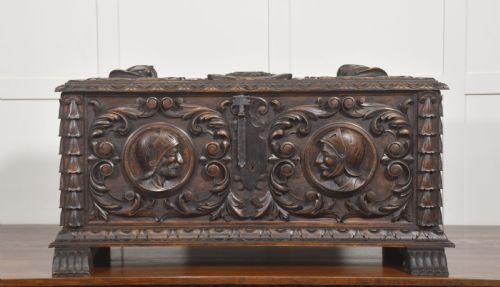
Surface decoration incorporates intricate carvings, figural medallions, and contrasting inlay materials such as bone and mother-of-pearl. Metal elements like brass hinges, iron locks, and wrought iron fittings provide both structural reinforcement and visual contrast.
Listings feature walnut combined with brass, iron, bone, and mother-of-pearl across centuries spanning the seventeenth to the nineteenth.
What varies in quality
The standard of carving and surface inlay distinguishes standard storage boxes from high-status furniture. Pieces featuring detailed figural medallions or complex geometric Syrian inlay demonstrate superior craftsmanship compared to plain timber panels.
The integrity of the original hardware, including brass dials, locks, and hinges, influences the overall character of the piece. Preservation of the original timber surface and patination marks the difference between well-maintained examples and heavily altered items.
The Dark Walnut Trunk Glossary
- Cassone
- A traditional Italian chest or coffer used for storing household valuables and wedding garments. These large storage pieces often feature extensive carved ornamentation or inlaid panels.
- Coffer
- A heavy wooden box with a hinged lid, traditionally utilised for storing precious items or documents. They frequently display robust construction methods suited to secure storage.
- Serpentine
- A curved furniture front characterised by a convex centre flanked by concave ends. This shaping requires skilled woodworking to achieve fluid lines across timber surfaces.
- Dough bin
- A specialised wooden container historically used for preparing bread dough before baking. These utilitarian pieces often feature sloping lids and sturdy support frames.
- Commode
- A low cabinet or chest of drawers designed for domestic storage. French examples often incorporate lift tops or serpentine shaping.
Dark Walnut Trunk: Frequently Asked Questions
What is a dark walnut trunk used for today?
These historical storage pieces function effectively as living room coffee tables, blanket chests, or hallway storage containers. Their robust construction allows them to hold heavy household items while adding traditional character to modern interiors.
The deep timber tones and decorative carvings complement both contemporary and traditional room schemes. Using them for storage keeps everyday clutter concealed inside centuries-old craftsmanship.
How do I care for a antique walnut chest?
Maintain the timber by applying natural beeswax periodically to nourish the dry wood grain. Avoid placing the chest near direct heat sources or strong sunlight to prevent timber warping and fading.
Keep humidity levels stable within the room to protect both the solid wood and any delicate inlay work. Gentle dusting with a soft cloth preserves the historic surface finish without causing abrasion.
How can I tell the age of a walnut coffer?
Examine the construction joints, tool marks, and hardware fixings for signs of period manufacturing techniques. Hand-cut joinery and forged iron or brass fittings typically indicate older craftsmanship compared to modern machine-made elements.
Compare the style of any carved medallions or decorative motifs against known historical periods like the Renaissance or Baroque eras. Timber shrinkage and natural wear patterns accumulated over centuries also help confirm genuine age.
What is the difference between a coffer and a cassone?
A coffer is a general term for a heavy storage chest, often built with robust structural framing and simple iron hardware. These versatile boxes served multiple domestic and travel purposes across various European regions.
A cassone specifically denotes a large, highly decorative Italian chest associated with wealthy households and marriage customs. These luxury items frequently display elaborate figural carvings, paintings, or intricate inlay work.