



Renaissance Revival Armchair
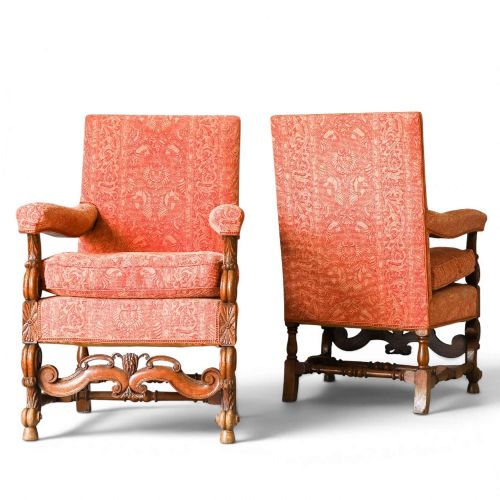
These renaissance revival armchair examples bring historic grandeur to a room through heavy carved woodwork and rich upholstery.
Renaissance Revival Armchair
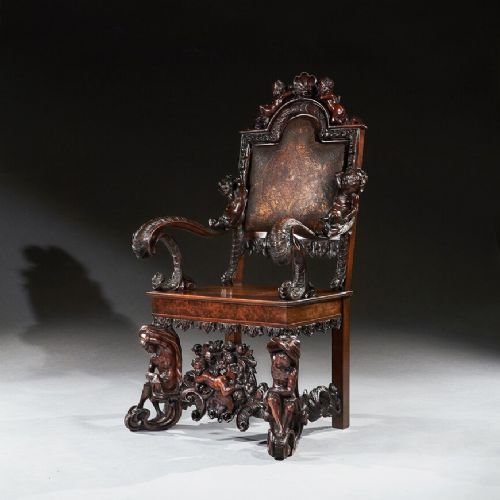
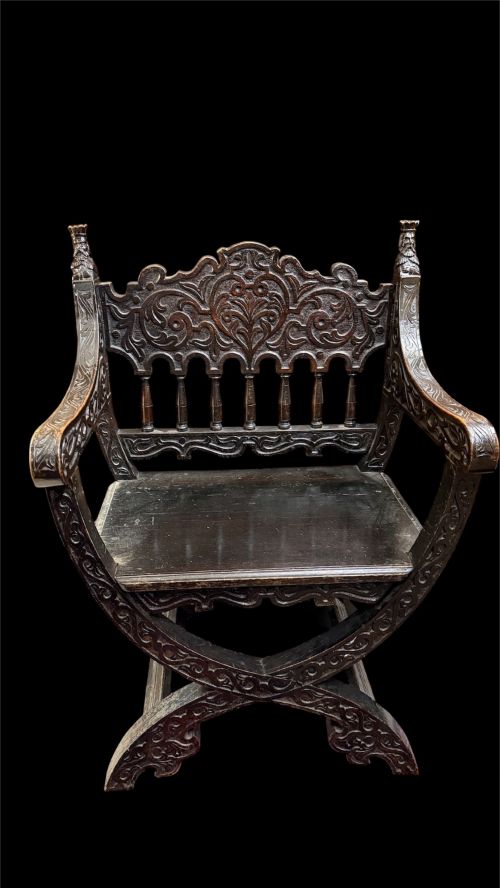
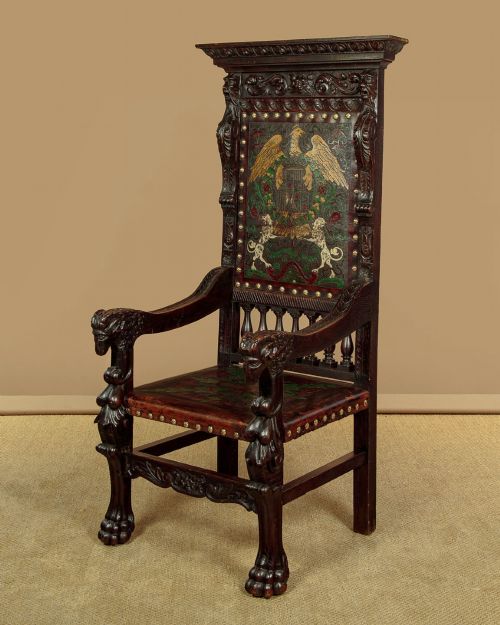
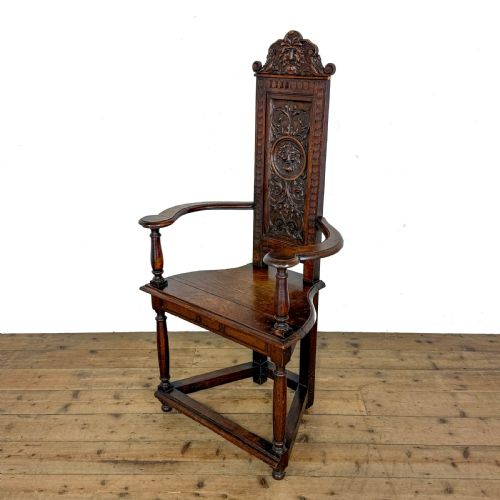
A renaissance revival armchair draws on historic European design motifs, translating sixteenth-century grandeur into nineteenth-century seating. Buyers searching for a renaissance revival armchair encounter pieces ranging from imposing throne chairs to X-frame curule designs and high-backed caquetoire forms.
Most examples originate from the nineteenth century, including Victorian interpretations and continental European workshops. Walnut and oak dominate the forms, frequently paired with leather or textile upholstery and brass detailing.
Materials and Construction
Craftsmen utilised dense hardwoods like walnut, oak, and mahogany to build these robust frames, allowing for deep relief carving and structural stability. Woodwork often incorporates turned members, inlay, and figural carvings executed in the manner of historic Italian and French traditions.
Upholstery materials include painted leather, woven textiles, and fabrics secured with brass tacks. Joinery relies on traditional methods appropriate to heavy seating frames designed for formal rooms.
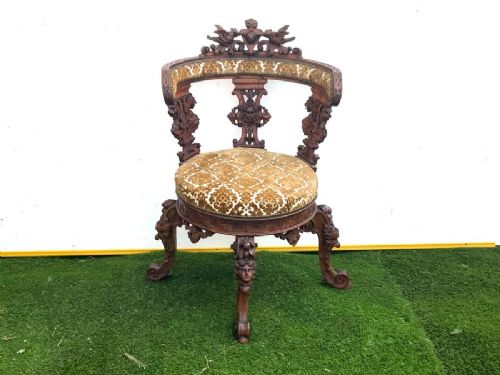
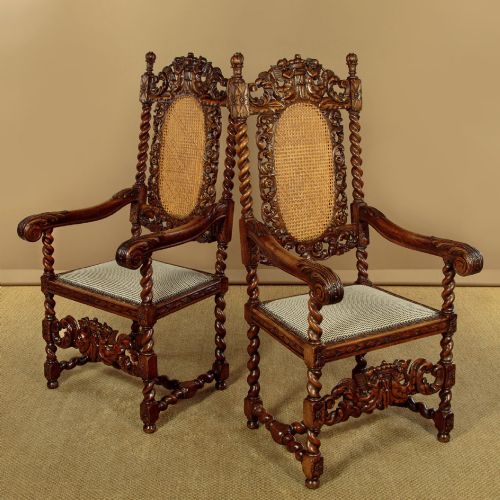
Listings feature forms ranging from Victorian dining chairs and hall chairs to rocking chairs and grand throne seats.
Assessing Quality and Execution
The depth and crispness of the carved ornamentation separate standard production from exhibition quality pieces. Fine examples display masterwork figural details and balanced proportions that reflect careful adherence to historic prototypes.
Material selection also dictates overall merit, particularly the choice of dense, well-figured walnut or quarter-sawn oak. The integration of original leather or textile elements further influences the character of each piece.
White, Allom & Co.·Andrea Brustolon
The Renaissance Revival Armchair Glossary
- Caquetoire
- A light, high-backed armchair originating in sixteenth-century France, designed for conversation.
- Curule
- An X-shaped folding chair design derived from ancient Roman magistrate seats.
- Savonarola
- A folding armchair constructed from multiple curved wooden slats forming an X-shape.
- Fauteuil
- An open-armed upholstered armchair originating in French furniture design.
- Throne Chair
- An imposing, high-backed seat intended to project authority and status.
Renaissance Revival Armchair: Frequently Asked Questions
What is a renaissance revival armchair?
A renaissance revival armchair is a nineteenth-century seat designed in imitation of sixteenth-century European styles, featuring elaborate carved woodwork and historic forms.
These pieces draw on Italian, French, and English design traditions to create an imposing visual presence.
How do I date a renaissance revival chair?
Dating relies on examining the timber preparation, tool marks, and specific revival sub-styles present in the construction. Nineteenth-century interpretations often blend Italian Baroque or French Renaissance motifs with contemporary manufacturing methods.
Secondary woods and hardware provide further clues to the precise period of manufacture within the broader nineteenth-century span.
Where should I place an X-frame chair?
X-frame and Savonarola chairs function well as accent pieces in studies, libraries, or spacious hallways where their sculptural frames remain visible.
Their distinct profiles require adequate clearance to appreciate the curved wooden slats and structural geometry.
What woods were used in these chairs?
Walnut and oak form the primary structural materials for the vast majority of these revival pieces. Mahogany, fruitwood, and other solid timbers appear less frequently across specific continental variations.
These dense hardwoods provided the necessary strength for deep-relief carving and robust joinery.