
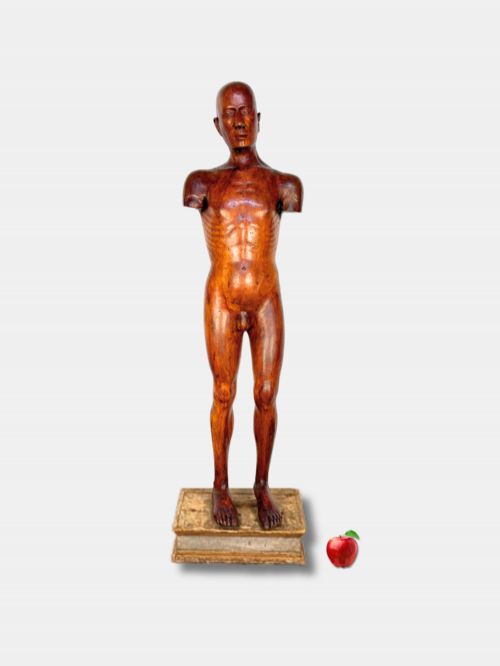

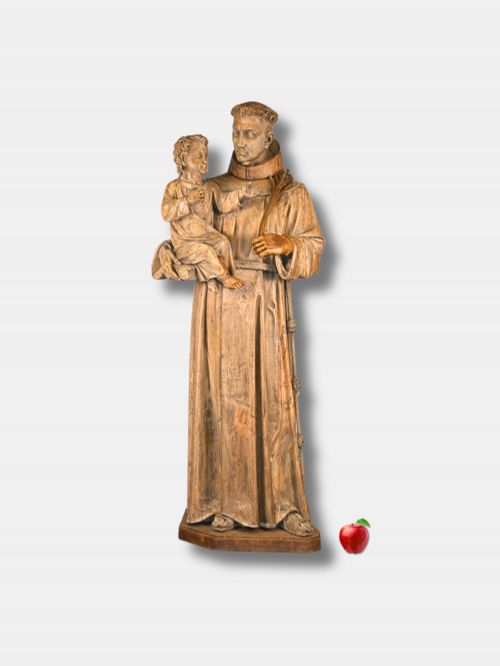
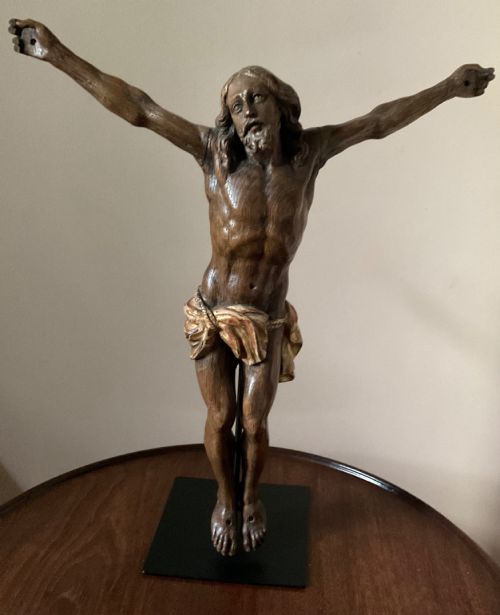
Religious Wooden Figure
These carved pieces transport centuries of devotion directly into a room, offering tactile presence through timber and pigment.
Religious Wooden Figure
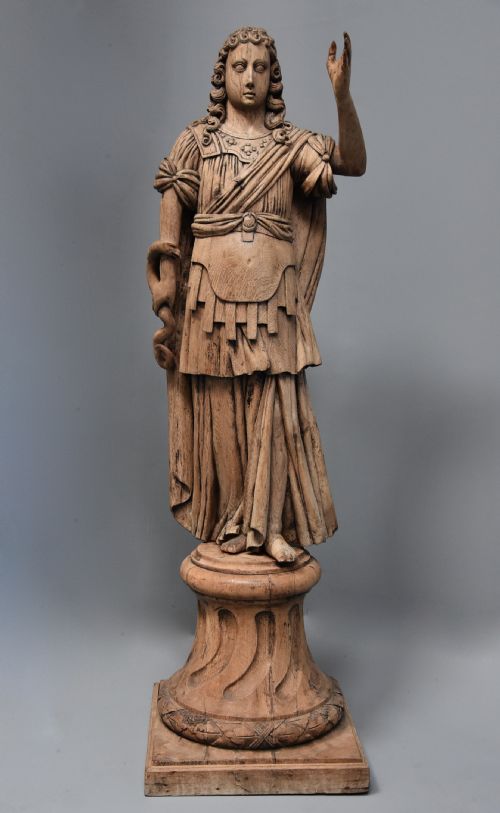
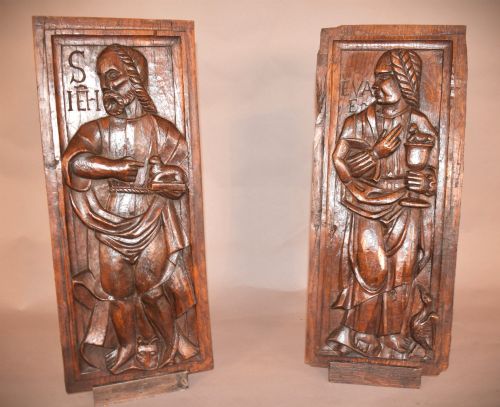
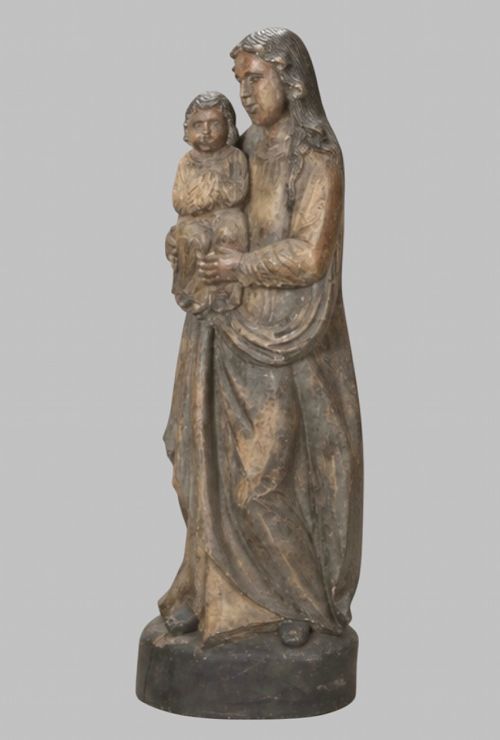
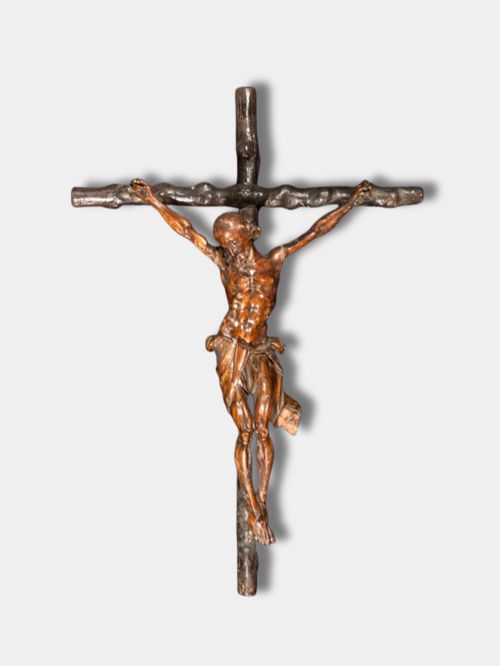
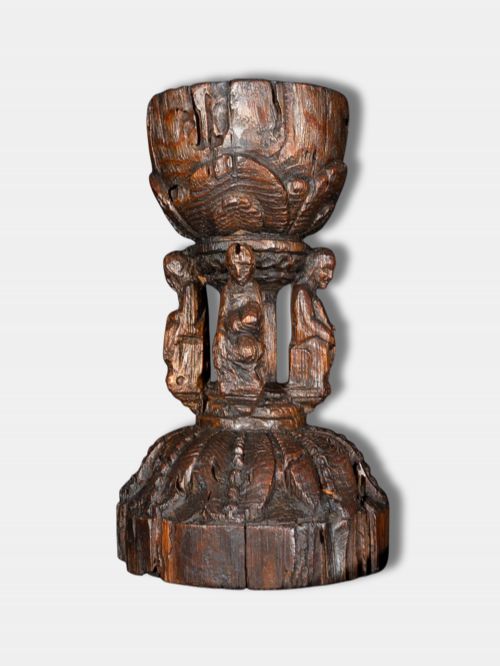
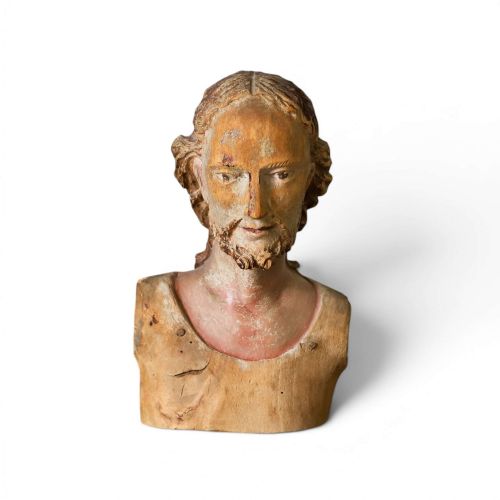
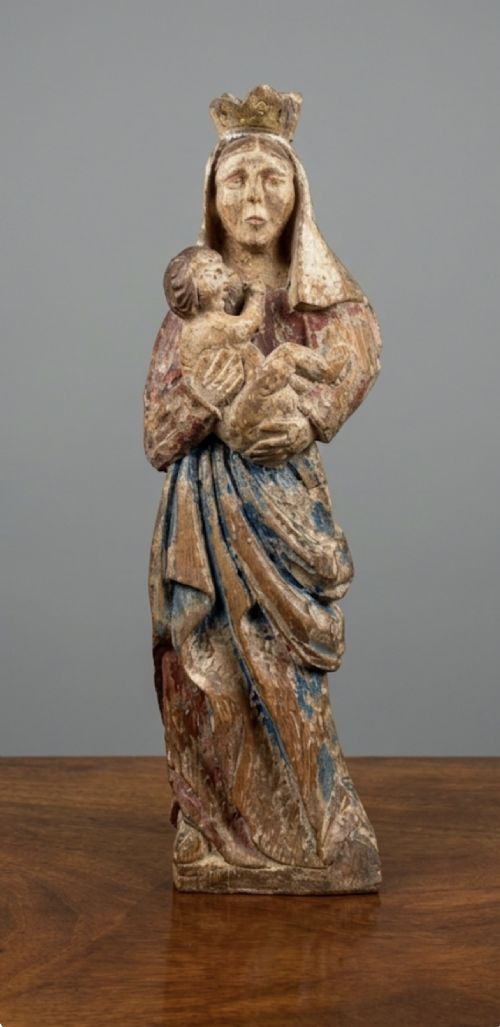
A religious wooden figure embodies centuries of sacred devotion, taking the form of saints, madonnas, and corporate figures carved with solemn expression. These sculptures emerge from diverse European and Asian traditions, spanning domestic devotional items to monumental life-size church figures.
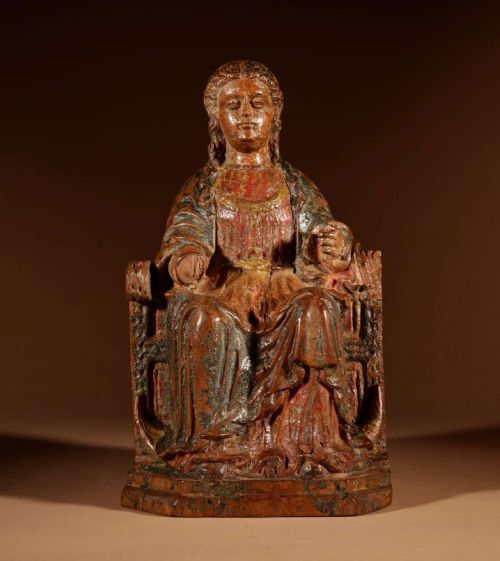
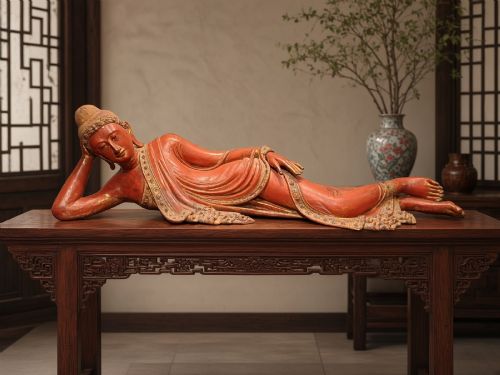
The selections on this page surface primarily from the sixteenth to the nineteenth centuries, incorporating both continental workshop pieces and regional folk art expressions. Forms range from seated enthroned Madonnas and standing apostles to reclining Buddhas and serene depictions of Guanyin.
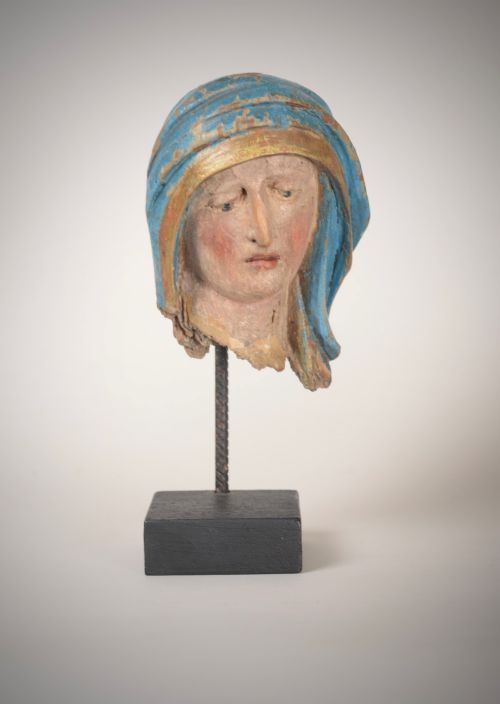
Continental workshops from Italy, Spain, Germany, and the Low Countries dominate the material record here, alongside expressions from Asian traditions. Buyers encounter everything from small limewood fragments to substantial oak and walnut representations mounted on traditional plinths.
Carving and Pigmentation
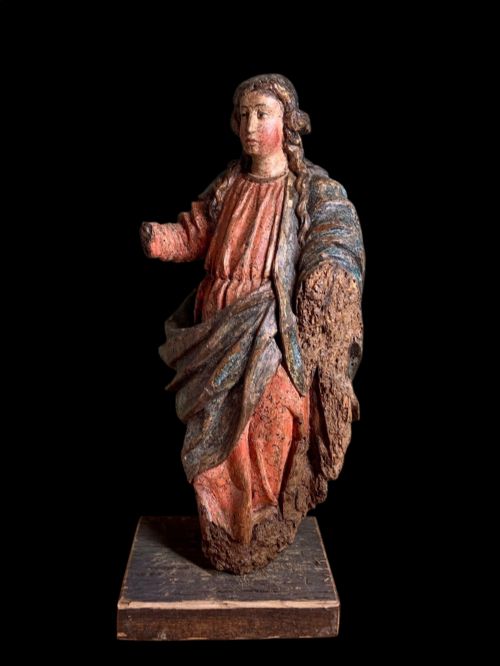
Surfaces frequently received applications of gesso as a smooth preparation layer for subsequent polychrome paint or gold leaf gilding. Many figures retain traces of their original pigments, showing how makers combined carved relief with layered colour to achieve lifelike depth.
The inventory records diverse global traditions, incorporating European saints and Madonnas alongside Asian Buddhist and Hindu deities.
Sculptural Fidelity and Surface Age
Quality rests primarily in the anatomical conviction of the carving and the sensitivity with which the timber grain is handled. Superior examples display confident command over drapery and expression, whereas lesser pieces rely on stiff repetition and mechanical chisel work.
The integrity of the original gesso and polychrome surface dictates much of the visual power in these figures. Pieces preserving authentic early paint layers or gold leaf hold greater historical weight than those stripped down to bare wood or subjected to heavy modern repainting.
The Religious Wooden Figure Glossary
- Polychrome
- Painted in several colours. This surface treatment was applied over gesso to give carved timber figures a lifelike appearance.
- Gesso
- A plaster mixture used as a base for paint or gold leaf. It provided a smooth ground on carved wood surfaces.
- Corpus Christi
- The body of Christ depicted on a cross. These wooden carvings range from small domestic devotional pieces to large church figures.
- Capipote
- A Spanish sculptural figure with a carved head and hands attached to a framework. These were traditionally dressed in real fabric garments for religious processions.
- Limewood
- A soft, pale timber favoured by European carvers. Its fine grain allowed artisans to execute intricate detail without splitting.
Religious Wooden Figure: Frequently Asked Questions
How are religious wooden figures cleaned?
Dust accumulated on these delicate carvings requires only a soft, dry brush. Moisture and liquid cleaning products must be avoided entirely to protect aged wood and fragile polychrome surfaces.
Professional intervention should be sought for any structural repairs or flaking paint. Keeping pieces away from direct sunlight and sudden humidity changes preserves the timber.
Where were these figures originally displayed?
Many larger sculptures stood within churches, abbeys, and private chapels as focal points for prayer. Life-size saints and altarpiece figures commanded devotional spaces across Europe and Asia.
Smaller seated Madonnas and devotional busts served private contemplation within domestic domestic settings. Over centuries, these sacred objects transitioned into collections and secular interiors.
How can I identify the age?
Dating relies on stylistic markers within the carving, such as the gothic severity of drapery versus baroque dynamism. Tool marks and the choice of timber also point toward specific regional workshops and centuries.
Secondary evidence like gesso composition and remaining pigment layers help confirm the period. Comparing known regional forms aids in narrowing down the exact century of production.
What does polychrome mean?
Polychrome describes wood sculpture finished with multiple colours of paint. Artisans applied pigment over a gesso ground to render robes, skin tones, and hair with vivid realism.
Surviving traces of this paint layer offer vital clues regarding the original appearance and age of the piece. Over time, genuine early paint develops a stable craquelure pattern.