

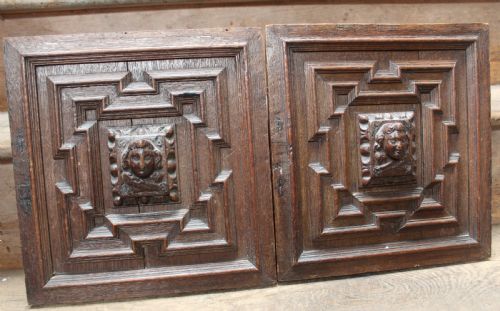
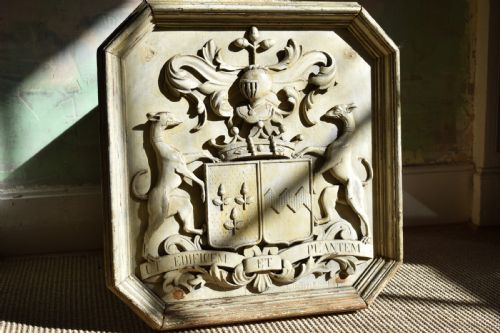
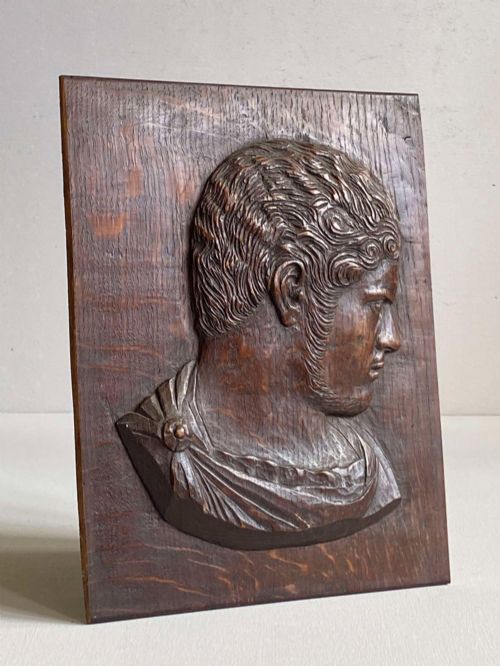

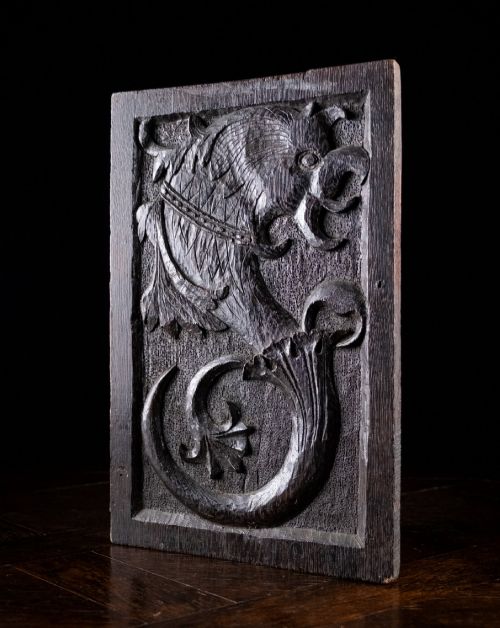
Relief Carved Wall Panel
A relief carved wall panel brings architectural depth and figurative drama to an interior through centuries of skilled timber work.
Relief Carved Wall Panel
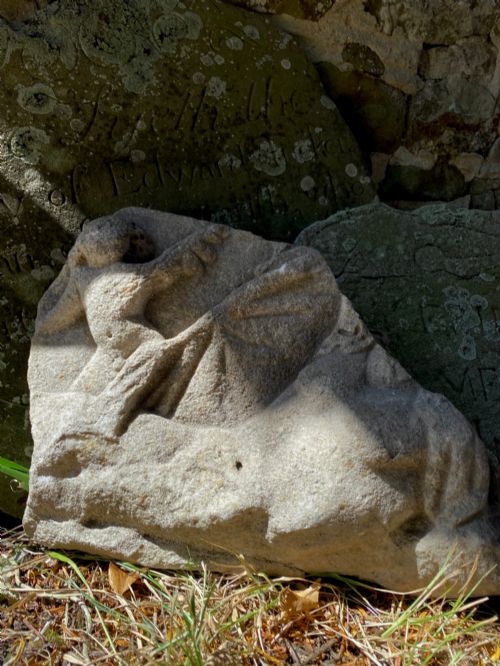
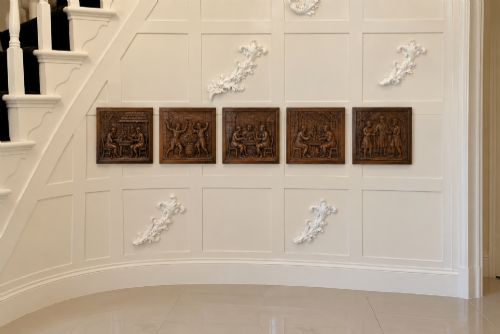
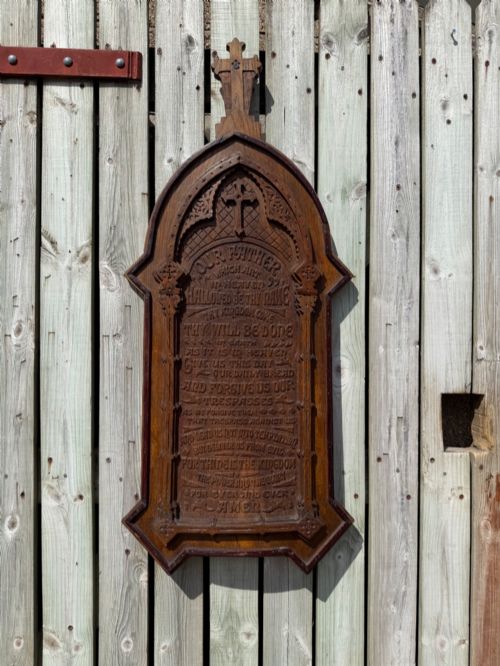
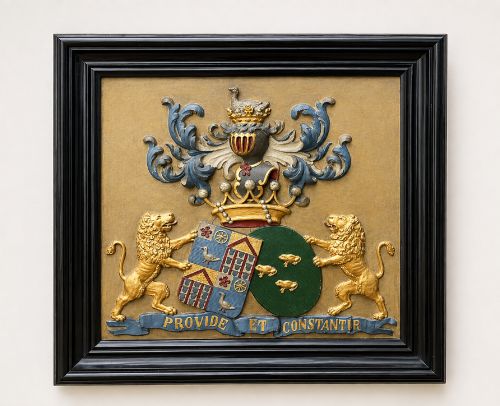
A relief carved wall panel is a sculptural timber or stone element designed for architectural integration or display, spanning subjects from heraldic plaques to tavern scenes.
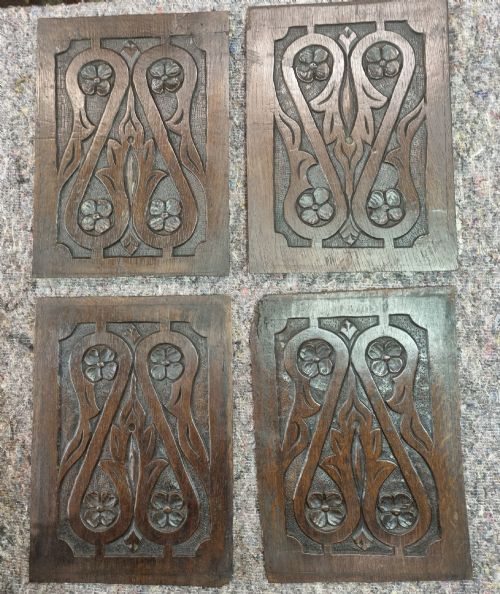
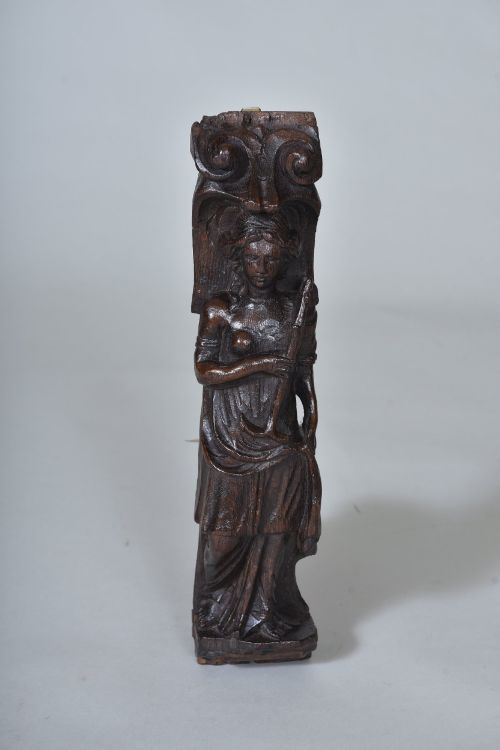
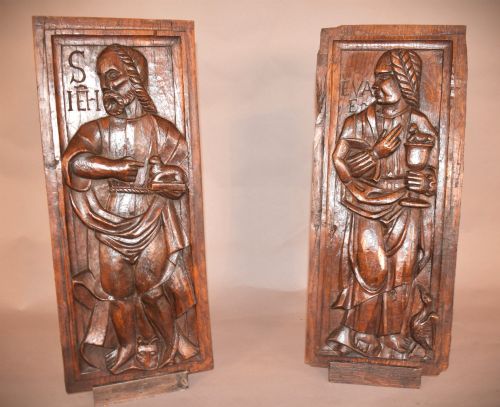
Buyers encountering this group will most frequently see oak and wood panels dating from the seventeenth, eighteenth, and nineteenth centuries, often manifesting stylistic influences such as Gothic Revival, Renaissance Revival, and Baroque.
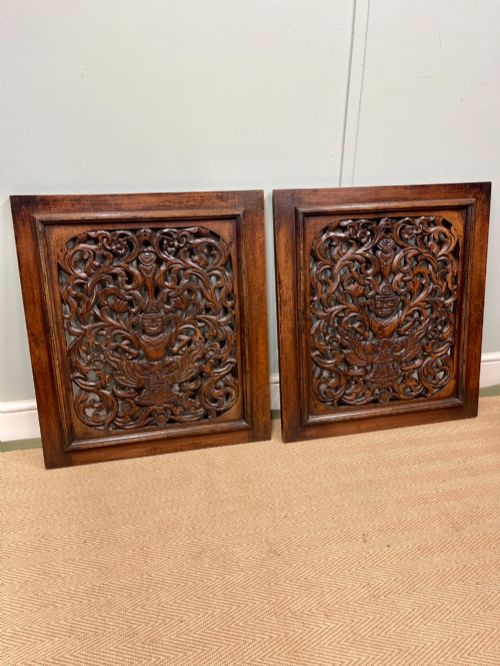
The assortment includes architectural salvage, wall plaques, and architectural fragments adapted for hanging, alongside dedicated Chinese and Burmese temple carvings.
Materials and construction methods
Craftsmen primarily utilised oak, walnut, chestnut, limewood, and fruitwood, selecting dense timbers that permitted sharp chisel work without splitting along the grain.
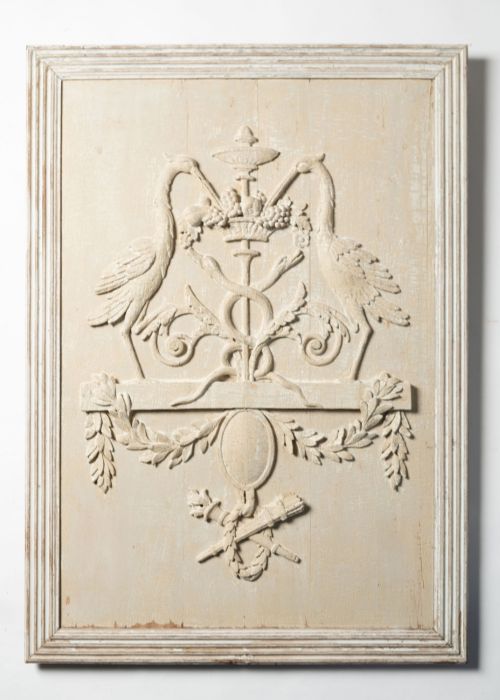
Surfaces were frequently finished with gesso, gold leaf, paint, or polychrome decoration to accentuate the three-dimensional depth of figures and floral motifs.
Relief Carved Wall Panel Retail Price Guide 2026
Typical asking prices for relief carved wall panel among the pieces listed under this phrase on Sellingantiques today, from the lower quarter to the upper quarter. They describe what is for sale here now, not the wider market.
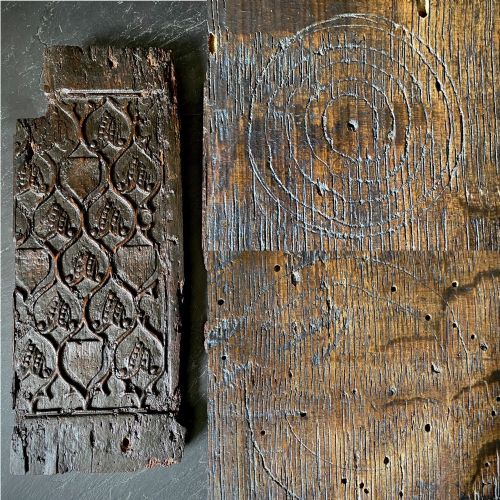
A fifteenth-century English oak panel retains concentric circle apotropaic witch marks scorched directly into the historic timber.
Factors of execution and depth
Superior execution shows confident tool control that maintains architectural proportion, whereas lesser pieces rely on shallow incision and hurried finishing.
The Relief Carved Wall Panel Glossary
- Apotropaic witch marks
- Incised symbols intended to ward off evil spirits. These marks appear as concentric circles scorched into early timber panels.
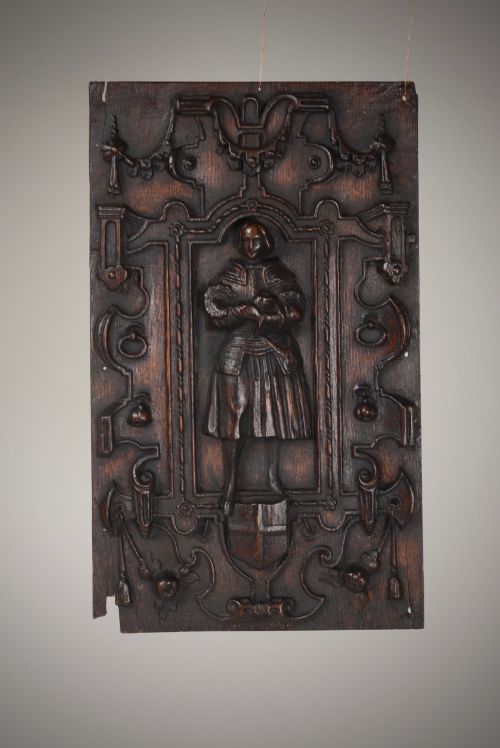
- High-relief
- A sculptural technique where figures project significantly from the background plane. This method creates deep shadows and strong spatial separation.
- Polychrome
- The practice of decorating architectural elements in multiple colours. Pigments were applied directly to carved wood or gesso surfaces.
- Trumeau
- A decorative wall mirror incorporating an upper panel with painted or carved artwork. These pieces combine functional glass with ornamental relief work.
Relief Carved Wall Panel: Frequently Asked Questions
How were these panels originally used?
These panels were integrated into domestic wainscoting, church altarpieces, or architectural furniture before later being removed for wall display.
Many originated as structural elements within European taverns, great houses, or Eastern temples before entering the collector market.
How do I hang a heavy timber panel safely?
Heavy wooden panels require robust mechanical fixings attached directly to wall studs or masonry anchors to bear the substantial weight.
Professional mirror plates or hidden french cleats provide the necessary stability for secure domestic placement.
How can I tell a seventeenth-century panel from a nineteenth-century revival piece?
Early panels display tool marks consistent with hand-riven timber and period joinery methods like pegged mortise and tenon frames.
Revival pieces often show mechanical saw patterns on the reverse and standardisation in the depth of the carving.
What maintenance do old carved wood panels need?
These panels require stable indoor humidity away from direct heat sources to prevent timber shrinkage and subsequent cracking.
Occasional dusting with a dry, soft brush preserves the surface finish without introducing damaging moisture to exposed wood.