




Relief Carved Wall Art
Relief carved wall art brings depth and narrative to a room, spanning centuries of timber, stone and metal craftsmanship.
Relief Carved Wall Art
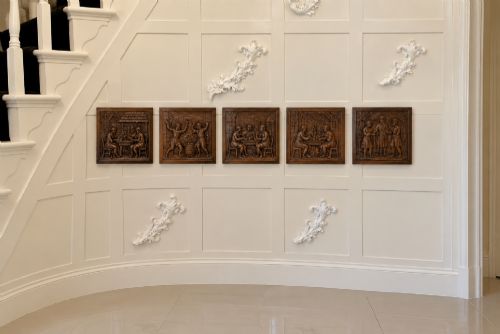
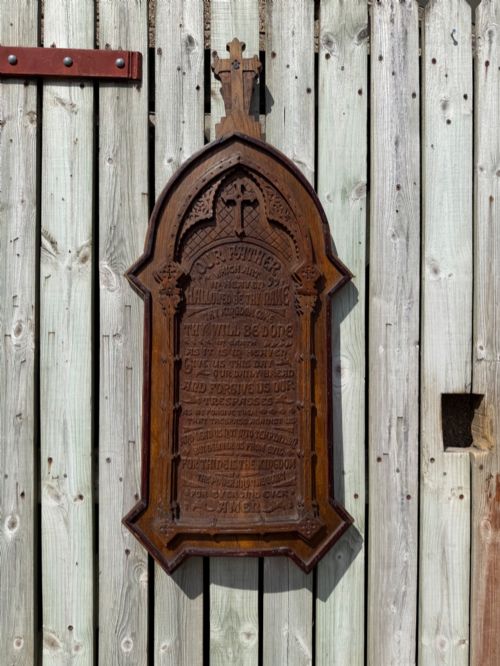
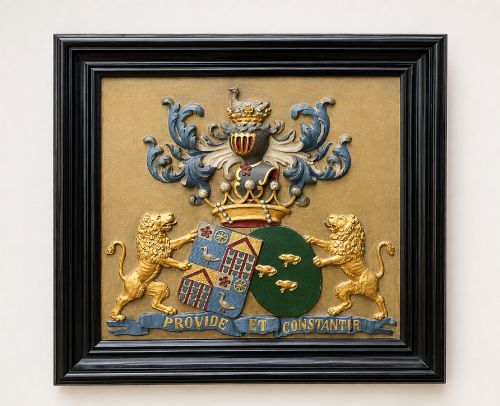
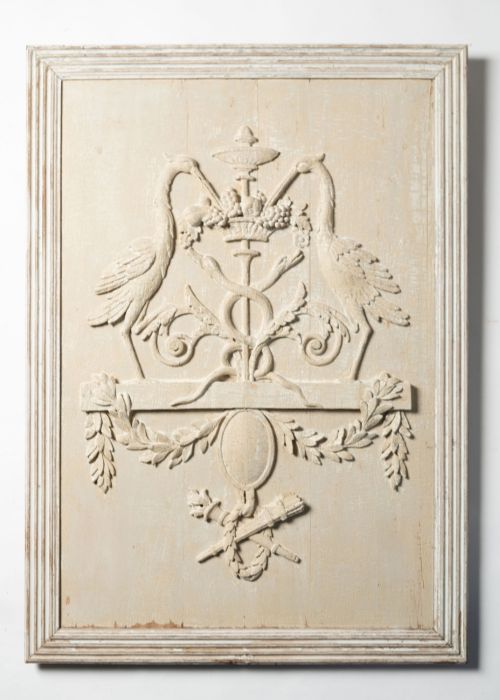
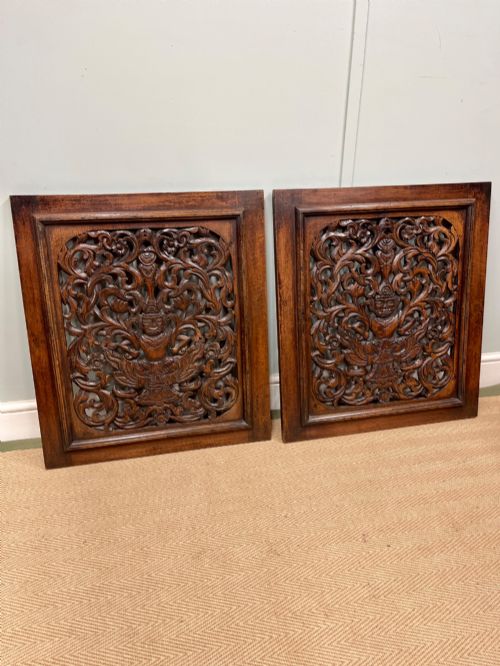
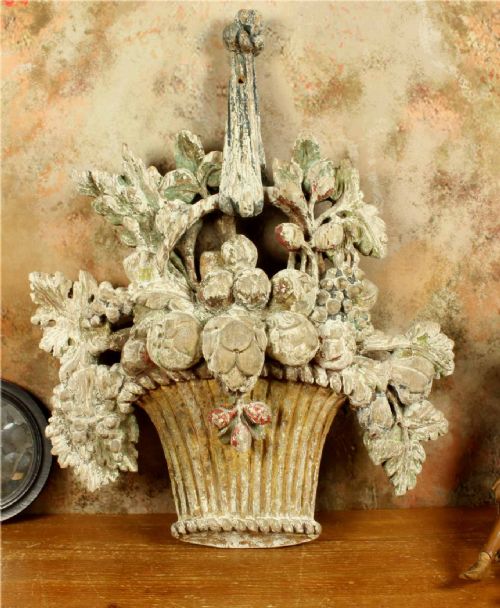
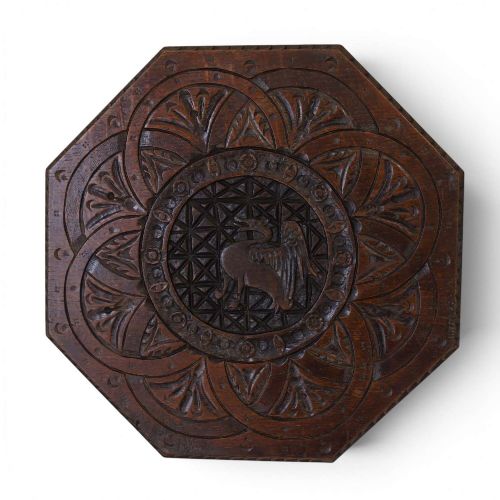
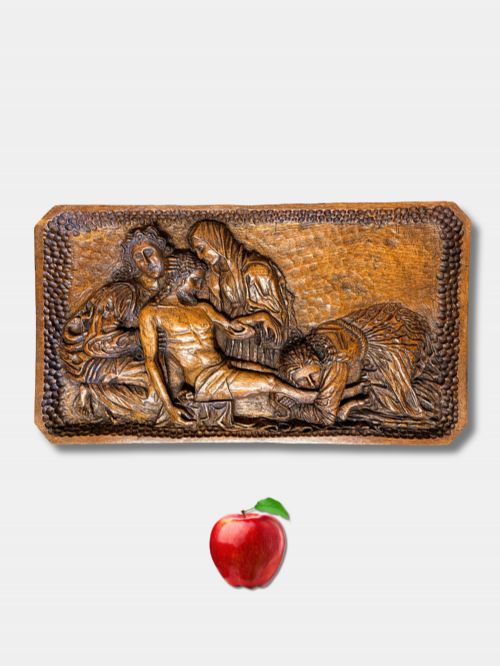
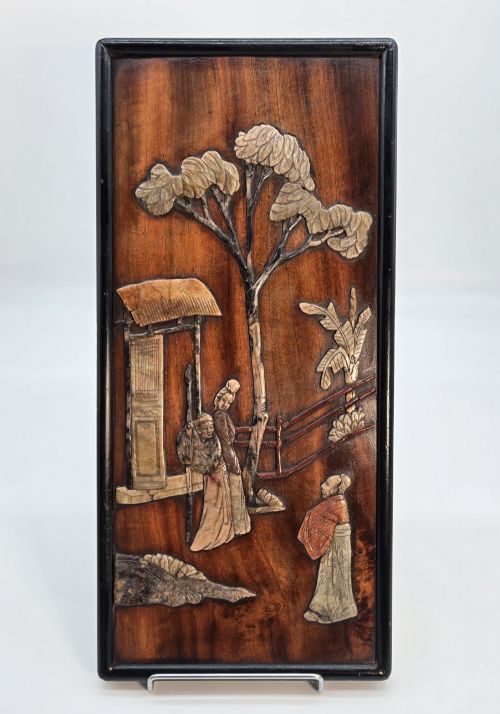
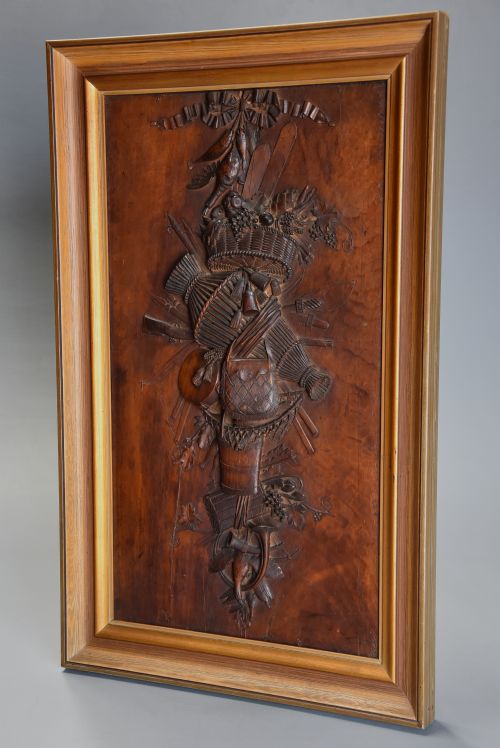
Relief carved wall art comprises panels, plaques, trophies and architectural fragments designed to hang on interior surfaces, adding texture and pictorial depth to plain plaster. When you search for relief carved wall art, you encounter everything from religious iconography and heraldic markers to botanical studies and hunting trophies originating across European, Asian and African workshops.
The versions most commonly met on this page date from the sixteenth century through to the early twentieth century, taking the form of oak, walnut or hardwood panels and framed stone or bronze plaques. Makers ranged from vernacular carvers producing domestic marriage plaques to regional artisans executing intricate temple panels and exhibition quality trophy carvings in fruitwood and teak.
Formats shift from Gothic and Baroque figural scenes to Neoclassical profiles and Arts and Crafts overmantels, reflecting the diverse domestic and sacred spaces these objects originally inhabited.
Materials and construction
Oak, walnut, chestnut and exotic hardwoods form the primary structural body of these works, shaped through hand chiselling, gouging and deep undercutting to achieve dramatic shadow play. Artisans utilised timber seasoning and grain alignment to prevent splitting across large expanses, particularly in architectural panels and structural fragments.
Beyond timber, makers incorporated white marble, limestone, terracotta, majolica pottery and cast bronze, securing low and high relief profiles within wood or stone frames. Surface finishes vary from natural wax and polished grain to traces of original gilt, lacquer and polychrome paint applied directly to the carved substrate.
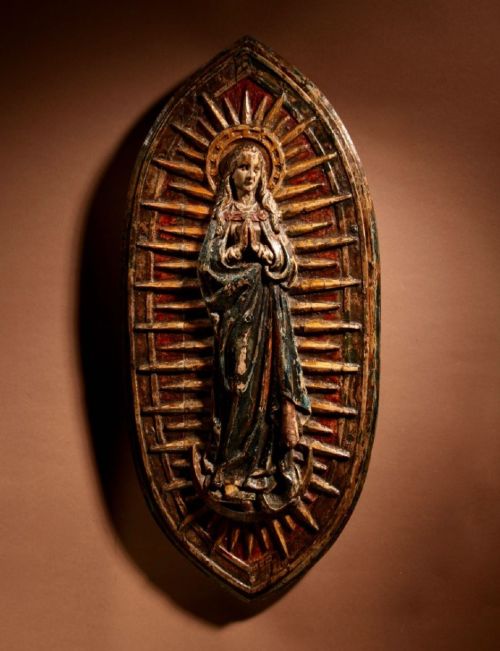
Look closely for the hidden serpent lurking beneath the praying virgin on the half moon in sixteenth century devotional panels.
Assessing quality and execution
The integrity of the surrounding frame, the preservation of the original surface patina and the stability of the timber substrate also determine the overall standard. Pieces retaining their original polychromy, gilding or integrated structural borders command greater visual coherence than heavily restored or later married elements.
Edward Pearce·Van Rijckevorsel & Verheijen
The Relief Carved Wall Art Glossary
- Relief carving
- A sculptural technique where figures and motifs project from a flat background plane. High relief projects significantly, while bas-relief remains shallow.
- Architectural salvage
- Elements rescued from dismantled buildings, including staircase panels, fragments and overmantels. These pieces often retain signs of their original structural context.
- Polychrome
- The practice of decorating architectural elements and wood carvings in multiple colours. Traces of original paint frequently survive in recessed areas.
- Trophy carving
- A decorative grouping of game, fowl, foliage or musical instruments arranged in a symmetrical composition. These were popular hunting lodge and interior adornments during the nineteenth century.
- Gilt wood
- Wood coated with a thin layer of gold leaf or powder. This finish enhanced visibility in dimly lit temples and formal interiors.
Relief Carved Wall Art: Frequently Asked Questions
How were antique wall panels originally mounted?
Many early panels formed integral parts of larger architectural schemes, such as church altarpieces, staircase surrounds or wall boiserie, rather than standalone decorative objects.
Over time, many were detached from their original structures, framed or fitted with simple hanging brackets for domestic display.
How do I care for wooden relief carvings?
Maintain stable humidity levels and keep wooden carvings away from direct heat sources to prevent the timber from drying out and splitting.
Dust gently with a soft, dry brush and avoid applying modern liquid polishes that can build up in the recessed carved areas.
Are marble and bronze plaques heavier than wooden ones?
Marble, terracotta and cast bronze plaques possess considerable weight and require secure wall fixings anchored directly into masonry or heavy studwork.
Wooden panels are generally lighter, though dense hardwoods like oak and teak still require robust hanging hardware.