


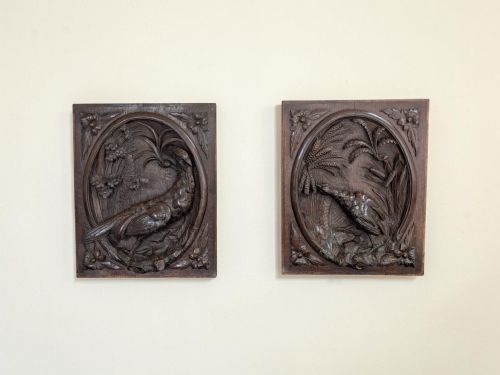


Relief Carved Oak Cabinet
A relief carved oak cabinet brings heavy texture and deep architectural history straight into a room.
Relief Carved Oak Cabinet
A relief carved oak cabinet is a solid storage piece built primarily from oak, featuring sculpted woodwork that projects from the flat surface. These items range from large sideboards and hall cupboards to smaller corner cabinets and display units.
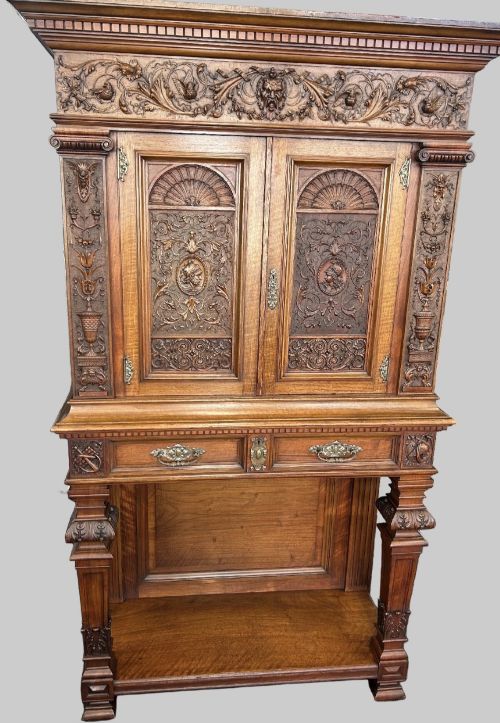
The versions most commonly met on this page date from the nineteenth century, including pieces influenced by Gothic and Renaissance revivals. Buyers encounter everything from tall Flemish hall cupboards on stands to small carved panels.
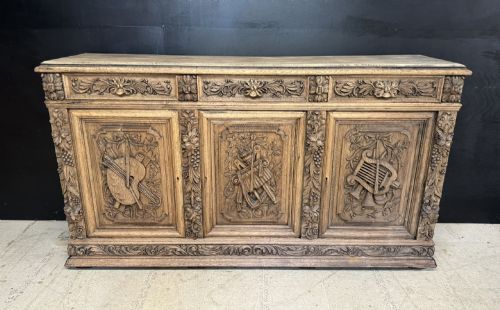
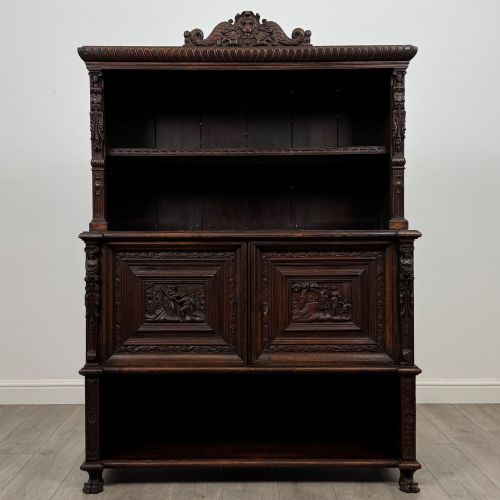
Forms vary from grand sideboards and game cupboards, known as buffets de corps, down to simpler two-door cupboards and single carved panels. Each piece shows the heavy structural presence typical of dark woods shaped with sculptural motifs.
How they were made
These items rely on solid oak timbers, chosen for strength and a pronounced grain that holds deep chisel work well. Artisans shaped the dense wood using hand-carving techniques to build up panels with layered figurative or geometric relief.
Metal hardware such as brass and iron appears on doors and hinges, providing functional contrast to the dark timber. Glass is also utilised in display variants to protect contents while keeping them visible.
Several game cupboards wait here, ready to store your secrets if not your pheasant.
What varies in quality
Quality rests in the depth and crispness of the carved relief work across the oak surface. Superior examples display sharp undercut details and well-balanced proportions, whereas simpler items feature flatter, more repetitive chip carving.
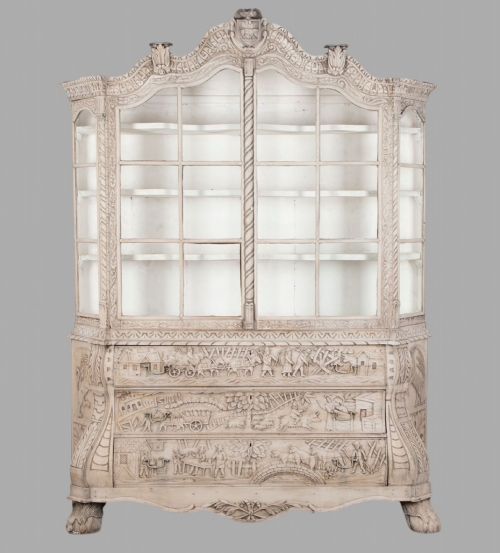
The integrity of the timber and the architectural scale of the piece dictate its standing. Heavy Flemish hall cupboards and bombe display cabinets demand high structural competence to support the weight of the dense wood and extensive ornamentation.
The Relief Carved Oak Cabinet Glossary
- Relief carving
- Woodwork where figures or patterns project from a flat background. This technique gives the surface strong shadows and tactile depth.
- Linenfold
- A style of wood panel carving that mimics folded fabric. It appears frequently on early cupboards and panels.
- Buffet de corps
- A large two-stage French sideboard or storage cupboard. These monumental pieces provide substantial storage capacity.
- Bombé
- A swelling, outward-curved furniture shape. It adds a dramatic silhouette to display cabinets and chests.
- Gothic Revival
- An architectural and decorative style drawing on medieval forms. Pieces often feature pointed arches and tracery motifs.
Relief Carved Oak Cabinet: Frequently Asked Questions
Where should I place a relief carved oak cabinet?
These substantial pieces need a room with enough wall space to absorb their dark wood and heavy visual weight. Hallways, dining rooms and large living spaces suit them best.
Keep them away from direct heat sources and strong sunlight to protect the aged oak from drying out or splitting over time.
How do I clean and maintain carved oak?
Dust the deep recesses regularly with a soft brush to prevent dirt from settling in the carved crevices. Apply a traditional beeswax occasionally to nourish the timber.
Avoid modern liquid polishes containing silicones, as they build up a dull film over the wood grain and damage the finish.
How do I tell nineteenth century revival pieces apart from older work?
Nineteenth century revival items often display machinery marks on unseen internal boards alongside hand-carved exterior decoration. Look closely at the construction methods inside the cabinet.
Earlier sixteenth century work shows entirely hand-hewn surfaces and pegged joinery without modern fasteners or standardised timber dimensions.
What is a Flemish hall cupboard?
A Flemish hall cupboard is a tall storage unit typically raised on a stand or short legs, originating from the Flanders region. These pieces feature dense, dramatic carving reflecting Renaissance styles.
They were designed for grand entryways to store cloaks and household goods while displaying the social status of the household.