



Barley Twist Oak Cupboard
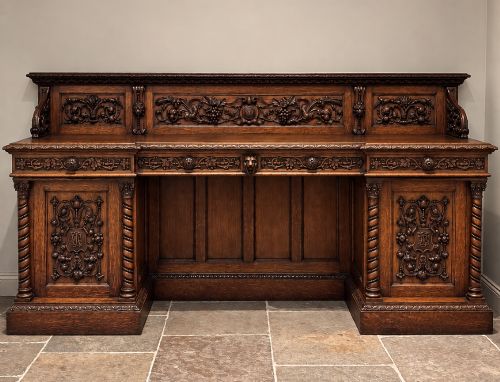
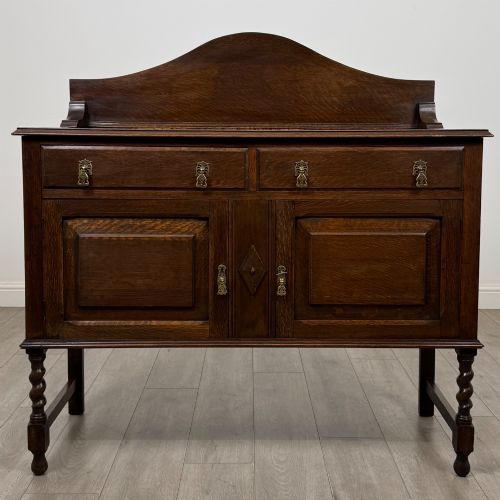
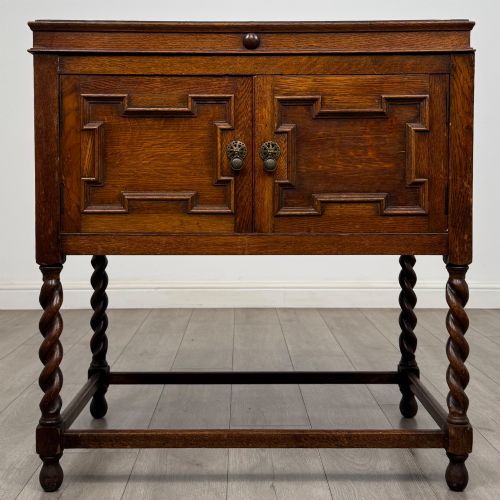
These barley twist oak cupboards bring rugged timber and tactile turned supports straight from Victorian and Edwardian dining halls into your home.
Barley Twist Oak Cupboard
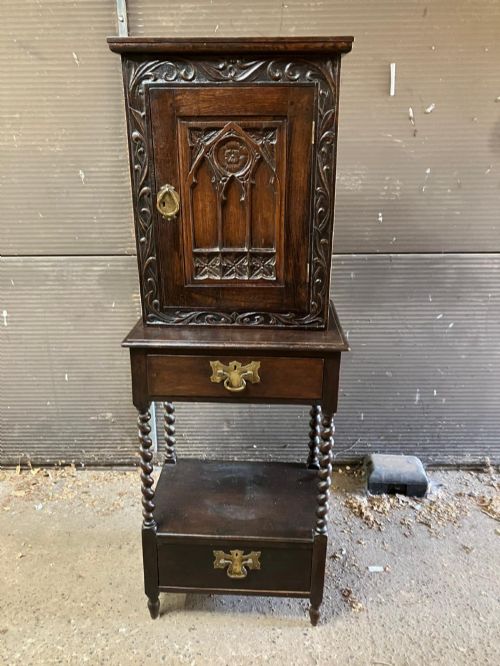
A barley twist oak cupboard combines storage utility with the robust presence of nineteenth and early twentieth century revival styles. You will encounter sideboards, linen presses, bookcases, and cabinets on stand that range from Jacobean interpretations to Flemish and French regional designs.
The pieces on this page span the seventeenth to the twentieth centuries, with Victorian, Edwardian, and nineteen-twenties examples appearing most frequently. These storage items serve well in modern interiors as statement sideboards or display units whilst retaining their historic character.
Makers often drew upon Gothic, Renaissance, and Romanesque revivals, applying deep carving and architectural mouldings to sturdy timber carcases. Whether you find a small hall cabinet or a larger two-part dresser, the core function remains enclosed storage framed by decorative turning.
What varies in quality
Quality reveals itself in the crispness of the timber carving and the architectural proportion of the overall form. Finer pieces display deeply undercut foliage, expressive figural masks, and well-balanced twist turnings rather than shallow, mechanical stamping.
The selection of the oak timber itself dictates the grade of the piece, with quartersawn boards showing attractive medullary rays that enhance the visual depth. Superior examples maintain original hardware, hinges, and glass panes that complement the period of construction.
Listings feature oak storage pieces from the seventeenth to the twentieth centuries, spanning Victorian, Edwardian, and various revival movements.
The Barley Twist Oak Cupboard Glossary
- Barley twist
- A spiral turning resembling a twisted stalk of barley, used extensively on the legs and uprights of seventeenth-century and revival furniture. This decorative column style became particularly popular during the Victorian and Edwardian eras.
- Jacobean style
- A heavy, geometric revival aesthetic drawing on early seventeenth-century English design with strapwork, panelled doors, and sturdy turnings. Cabinetmakers often resurrected this style in the nineteenth century for grand dining furniture.
- Linen press
- A tall cupboard originally designed for storing folded linen, typically featuring sliding trays in the upper section and drawers below. These pieces offer substantial enclosed storage space for modern domestic use.
- Kast
- A large, architectural wardrobe or cupboard of Dutch or Flemish origin, featuring heavy cornice mouldings and panelled doors. These impressive storage pieces often rest on bun feet.
- Green man
- A sculptural architectural ornament depicting a human face entwined with leaves, vines, or foliage, symbolising rebirth. Carvers frequently incorporated this motif into nineteenth-century revival oak cabinetry.
Barley Twist Oak Cupboard: Frequently Asked Questions
How do I date a barley twist cupboard?
Dating relies on examining the timber grain, construction joints, and stylistic revival cues. Nineteenth-century pieces often combine machine-sawn elements with hand-carved details, whereas earlier examples show entirely hand-wrought pegged joinery.
Hardware such as hinges and locks also provides vital clues, as do secondary woods used in drawer linings. Comparing the specific revival style, whether Jacobean or Flemish, helps narrow the decade of manufacture.
Where should I place an oak cupboard?
These substantial storage pieces suit dining rooms, hallways, or living spaces where their deep tones anchor the room. Ensure the floor can support the weight of solid oak furniture before positioning.
Keep the timber away from direct heat sources and strong sunlight to prevent the oak from drying out or splitting. Their enclosed shelving makes them ideal for storing tableware, books, or linens.
How do I care for antique oak furniture?
Maintain the finish by applying natural beeswax occasionally to nourish the dry timber and enhance its lustre. Avoid silicone-based sprays that can penetrate the grain and damage historic polishes.
Dust regularly with a soft, dry cloth and clean up any spills immediately to protect the wood surface. Stable indoor humidity levels prevent the oak panels from shrinking or warping over time.
What is the difference between a sideboard and a dresser?
A sideboard primarily functions as a low serving and storage cabinet enclosed by doors and drawers. It often sits against a dining room wall without upper shelving.
A dresser typically incorporates an upper open rack or shelved superstructure mounted onto a lower base of cupboards and drawers. Both forms frequently showcase barley twist supports on this site.