


Regency X Leg Stool
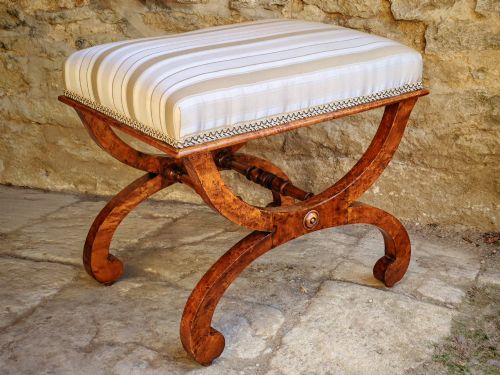
A regency x leg stool offers the distinctive crossing stretcher design characteristic of the period, providing sturdy seating that functions as a stool or footstool.
Regency X Leg Stool
A regency x leg stool is a low seating form featuring intersecting stretcher supports that echo classical curule designs. These pieces appear as compact footstools, dressing stools, and larger window seats spanning the nineteenth century alongside earlier Georgian and later Victorian iterations.
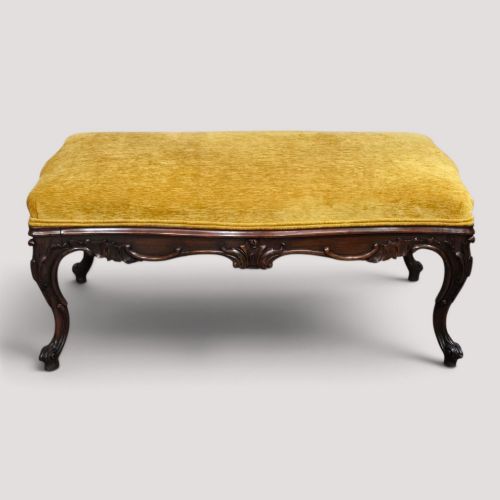
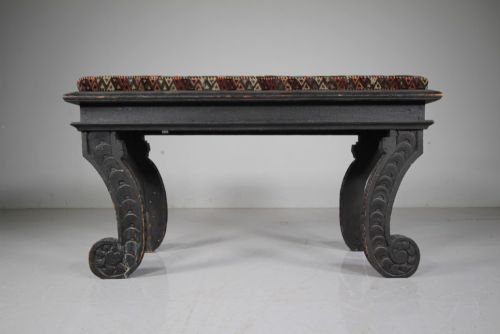
The version most frequently met on this page is the mahogany or rosewood framed stool, often upholstered in leather, velvet, or fabric. Makers varied these frames with simulated timbers, ebonised wood, or painted pine.
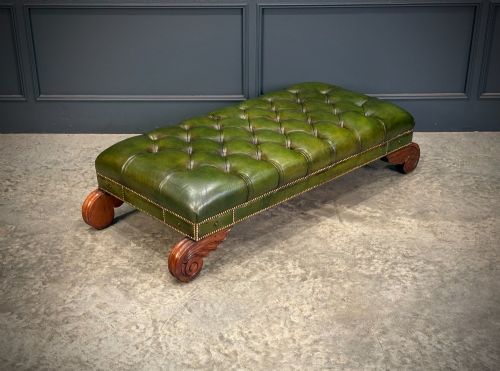
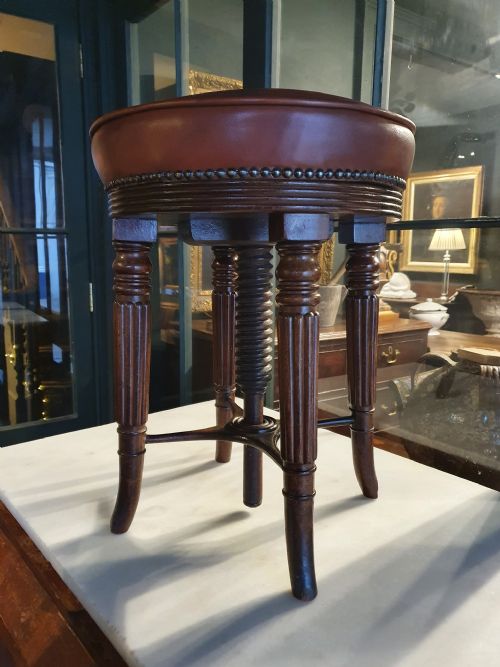
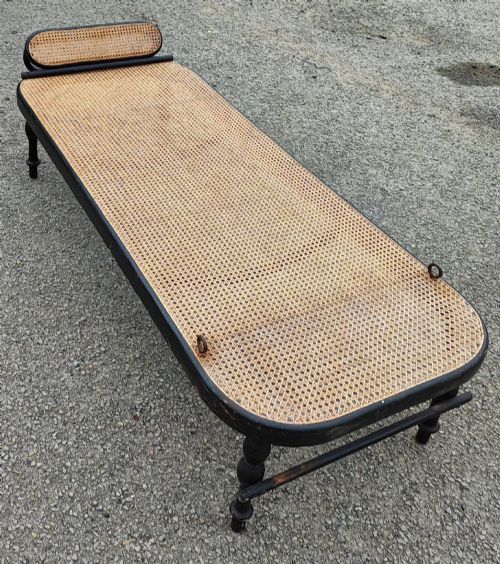
Beyond the standard footstool, the selection includes long benches, daybeds, and revolving piano stools sharing the characteristic cross-frame architecture. Origins range from English workshops to Anglo-Indian and Italian production.
How they were made
Craftsmen shaped dense hardwoods such as mahogany, rosewood, and yew wood into intersecting frames, securing the joints with traditional woodworking techniques. Alternative finishes included ebonised wood and painted pine.
Upholstery methods utilised materials like leather, velvet, chenille, and fabric, often secured over buttoned padding or cane panels. Brass details occasionally reinforced the timber structures.
Some stools double as revolving piano seats, letting musicians spin while maintaining strict nineteenth-century posture.
What varies in quality
The refinement of the timber turning and the precision of the intersecting X frame joints distinguish finer examples from simpler provincial pieces. Dense grains in rosewood and figured mahogany indicate superior material selection.
The execution of the upholstery, whether buttoned leather, woven cane, or textile, reflects the original workshop's standard. Maker attribution to known firms like Gillows or Miles & Edwards elevates the standing of a piece.
Gillows·Miles & Edwards
The Regency X Leg Stool Glossary
- X Frame
- A structural design where two legs cross in an X shape, providing support while referencing classical Roman seating. This geometry defines the core aesthetic of the pieces listed here.
- Simulated Rosewood
- A paint technique applied to a base timber to imitate the rich grain and deep colour of genuine rosewood. Cabinet makers utilised this method to achieve high-status aesthetics economically.
- Ebonised Wood
- Timber treated to resemble ebony through staining or painting, creating a dark, uniform finish. This treatment was popular for accentuating architectural details on nineteenth-century frames.
Regency X Leg Stool: Frequently Asked Questions
How do I identify a genuine regency x leg stool?
Examine the timber species, construction joints, and upholstery style for consistency with nineteenth-century manufacturing methods. Genuine examples frequently employ mahogany or rosewood with hand-turned elements.
Compare the proportions and stretcher placement against documented pieces from the period to confirm authenticity.
Where should I place a window seat at home?
Window seats fit naturally beneath low windows, along narrow hallways, or at the foot of a bed. Their compact height makes them suitable for occasional seating in living rooms.
Ensure the surrounding floor space allows clear visibility of the crossing leg frame.
How do I care for leather upholstered stools?
Clean leather surfaces gently with a soft, dry cloth and avoid placing the stool in direct sunlight. Leather treatments should be applied sparingly to maintain suppleness.
Protect the timber frame by maintaining consistent room humidity to prevent wood splitting.
What is the difference between a footstool and a window seat?
Footstools are generally square or small in scale, designed to support feet while sitting in an armchair. Window seats are elongated forms built to accommodate one or more people sitting by a window.
Both forms share similar leg structures and upholstery materials across the inventory.