



Regency Writing Chest
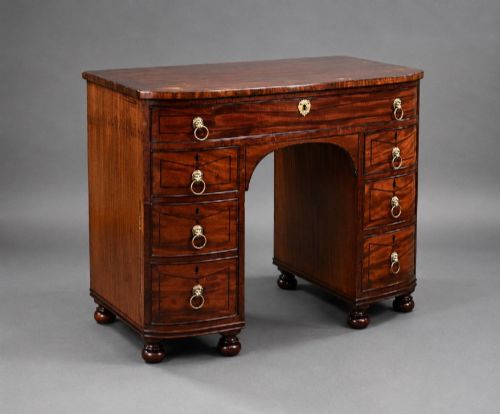
These regency writing chest pieces combine drawers with a drop-front writing surface, offering a compact desk and storage in one form.
Regency Writing Chest
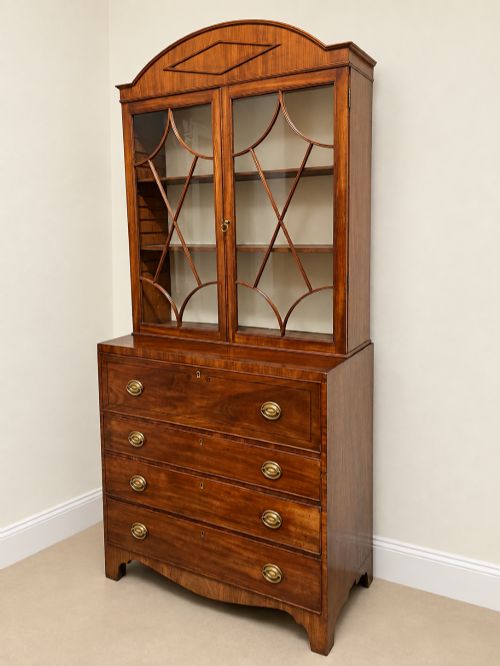
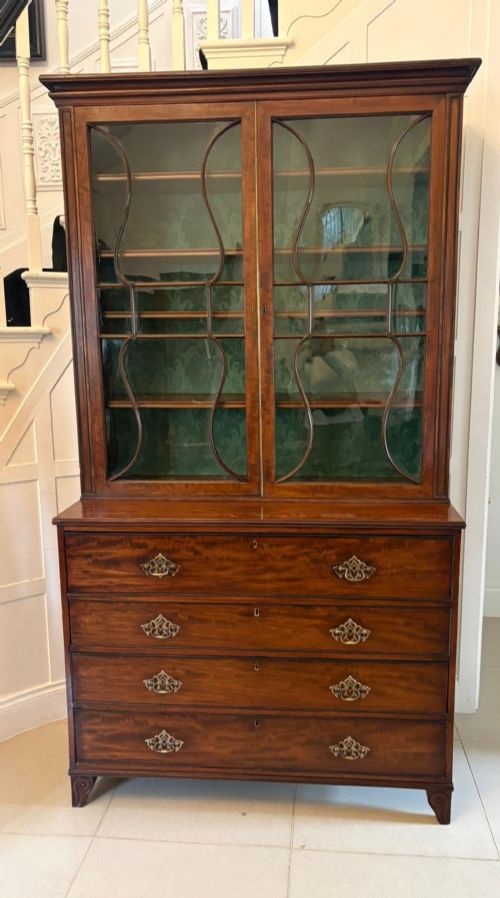
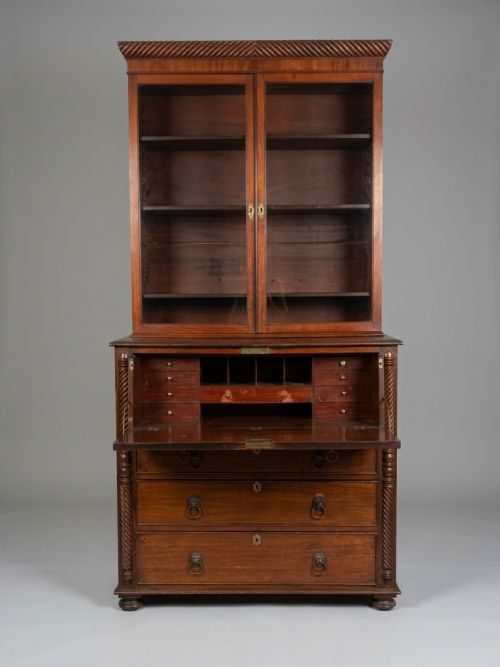
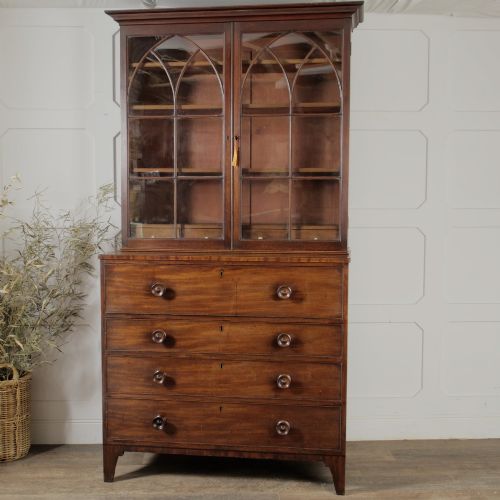
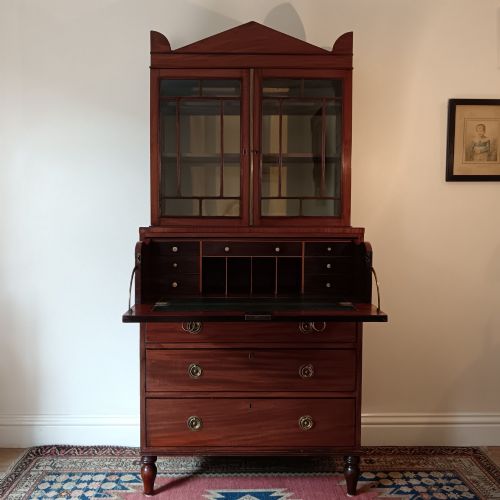
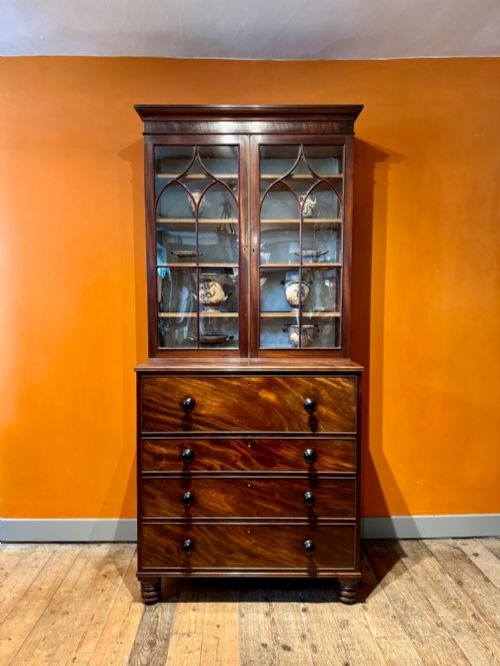
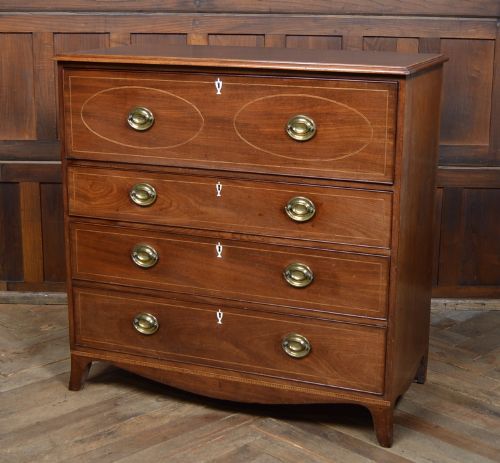
A regency writing chest typically appears as a mahogany chest of drawers containing a fitted writing drawer, or as a taller secretaire bookcase with glazed doors above.
Pieces span the Georgian and Regency periods through the nineteenth century, including regional variations such as Scottish, Irish, and military campaign forms.
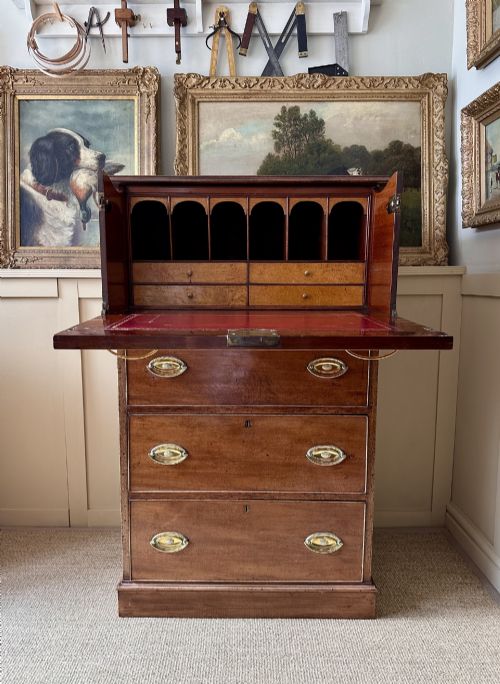
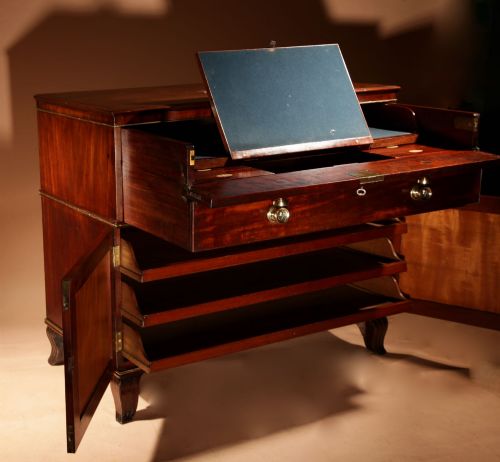
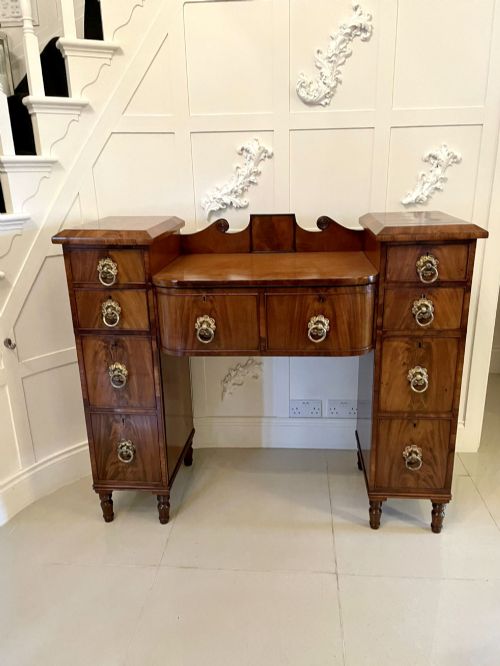
Makers integrated compartments, pigeonholes, and small drawers behind the fall-front flap, alongside side cabinets and dressing chests.
Materials and construction
Workshops utilised solid and figured mahogany, rosewood, walnut, and pollard oak, often accented with satinwood and inlaid details.
Fittings include brass handles and campaign mounts, glass panels for bookcase doors, and interior writing surfaces lined in baize or leather.
Regency Writing Chest Retail Price Guide 2026
Typical asking prices for regency writing chest among the pieces listed under this phrase on Sellingantiques today, from the lower quarter to the upper quarter. They describe what is for sale here now, not the wider market.
Listings feature mahogany, rosewood, walnut, pollard oak, camphorwood, brass, leather, and baize across Georgian and Regency periods.
Build and timber selection
Finely chosen flame mahogany and figured rosewood veneers set superior examples apart from plainer constructions.
The complexity of the internal fitments, the precision of the oak linings, and the integration of secondary woods indicate the standard of workshop production.
George Oakley·Gillows of Lancaster·William Trotter Edinburgh·Gillington of Dublin
The Regency Writing Chest Glossary
- Secretaire
- A desk or chest of drawers containing a hinged writing flap that drops down to reveal fitted compartments. This form conceals writing materials behind standard drawer fronts.
- Campaign
- Portable furniture built in sections with recessed brass handles and corner brackets for transport by military officers. These pieces dismantle or feature sturdy carrying handles.
- Glazed
- Fitted with glass panes, typically seen on the upper bookcase sections of taller cabinet combinations. This allows books or papers to be displayed while protected from dust.
- Baize
- A coarse woolen material used to line writing surfaces and pull-out trays inside the desk compartments. It provides a soft writing plane.
- Wellington chest
- A tall, narrow chest of drawers secured by a hinged locking side bar that fastens over the drawer edges. This design originated in the nineteenth century.
Regency Writing Chest: Frequently Asked Questions
What is a regency writing chest?
A regency writing chest is a piece of furniture that looks like a standard chest of drawers or bookcase from the outside, but contains a pull-down drawer front concealing a desk interior.
These units served as practical workspaces in domestic libraries and parlours during the early nineteenth century.
How do you use the secretaire drawer?
The top drawer pulls forward and hinges downward to create a flat writing surface supported by internal runners or brackets.
Inside, small drawers and pigeonholes hold stationery and inkwells while keeping paperwork concealed when the front is closed.
Are campaign chests different?
Campaign versions are built in sturdy sections with flush brass handles designed to withstand travel during military deployments abroad.
They utilise durable timbers like camphorwood and mahogany to endure shifting climates.
How to identify the period?
Period indicators include timber choices such as flame mahogany and rosewood, specific brass hardware designs, and cabinetmaking methods like oak drawer linings.
Construction details and regional proportions help separate Georgian and Regency examples from later nineteenth-century pieces.