


Regency Writing Accessory
A regency writing accessory brings the refined desk furniture of the early nineteenth century into modern interiors.

Regency Writing Accessory
A regency writing accessory encompasses desk sets, inkstands, inkwells, pounce pots, and writing slopes produced during the Regency period and broader nineteenth century. These objects served the practical writing needs of the period while displaying the refined taste of their owners.
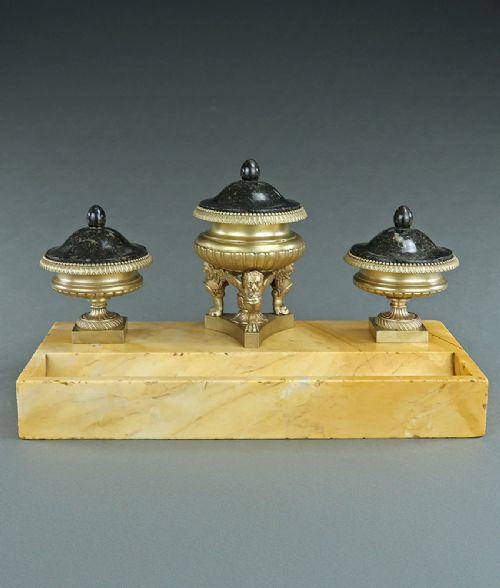
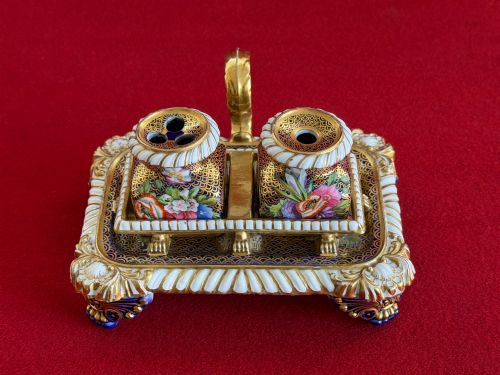
Buyers browsing this selection will most frequently encounter rosewood inkstands inlaid with brass alongside porcelain inkwells and marble-based encriers. These pieces combine utilitarian functions with decorative elegance rooted in Regency and Neoclassical design principles.
The materials span from rich rosewood and Sheffield plate to porcelain, enamel, and Sienna marble, reflecting the varied workshops of Georgian and Regency makers. Each form provides a tangible link to the personal correspondence and administration of the era.
Materials and Method
Cabinet makers utilised dense hardwoods such as rosewood, incorporating precision brass inlay and gold leaf detailing into desk sets and writing slopes. These wooden structures required expert joinery to house fitted compartments and glass or porcelain ink containers securely.
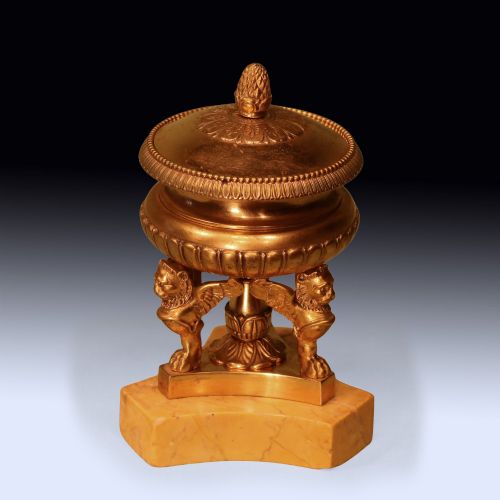
Potteries shaped soft-paste porcelain, pearlware, and delftware into inkstands and inkwells, applying hand-painted scenes and specialist patterns like the Spode pattern 1166 or Flight Barr and Barr designs. Metalworkers cast ormolu and gilt bronze, mounting them onto Sienna marble bases for weight and visual contrast.
Listings feature items spanning the Georgian, Regency, and early nineteenth century periods, constructed from rosewood, porcelain, marble, and Sheffield plate.
Distinctions in Quality
Quality rests in the precision of the brass inlay within the rosewood surfaces and the crispness of casting in ormolu and gilt bronze mounts. Superior examples maintain tight joints and well-preserved surface patination without excessive replacement of components.
In porcelain pieces, the refinement of the hand-painted decoration and the clarity of the glaze distinguish standard production from exceptional factory outputs. Finer inkstands feature harmonious integration of contrasting materials like marble and metal.
Spode·Flight Barr and Barr·Worcester
The Regency Writing Accessory Glossary
- Encrier
- A portable inkstand or desk ink container. This French term typically describes continental or classically inspired pieces incorporating marble and bronze.
- Pounce pot
- A small perforated shaker used to sprinkle sand or gum resin over wet ink. This substance dried the ink and smoothed the paper surface for further writing.
- Writing slope
- A portable slant-topped box designed for correspondence. These boxes fold open to reveal a sloping writing surface and internal storage for paper and ink.
- Sheffield plate
- A composite material made by fusing a thin sheet of silver to a copper base. This technique allowed makers to produce durable luxury metalware during the Georgian era.
- Pearlware
- An earthenware body developed in the late eighteenth century featuring a faint bluish glaze. It often served as a brighter, refined alternative to creamware for painted desk items.
Regency Writing Accessory: Frequently Asked Questions
What is a pounce pot used for?
A pounce pot held fine powder used to prepare paper for writing or to dry freshly applied ink. Writers shook the sand-like substance over the page before blotting it away.
These small containers match inkwells on desk stands and form an essential part of period writing sets.
Where were these porcelain inkstands made?
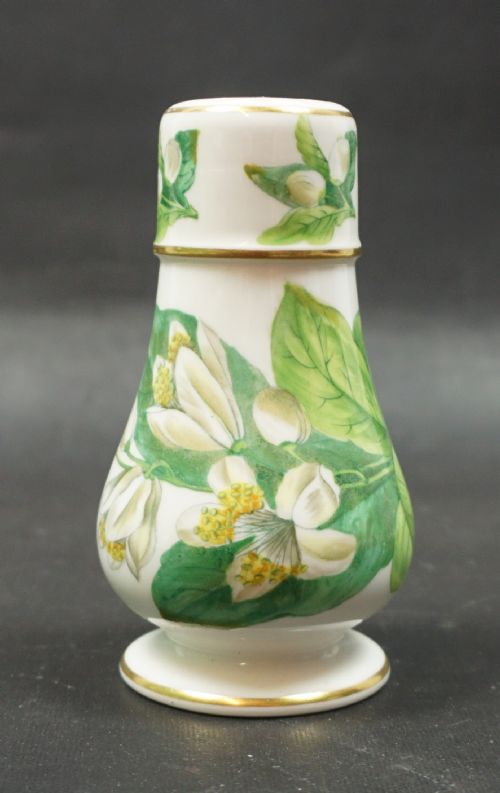
Prominent English porcelain factories such as Spode and Worcester produced many of the ceramic inkstands from this era. These manufactories employed skilled painters to decorate pieces with floral motifs and intricate patterns.
Such items combined practical desk utility with the high artistic output of English ceramic centres.
What materials make up an encrier?
An encrier frequently combines natural stone bases, such as Sienna marble, with cast metal elements like ormolu or gilt bronze. Glass or ceramic ink inserts fit securely into the stone or metal housing.
This mix of heavy stone and polished metal gave desk accessories stability and a grand appearance.