



Silver Double Inkwell Stand
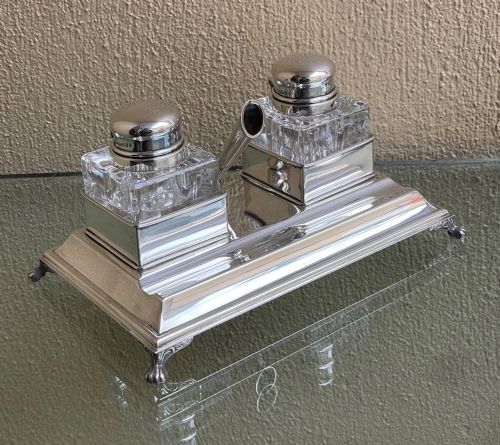
A silver double inkwell stand anchors a writing desk with heavy glass reservoirs and chased metal trays.

Silver Double Inkwell Stand
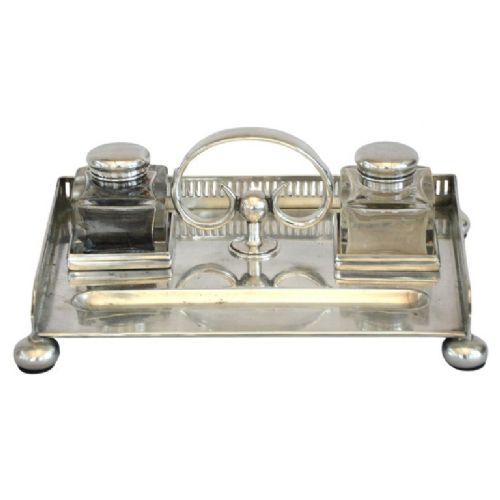
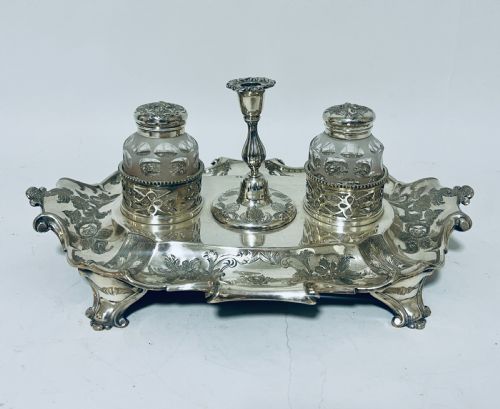
A silver double inkwell stand brings order to the nineteenth and twentieth-century desk by pairing two lidded ink pots on a single metal or wooden tray, often alongside pen rests and chambersticks. You meet these pieces in solid sterling silver, silver plate, Sheffield plate, and oak, spanning periods from the early nineteenth century through the Edwardian era and into the mid-twentieth century.
The heavy glass inserts are central to these desk accessories, designed to hold ink securely while revealing the fluid level within. Many examples incorporate cut glass or plain glass bottles framed by gallery rails, silvered bronze, or substantive desk tidy bases bearing hallmarks or maker marks.
How they were made
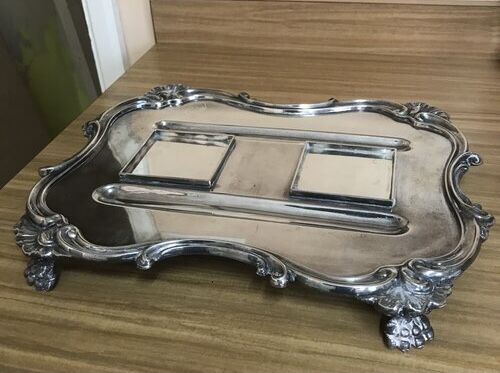
Silversmiths and electroplaters constructed these trays from sterling silver, silver plate, and Sheffield plate, shaping metal bases with raised galleries and pen rests to hold writing implements. Makers frequently mounted cut glass or heavy glass inkwells into fitted collars on the metal stands.
Some desk accessories combined silvered bronze or oak with metal mounts, employing casting and chasing techniques to create Rococo Revival, Victorian Gothic Revival, and Art Nouveau decorative schemes.
Materials across these listings range from sterling silver and Sheffield plate to oak and silvered bronze.
What varies in quality
The survival of matching glass inkwells with their original silver or plated lids determines the integrity of the ensemble, as replacement bottles alter the balance and authenticity of the stand.
Walker And Hall·Harrods·Maurice Dufrene·Martin Hall·William Hutton
The Silver Double Inkwell Stand Glossary
- Inkstand
- A fitted tray or stand designed to hold inkwells, sanders, and pen rests for a writing desk. These objects formed the centrepiece of formal correspondence.
- Sheffield Plate
- A fused layer of silver over a copper core, produced before modern electroplating became widespread. This technique creates a distinctive warm metal tone.
- Desk Tidy
- A multipurpose desk accessory featuring compartments for ink, pens, and small stationery items. They keep the writing surface organised.
- Chamberstick
- A short candlestick fitted with a pan to catch dripping wax, frequently incorporated into larger desk stands for use at night.
- Silvered Bronze
- A bronze base treated with a silver coating to mimic solid silver construction. This material appears in decorative Art Nouveau pieces.
Silver Double Inkwell Stand: Frequently Asked Questions
What is a silver double inkwell stand?
A desk accessory featuring a shared base holding two ink pots, typically accompanied by pen rests and sometimes a chamberstick.
They served as the main writing station on nineteenth and twentieth-century desks.
How do I date a silver inkstand?
Hallmarks on the metal elements provide exact assay office marks and date letters for sterling silver pieces.
Stylistic details like Art Nouveau curves or Victorian Gothic revival motifs help narrow down unmarked plated examples.
Are the glass inserts usually original?
Glass bottles often suffer damage over decades of use, meaning replacements are common in the marketplace.
Matching glass weight, cut patterns, and collar fit helps identify period-correct reservoirs.
How were these stands used?
They held black and red ink for dipping steel nib pens during letter writing and administrative tasks.
Pen rests kept wet nibs off the writing surface between lines.