




Cut Glass Inkwell Tray
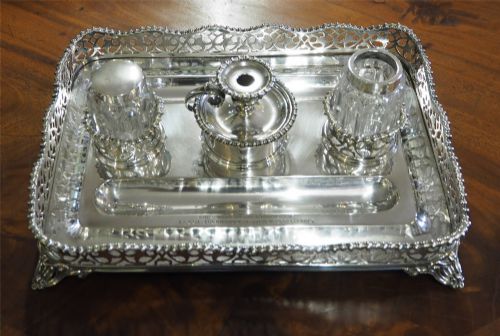
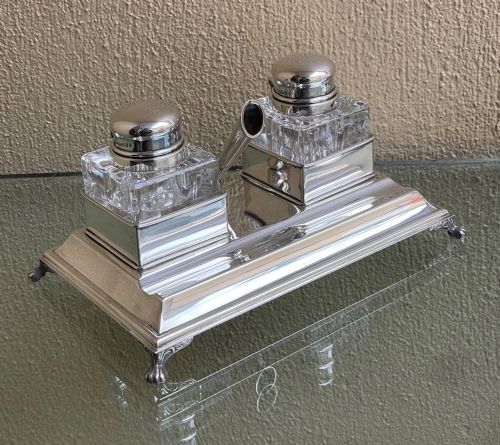
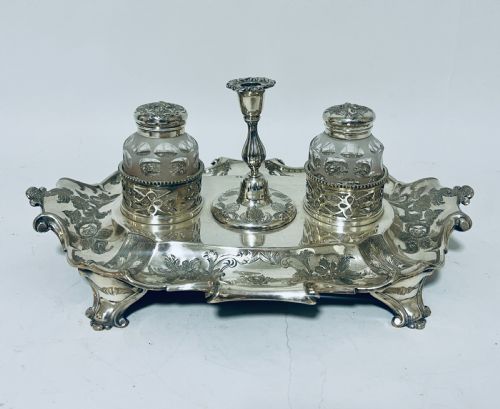
These cut glass inkwell tray pieces are heavy desk accessories that anchor a writing desk with practical weight and gleaming facets.

Cut Glass Inkwell Tray
A cut glass inkwell tray provides a stable base for holding glass ink vessels and pens upon a writing surface. These desk furnishings range from simple wooden trays to elaborate metal and glass assemblies.
The pieces appearing on this page span the Victorian and Regency periods, alongside Edwardian and mid-twentieth century examples. Most specimens combine a tray or stand with fitted inkwells, often incorporating mounts in silver, brass, or plate.
How they were made
Glass sections are heavy-pressed or hand-cut to create deep facets that catch the light. Trays utilise timbers such as oak, coromandel, and mahogany, frequently inlaid with brass or mother of pearl.
Metal components involve sterling silver, silver plate, and brass, shaped by casting and smithing techniques. Mounts and galleries secure the glass inserts firmly within the wooden or metal bases.
Some desk stands include tiny compartments designed specifically for blotting sand and wafer seals.
What varies in quality
The standard of cutting on the glass elements dictates much of the refinement, with crisp edges and heavy blanks marking superior work. Timber selection and the precision of brass inlay further separate standard utility pieces from high-status items.
Makers who incorporated solid silver mounts or intricate cast metal frames achieved greater durability and visual weight. The integration between the tray and its removable ink vessels indicates the original maker's investment of time and skill.
Elkington·Rupert Favell·James Cartland and Sons·W M F·Daniel Holy
The Cut Glass Inkwell Tray Glossary
- Inkstand
- A complete desk accessory comprising a tray, one or more inkwells, and often a pen trough or sander. These pieces sat permanently upon library and study desks.
- Cut glass
- Glass decorated by grinding facets or patterns into the surface using rotating wheels. This technique adds considerable weight and sparkle to ink bottles and trays.
- Coromandel wood
- A dense, heavily figured timber from Asia featuring dark brown stripes, utilised for luxury nineteenth century desk stands. It provides a rich, polished foundation for metal mounts.
- Sheffield plate
- An early form of composite metal made by fusing a thin sheet of silver to a thicker copper base. It appears on eighteenth and nineteenth century desk furnishings.
- Ormolu
- Gilded bronze used for decorative mounts, feet, and galleries on French and English desk stands. The process involves applying a mercury-gold amalgam to cast brass or bronze.
Cut Glass Inkwell Tray: Frequently Asked Questions
What is a cut glass inkwell tray used for?
These trays held glass ink vessels securely upon a desk to prevent tipping during writing. They also provided a convenient resting place for dip pens.
Beyond basic utility, they served as decorative centerpieces for nineteenth century studies and writing tables, displaying the owner's taste.
How do I date a cut glass inkwell tray?
Dating relies upon stylistic cues, material combinations, and any metal hallmarks present on the mounts. Georgian and Regency pieces often feature simpler Sheffield plate or mahogany, while Victorian examples embrace heavier glass cutting and exotic woods.
Silver hallmarks supply exact years and assay offices for pieces containing precious metal. Wooden styles and brass inlay details further align items with specific nineteenth century design movements.
Are the glass bottles usually original to the tray?
Many trays retain their matching cut glass ink bottles, fitted precisely into the wooden or metal recesses. Because glass is fragile, some pieces acquired replacement bottles over time.
Matching the collar size, glass weight, and cut pattern helps determine if the bottles belong to the original stand.
How should I clean a cut glass inkwell tray?
Glass components benefit from warm soapy water and a soft brush to remove old ink residue from deep cuts. Timber and metal mounts require dry dusting and appropriate specialist polishes applied sparingly.
Harsh chemical dips must be avoided on plated and solid silver mounts to preserve the underlying metal and any patination.