

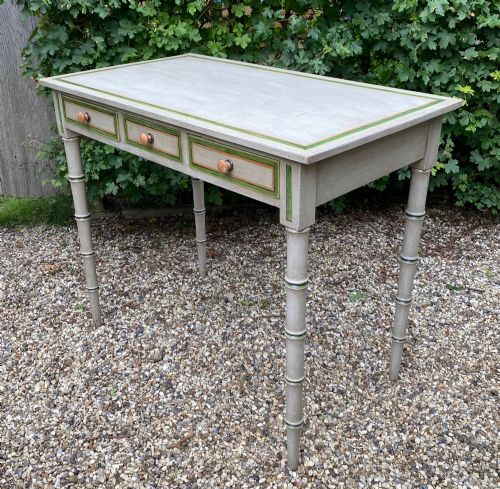
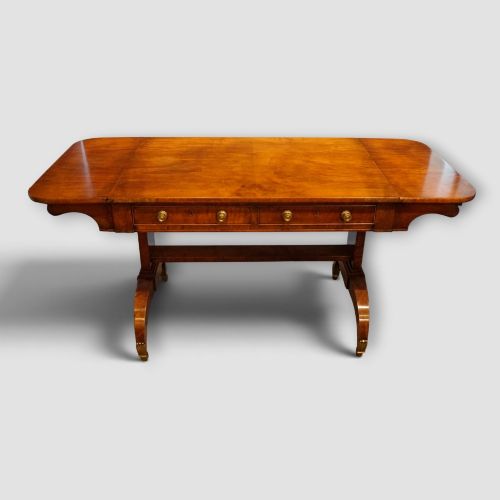
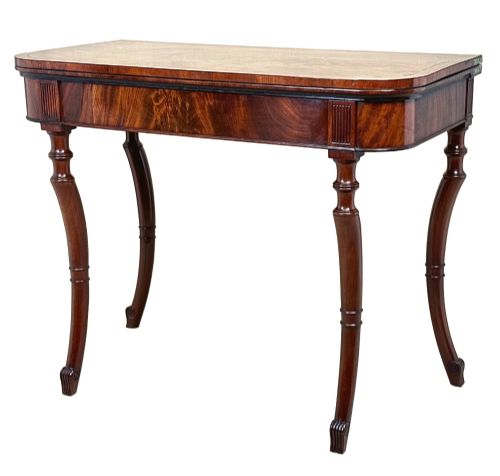
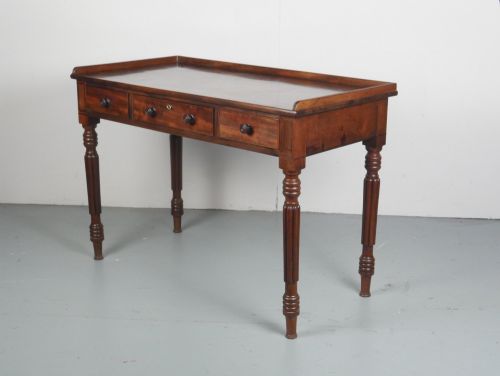
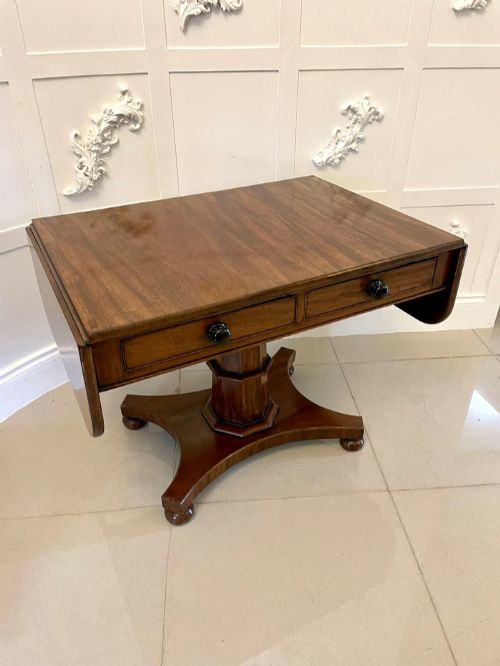
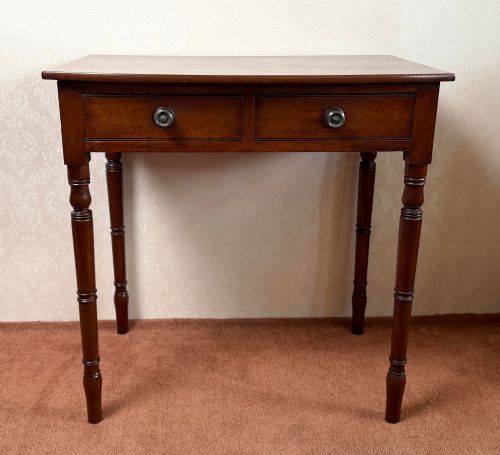
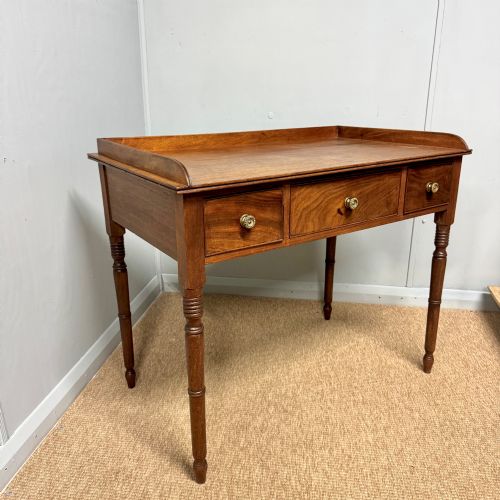
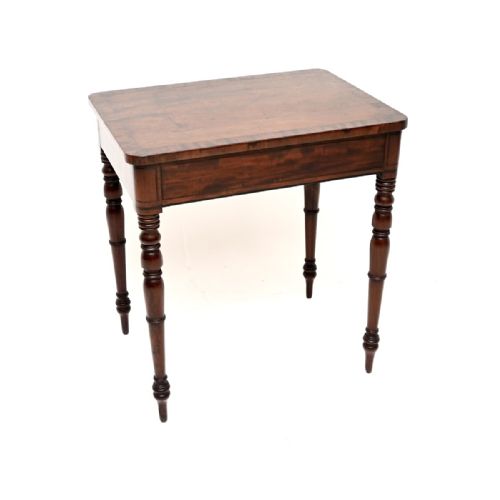


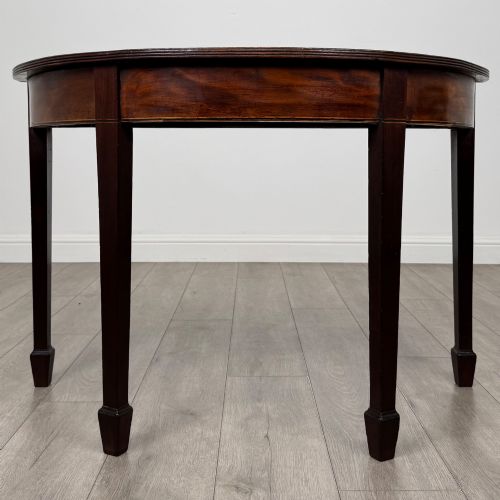

Regency Wooden Console
A regency wooden console brings architectural balance and rich timber grain to a hallway or drawing room.
Regency Wooden Console
A regency wooden console sits flat against a wall, serving as a formal surface for lamps, clocks or decorative objects. While the term invokes the Regency period, listings span several eras including Georgian, William IV and Victorian, alongside later 20th-century interpretations.
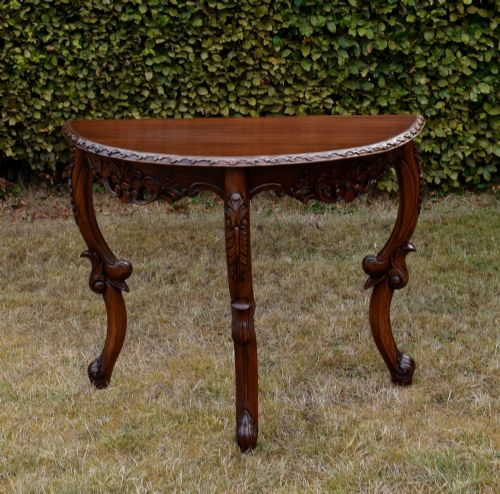
Most examples found here are constructed from mahogany, appearing in various forms such as side tables, sofa tables, and serving tables. These pieces often feature D-shaped or demi-lune tops designed to fit neatly into domestic spaces.
Makers and craftsmen of the 19th century built these tables to anchor large interior walls, employing sturdy timbers that have survived centuries of daily household use.
Materials and Construction Techniques
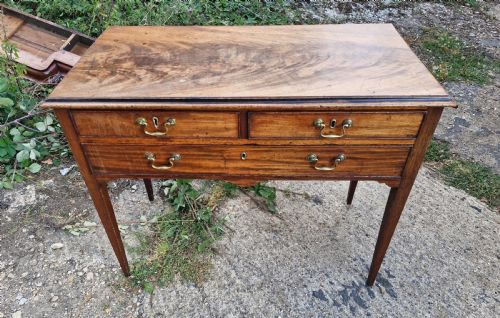
Solid mahogany and flame mahogany veneer provide the primary visual impact across these tables, often enhanced by secondary timbers like pine and boxwood stringing. Cabinetmakers selected figured grain patterns to catch the light on prominent surfaces.
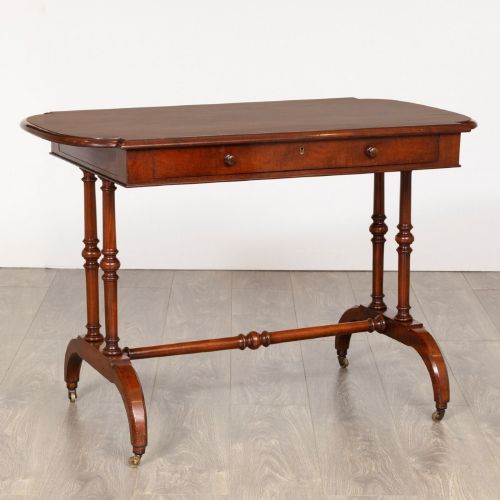
Brass mounts, castors and handles appear frequently as functional and decorative accents on drawers and legs. Joinery relies on traditional methods suited to supporting heavy timber tops without warping.
Regency Wooden Console Retail Price Guide 2026
Typical asking prices for regency wooden console among the pieces listed under this phrase on Sellingantiques today, from the lower quarter to the upper quarter. They describe what is for sale here now, not the wider market.
Listings incorporate mahogany, rosewood, satinwood, and boxwood alongside pine and brass hardware.
Distinctions in Quality and Execution
Superior examples display careful selection of flame mahogany veneer matched symmetrically across the table top, whereas lesser pieces utilise plain timber boards. The depth of colour and the crispness of carved details separate standard production items from master cabinetmaker work.
Original brass hardware and intact secondary woods indicate a higher degree of preservation. Structural integrity in the legs and frame determines how well the console handles weight over time.
James Mein of Kelso
The Regency Wooden Console Glossary
- Demi-lune
- A table with a half-moon shape, designed to stand flat against a wall. This form became popular during the Georgian and Regency periods for smaller rooms.
- Flame mahogany
- A veneer cut from the fork of the mahogany tree, producing a distinctive flickering flame pattern. Cabinetmakers reserved this timber for the most prominent display surfaces.
- Sofa table
- A rectangular occasional table with drop leaves on either side, originally designed to stand in front of a sofa. These pieces typically feature pedestal bases or end supports.
- Washstand
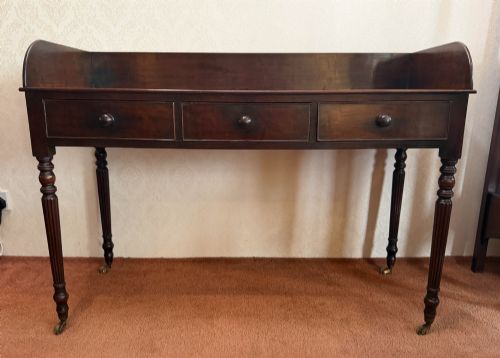
- A utilitarian piece of furniture adapted for washing utensils, often constructed in mahogany or pine during the 19th century.
- Stringing
- A thin inlay of contrasting wood, such as boxwood, used to outline drawers and table edges. This decorative technique defines neoclassical and Regency furniture styles.
Regency Wooden Console: Frequently Asked Questions
Where should I place a console table?
A console table works best against a blank wall in a hallway, landing or living room where it does not obstruct movement. It provides a convenient surface for placing keys, lamps or decorative ceramics.
Because these tables are shallow, they occupy minimal floor space while adding architectural weight to a room. Many historical pieces were designed specifically for such narrow spaces.
What is the difference between a console and a side table?
A console table is traditionally designed to stand flat against a wall, sometimes anchored to it for stability. Side tables are generally freestanding pieces with four legs that can move around a room more easily.
In practice, terms overlap in historical listings depending on the exact proportions and intended use of the furniture.
How do I care for antique mahogany wood?
Protect antique mahogany from direct sunlight and sudden changes in temperature to prevent the timber from drying out or splitting. Dust regularly with a soft, dry cloth rather than using modern aerosol polishes.
Applying a traditional beeswax occasionally helps nourish the grain and maintain the natural lustre of the polished surface.
Can I use a console table as a desk?
Some console tables feature drawers and adequate knee clearance, making them suitable for occasional writing or laptop use. However, dedicated writing tables and desks are built with different ergonomic heights in mind.
Check the internal drawer depth and overall height before using a console for daily desk work.