

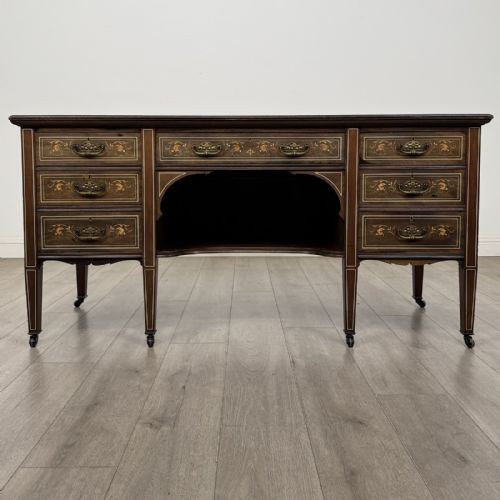
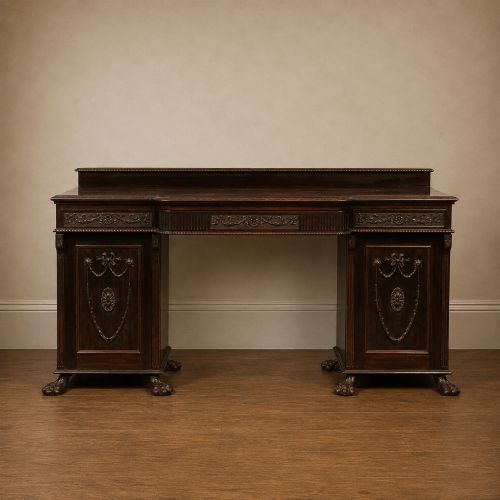
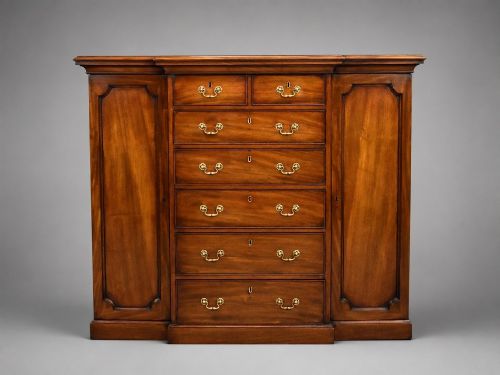
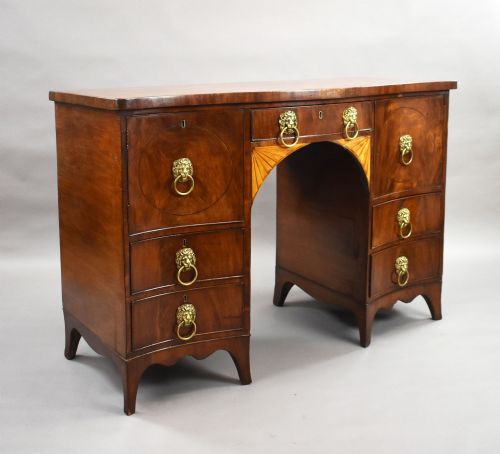
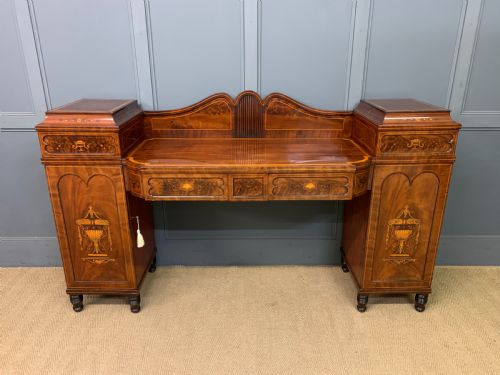


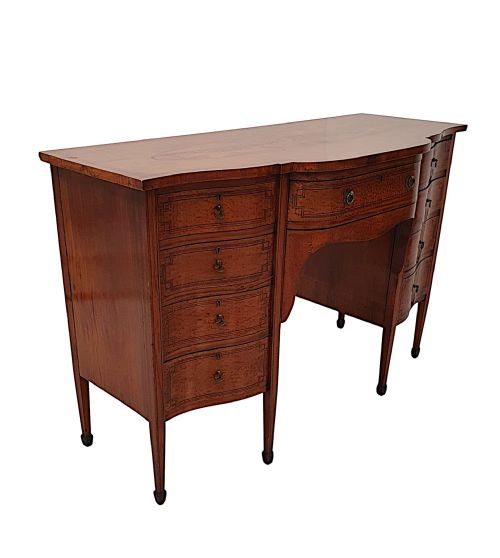


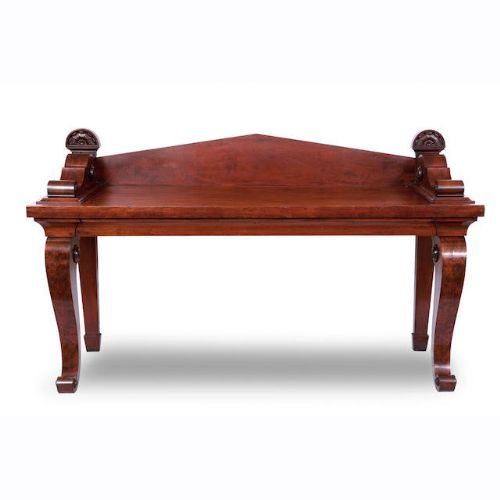
Pedestal Style Server Table
These pedestal style server table pieces are substantial serving tables and sideboards crafted for dining rooms across multiple centuries.
Pedestal Style Server Table
When you examine a pedestal style server table on this page, you encounter sturdy dining room furniture designed to hold food and silver during meals. The selections span from the George III and Regency periods through the Victorian, Edwardian, and Art Deco eras.
You will most frequently meet mahogany examples, often featuring inlaid details in satinwood or boxwood. Sideboards, sideboards and buffets, and serving tables make up the core forms available here.
The pieces encompass original antiques and later revival styles, including Georgian Revival, Regency Revival, and Adam Revival. Makers and workshops such as Gillows, Epstein, James Mein of Kelso, and Holland and Sons appear in the historical and current record.
How they were made
Cabinet makers utilised solid mahogany and applied flame mahogany veneer or burr walnut veneer across the surfaces of these servers. Contrasting woods like satinwood and boxwood provide delicate stringing and inlay work.
Metal elements such as brass appear on mounts and hardware, while glass components occasionally feature in related cabinets. Structural joinery and decorative carving define the pedestals, paw feet, and bow front or serpentine shapes.
Pedestal Style Server Table Retail Price Guide 2026
Typical asking prices for pedestal style server table among the pieces listed under this phrase on Sellingantiques today, from the lower quarter to the upper quarter. They describe what is for sale here now, not the wider market.
Design revivals recorded on this page include Georgian, Regency, and Adam Revival interpretations.
What varies in quality
The distinction between standard and superior pieces rests on the choice of timber and the precision of the cabinet work. Highly figured flame mahogany or burr walnut veneers combined with intricate boxwood and satinwood inlay elevate a piece significantly.
Proportion and decorative restraint dictate the visual success of the server. Pieces attributed to notable makers or constructed with well-executed pedestal supports demonstrate superior execution.
Gillows·Epstein·James Mein of Kelso·Holland and Sons
The Pedestal Style Server Table Glossary
- Pedestal sideboard
- A large dining room furnishing featuring central storage flanked by distinct pedestal cupboards or columns. These units provide substantial surface space for serving dishes.
- Flame mahogany
- A distinct timber cut that produces a fiery, swirling grain pattern across the wood surface. Cabinet makers select this veneer for its striking visual impact on drawer fronts and doors.
- Serpentine front
- A furniture facade featuring a gentle, undulating curve that sweeps inward and outward. This shaping requires expert carpentry to execute smoothly.
- Breakfront
- A cabinet design where the central section projects forward from the flanking wings. This architectural arrangement creates depth and shadow on large sideboards.
- Inlay
- A decorative technique where contrasting woods or materials are set flush into the primary surface. Boxwood and satinwood frequently serve this purpose on mahogany frames.
Pedestal Style Server Table: Frequently Asked Questions
What is a pedestal style server table?
A pedestal style server table is a large dining room furnishing designed for food service and storage. They typically feature heavy pedestal ends supporting a long serving surface.
These pieces emerged strongly during the Georgian and Regency periods and continued through the Victorian and Edwardian eras. They function as both practical servers and decorative centrepieces in formal dining spaces.
How do I date a mahogany sideboard?
Dating relies on observing the stylistic markers, wood choices, and construction methods used in the piece. Georgian and Regency pieces display clean classical lines, whereas Victorian examples often feature heavier proportions and rich veneers.
Revival pieces from the Edwardian period or later adopt earlier Georgian or Regency aesthetics. Checking for secondary woods and traditional joinery helps confirm the era of manufacture.
Where were these servers used?
These servers belong primarily in the dining room or reception hall of large homes. Servants utilised the surface space to plate dishes and store silverware during large meals.
Today, buyers place them in modern dining rooms or spacious hallways for both display and storage. Their large surfaces accommodate lamps, decorative items, and serving platters with ease.
What is burr walnut?
Burr walnut is a specialised wood cut taken from the growth deformity on a walnut tree. This section yields a swirling, highly textured grain pattern prized by elite cabinet makers.
Pieces utilising burr walnut veneer, such as those from the Art Deco period, possess a distinctive mottled appearance. This material marks the piece out as a more decorative and luxurious item.