


Regency Wooden Canterbury
A regency wooden canterbury is a practical piece designed to hold folios and newspapers neatly beside a chair.
Regency Wooden Canterbury
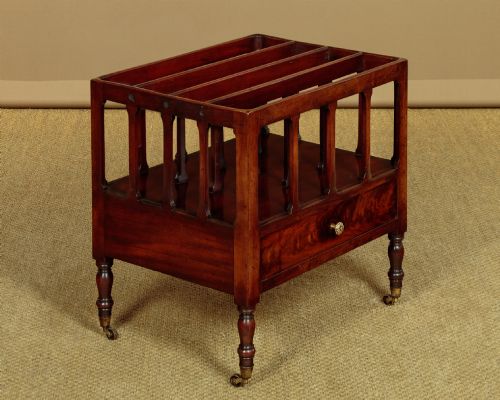
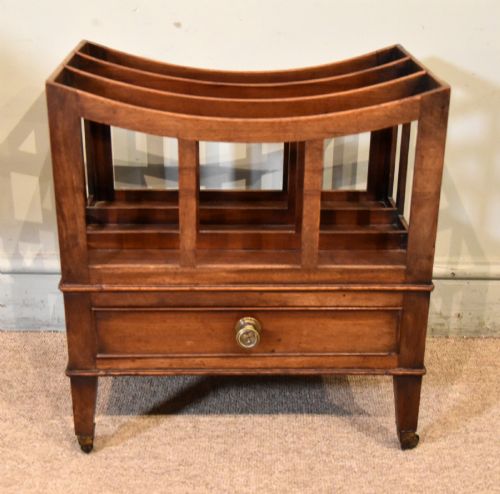
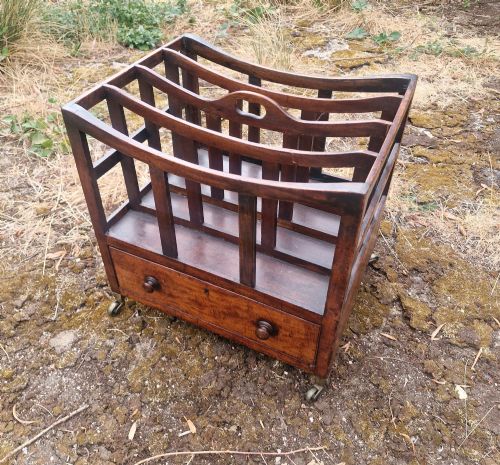
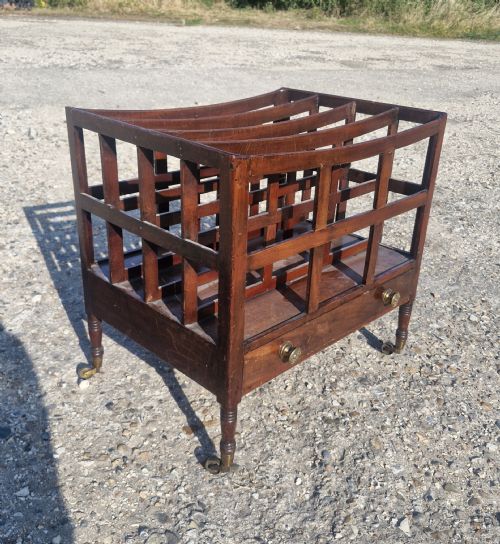
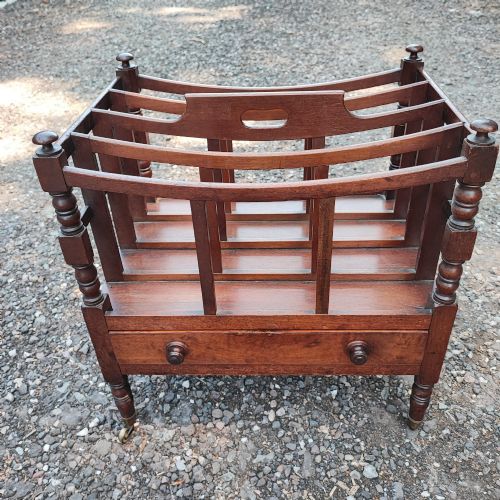
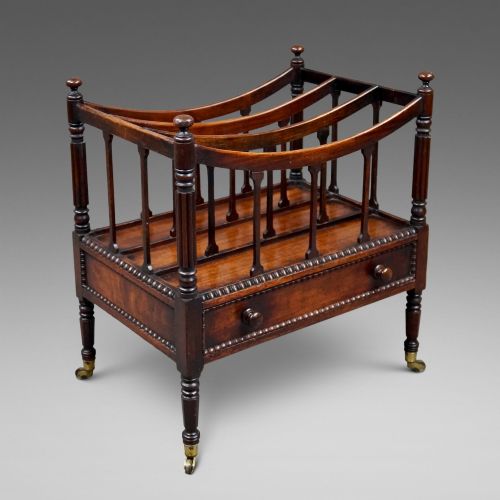
A regency wooden canterbury is a freestanding rack with divisions for sheet music, newspapers, and periodicals, developed during the late Georgian era. These items sit on low supports, frequently fitted with castors to move easily across carpets in a parlour or library.
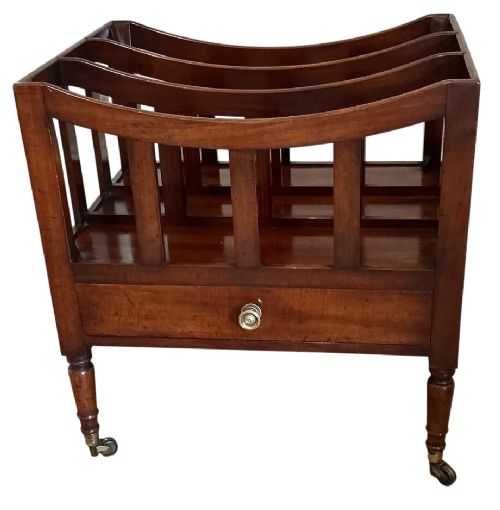
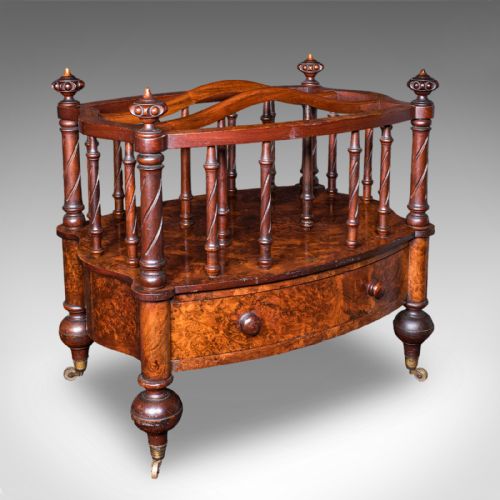
Most examples found in this selection date from the nineteenth century, spanning the Regency, George IV, and William IV periods. Mahogany and rosewood dominate the construction, often shaped with boat-shaped compartments or integrated drawers below the rack.
The form combines slatted or railed partitions with a low drawer and sturdy corner posts. Variations range from plain country house editions to refined pieces with ebony banding and turned supports.
Defining Quality
The refinement of the timber selection separates standard pieces from exceptional ones. Finer items utilise figured mahogany or dense rosewood with meticulous grain matching across the divisions and drawer fronts.
Carving detail on the upright supports and the integration of functional drawers add distinction to superior examples. Solid brass fittings and precise turning on the legs indicate higher workshop standards.
Archbishops and musical furniture shared a strange bond when the first stand supposedly took inspiration from Canterbury.
Gillows of Lancaster
The Regency Wooden Canterbury Glossary
- Canterbury
- A low stand with partitioned sections designed to hold sheet music, books, and periodicals. The name supposedly derives from an archbishop who requested such a stand.
- Folio stand
- A large rack intended for holding oversized prints, maps, or bound volumes. These share a similar slatted construction to standard music racks.
- Ebony banding
- A narrow inlay of dark wood used to frame panels and tabletops. This technique provides a sharp visual contrast against lighter mahogany surfaces.
- Castor
- A small wheel fitted to the base of furniture legs. They allow heavy wooden stands to be repositioned across rooms with minimal effort.
Regency Wooden Canterbury: Frequently Asked Questions
What was a regency wooden canterbury used for?
These stands served as tidy storage for sheet music, newspapers, and unbound volumes near a piano or seating area. They kept reading materials organised and accessible in domestic rooms.
Families utilised them daily in drawing rooms and libraries, preventing papers from cluttering tabletops.
How do I tell a Regency piece from a later copy?
Examine the timber quality, construction methods, and secondary woods used inside any drawers. Period pieces show appropriate hand-cut joints and genuine patina accumulated over generations of use.
Hardware such as brass castors should match the manufacturing era of the main frame.
Where should I place this in my home?
They fit naturally beside a sofa, armchair, or desk where periodicals and books accumulate. Their open partitions keep reading matter visible and close to hand.
Avoid positioning them directly next to heat sources that might dry out nineteenth-century timber.
Did all these stands feature drawers?
Many examples include a single shallow drawer beneath the partitions for small items like bookmarks or writing tools. Others consist entirely of the open slatted rack.
Both formats were common during the period, depending on the specific room requirements.