



Regency Wine Table 1820
A regency wine table 1820 is a compact occasional piece designed for fluid daily movement and poised drinks.
Regency Wine Table 1820
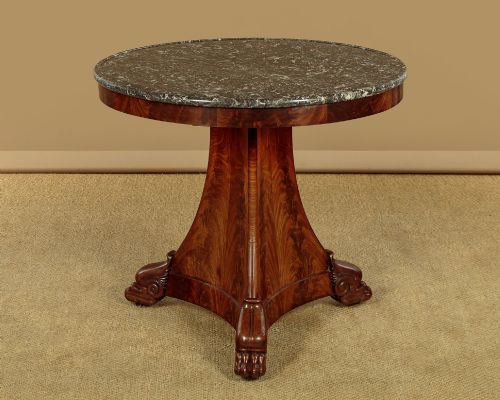
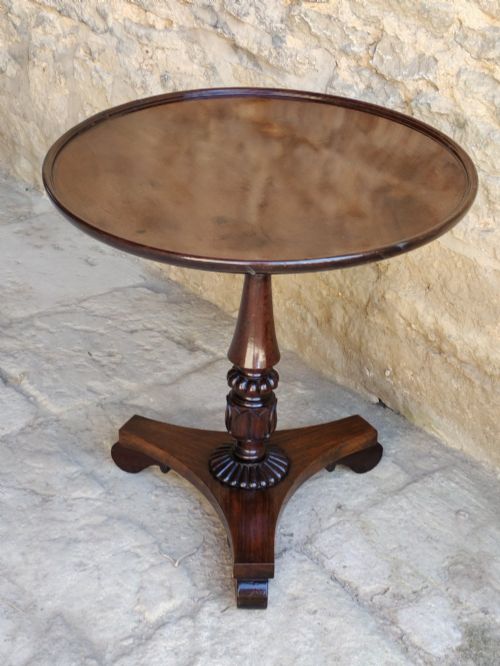
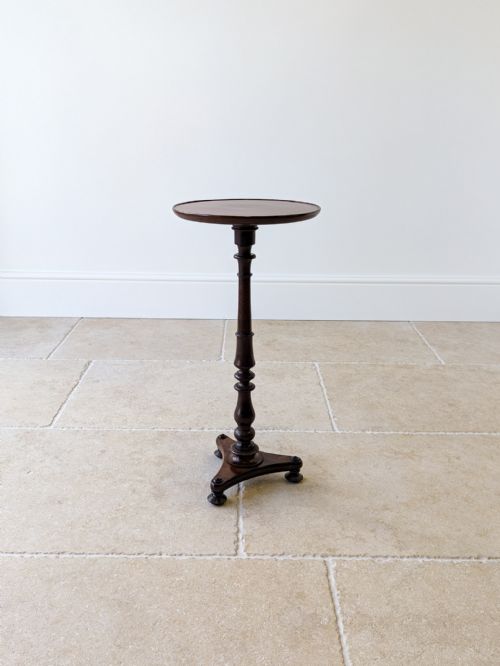
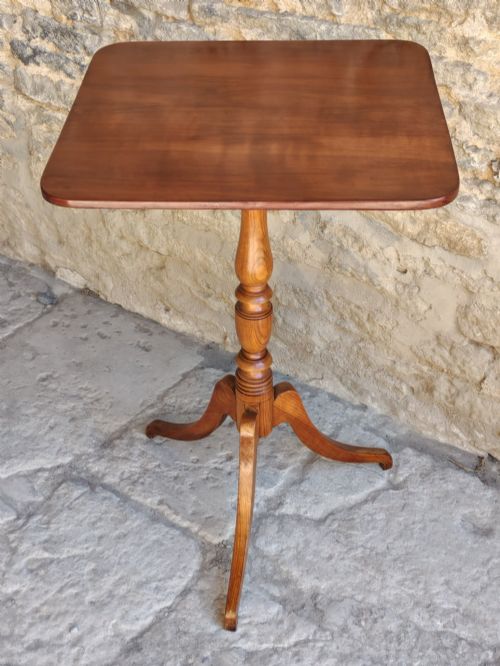
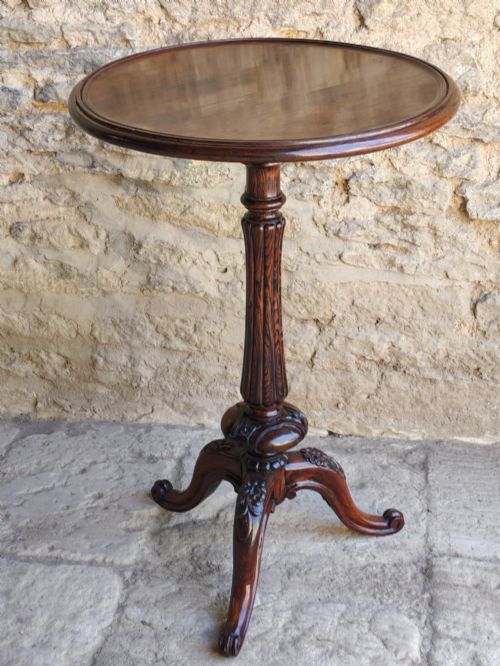
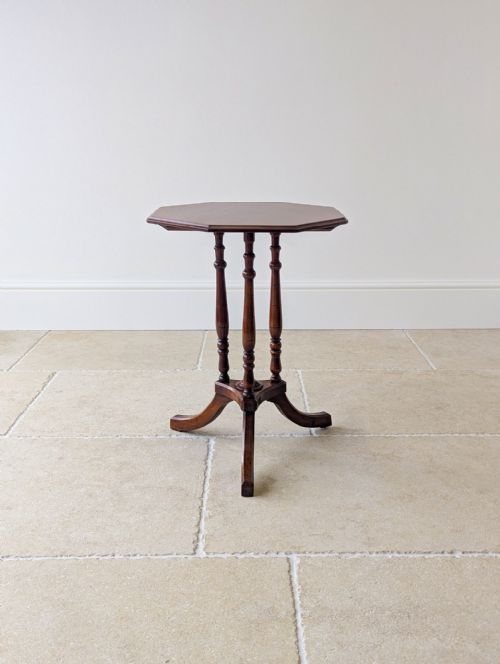
When you search for a regency wine table 1820, you encounter versatile tripod and pedestal designs that served domestic social rituals in Georgian and Regency interiors. These agile forms functioned as side tables, lamp stands, and intimate serving surfaces across polite rooms.
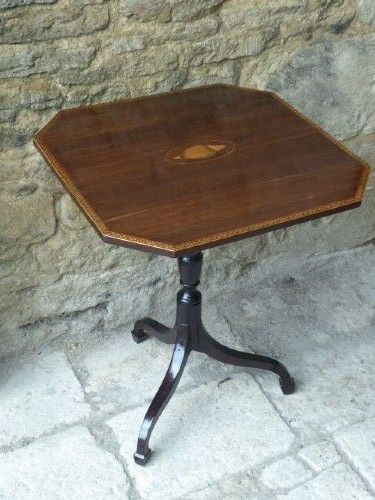
The examples gathered here span the Regency and Georgian eras, alongside broader nineteenth-century designations. Most pieces take the form of small occasional, side, or wine tables intended for flexible placement beside seating.
Makers of the period produced circular dishtop, octagonal, and tilt-top formats that could be stashed against a wall when not in use. Solid timbers and figured veneers define the dominant structural types found within this specific group.
How they were made
Cabinetmakers constructed these tables using dense timbers such as mahogany, rosewood, and yew wood, often enhanced with contrasting wood inlay or satinwood and burr oak highlights. Flame veneer and ebonised timber also appear on select surfaces, showing careful selection of grain patterns.
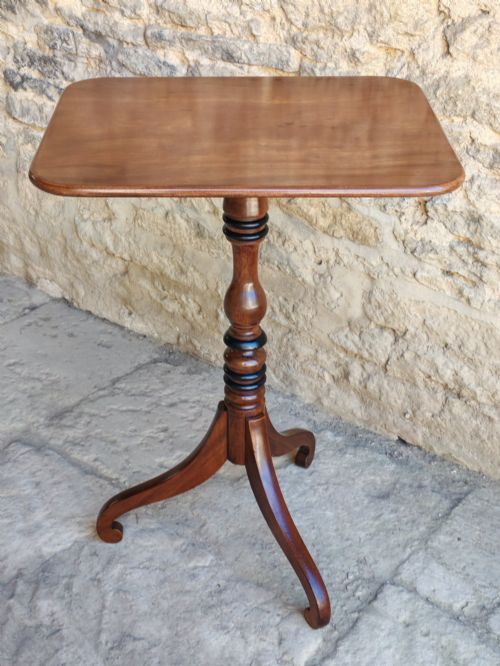
Many specimens utilise a clever tipping or snap-top mechanism supported on a central pillar and a tripod base fitted with brass details. This folding mechanism allowed the top to tilt vertically for storage.
Secondary woods provide the core structure beneath fine face veneers, while turned pedestals distribute weight evenly down to three splayed legs.
Regency Wine Table 1820 Retail Price Guide 2026
Typical asking prices for regency wine table 1820 among the pieces listed under this phrase on Sellingantiques today, from the lower quarter to the upper quarter. They describe what is for sale here now, not the wider market.
Many a nineteenth-century wine table has survived countless dinner parties only to spend its retirement holding a television remote.
What varies in quality
The choice of timber grain fundamentally dictates the visual impact of a piece, with richly figured flame mahogany and solid rosewood marking out superior workshop output. Simpler fruitwood or mixed secondary constructions occupy a more utilitarian tier.
The precision of the tilt-top mechanism and the stability of the central tripod pillar reveal the original maker's skill. Robust joinery ensures the top remains level without excessive wobble when deployed.
Gillows
The Regency Wine Table 1820 Glossary
- Gueridon
- A small ornamental stand or table, usually circular and supported by a central column or figures.
- Tripod base
- A three-legged support structure beneath the central pillar, common on small occasional tables.
- Tilt top
- A hinged tabletop mechanism allowing the surface to swivel vertically for compact storage against a wall.
- Dishtop
- A raised, concave rim carved directly into the solid timber edge of a table to prevent items from sliding.
- Flame mahogany
- A richly figured wood veneer showing a distinct feather-like flame pattern derived from specific branch junctions.
Regency Wine Table 1820: Frequently Asked Questions
What is a regency wine table 1820 used for?
These compact tables were originally designed to hold glasses and decanters beside seating during evening gatherings. Today they function flexibly as lamp tables or bedside stands in smaller spaces.
Their lightweight construction makes them easy to move from room to room as daily needs require.
What woods were used in 1820?
Cabinetmakers relied heavily on imported mahogany and rosewood, alongside native timbers like yew wood and fruitwood. Inlays of satinwood and burr oak added decorative contrast.
Selection depended on the desired formality and the workshop's access to materials.
Where should I place a lamp table?
These small tables fit comfortably beside sofas, armchairs, or in narrow hallway corners where larger furniture will not fit. Their slender tripod bases provide adequate stability while taking up minimal floor space.
Keep them away from direct heat sources to protect historic veneers.