
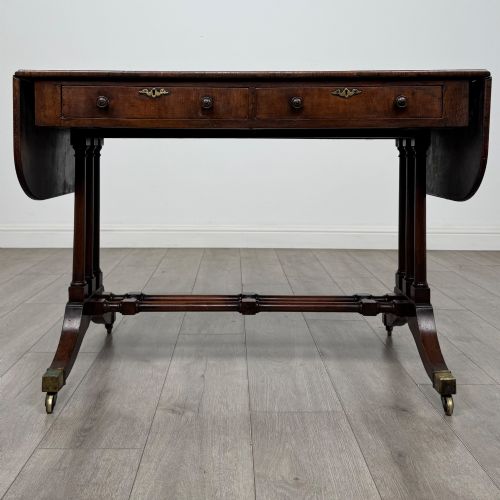
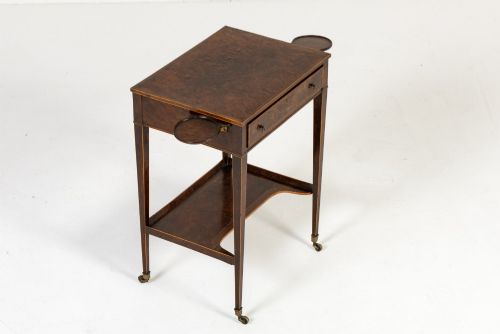
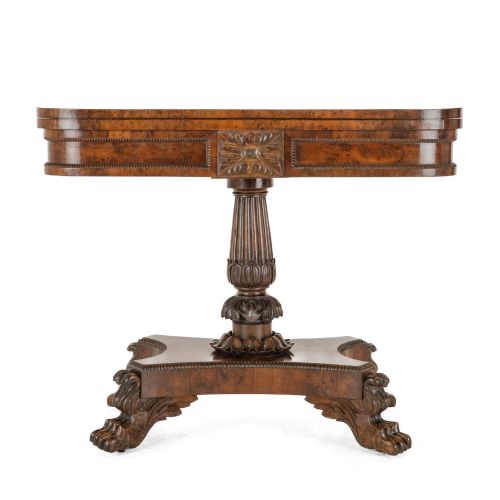

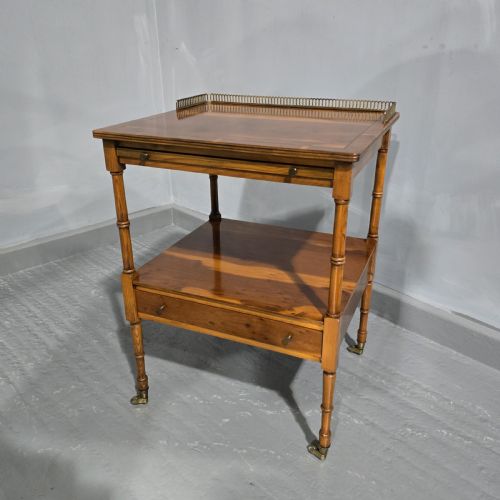
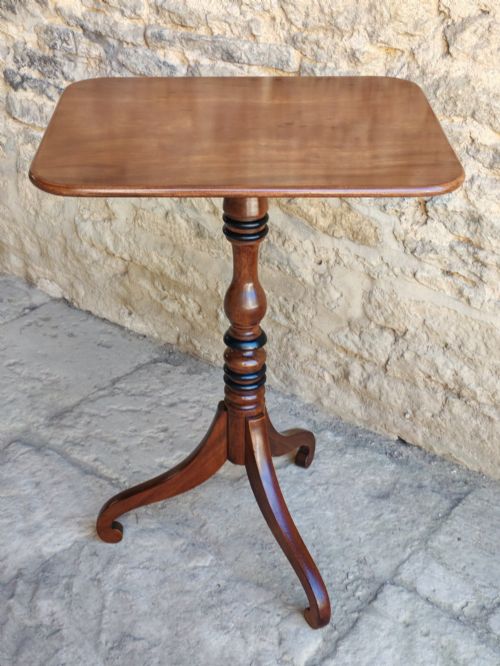


Regency Yew Wood Table
A regency yew wood table brings together rich native timber and refined period design, offering a warm centrepiece for a traditional room.
Regency Yew Wood Table
A regency yew wood table encompasses a variety of compact and freestanding furniture forms originating primarily from the early nineteenth century and later revivals. When you search for a regency yew wood table, you encounter practical surfaces such as occasional, side, writing, and card tables alongside tripod stands.
The timber itself defines the character of these pieces, often featuring rich grain patterns and warm honey tones. Many examples combine yew and burr yew with contrasting woods like mahogany or satinwood.
While genuine period pieces date from the Regency and Georgian eras, the selection also includes later nineteenth-century interpretations and twentieth-century revival pieces. Side tables and tripod occasional tables appear most frequently in this selection.
How they were made
Cabinet makers utilised solid yew and decorative burr yew veneer applied over secondary timbers such as mahogany or pine. This technique highlighted the intricate, swirling grain of the wood on table tops and drawer fronts.
Inlay and contrasting banding using ebony, boxwood, or satinwood frequently bordered the primary yew surfaces. Turned pedestals, tripod legs, and brass castors completed the construction of these versatile domestic tables.
A solitary teapoy waits quietly among the tables, still harbouring memories of imported tea leaves and bygone parlour gossip.
What varies in quality
The choice of timber grain fundamentally dictates the distinction between standard examples and superior pieces. Highly figured burr yew displays depth and complexity that plain planking lacks.
Construction methods and secondary details like crossbanding, brass fittings, and fine turning separate utilitarian items from pieces designed for principal rooms.
The Regency Yew Wood Table Glossary
- Burr yew
- A growth deformity in the yew tree that yields highly patterned, swirling timber veneers prized by cabinet makers. This material creates dramatic visual movement on table tops.
- Crossbanding
- A decorative border of veneer laid around the edge of a table top with the grain running perpendicular to the central panel. It frames the primary wood.
- Tripod table
- A small freestanding table supported by a central pillar resting on three legs. These versatile tables date heavily from the Georgian and Regency periods.
- Card table
- A folding table designed for gaming, featuring a hinged top that opens to reveal a baize-lined surface. Many examples from this era utilise yew and burr yew veneers.
- Teapoy
- A small box or chest mounted on a pillar and base, designed to hold tea canisters. Some Regency variations incorporate yew wood and serve as small occasional pieces.
Regency Yew Wood Table: Frequently Asked Questions
Are all these tables from the Regency period?
The selection includes genuine Regency and Georgian pieces alongside later nineteenth-century examples and twentieth-century revivals. The dates span from around eighteen hundred through to nineteen thirty.
Examining the construction methods, timber choice, and secondary woods helps determine whether a piece originates from the primary period or a later revival.
What is burr yew?
Burr yew comes from a wart-like growth on the yew tree filled with clustered bud formations. It produces a dense, swirling pattern full of movement and rich colour.
Cabinet makers used this timber sparingly as a veneer on prominent surfaces like table tops and drawer fronts to catch the eye.
How were these tables used originally?
Different forms served distinct domestic functions in the home. Card tables provided evening entertainment, writing tables accommodated correspondence, and occasional tables held lamps or decorative items.
Smaller tripod and torchere stands offered portable surfaces that could move easily around a drawing room or parlour.
Can I use a yew wood table daily?
These tables adapt well to modern interiors as side surfaces, lamp tables, or writing desks. Their warm timber tones integrate easily with various decorating styles.
Using coasters and placing them away from direct heat sources protects the historic polish and delicate veneer work during everyday use.