



Regency Wine Decanter
These regency wine decanter pieces bring the heavy cut crystal and rich timbers of the early nineteenth century straight to the dining table.
Regency Wine Decanter
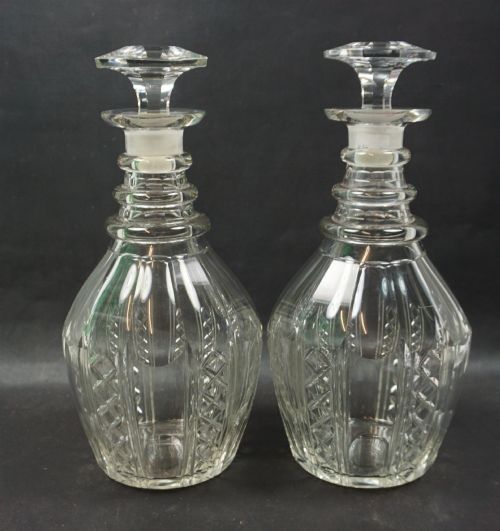
When you search for a regency wine decanter, you enter a world of heavy crystal vessels, gleaming silver coasters, and polished mahogany cellarettes designed to serve wine in style. The pieces here span the Georgian and Regency periods, stretching from eighteen hundred to eighteen thirty, covering everything from ship's decanters to silver-plated bottle stands.
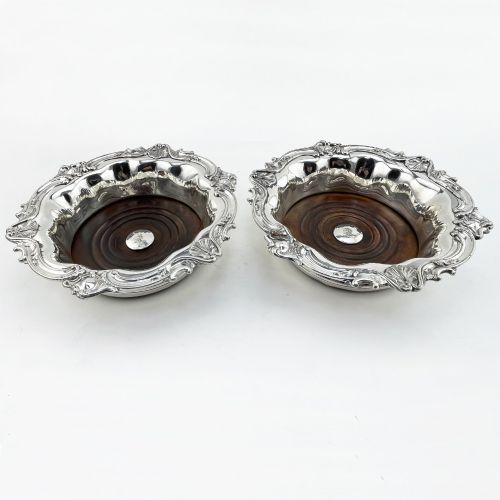
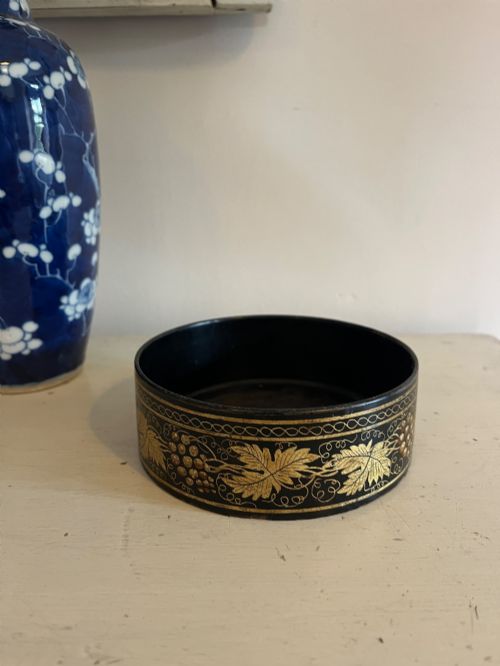
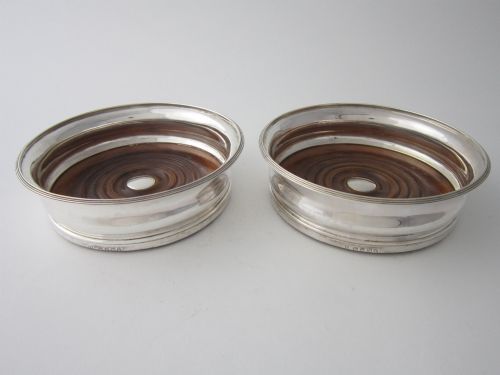
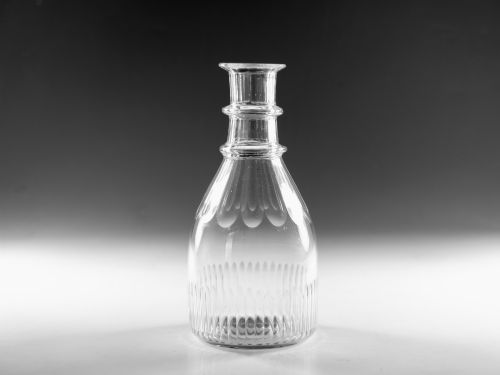
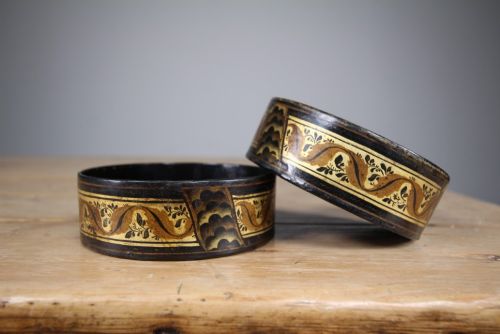
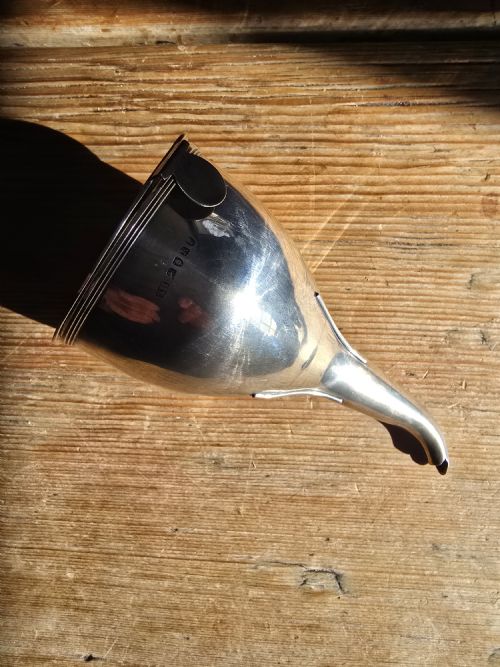
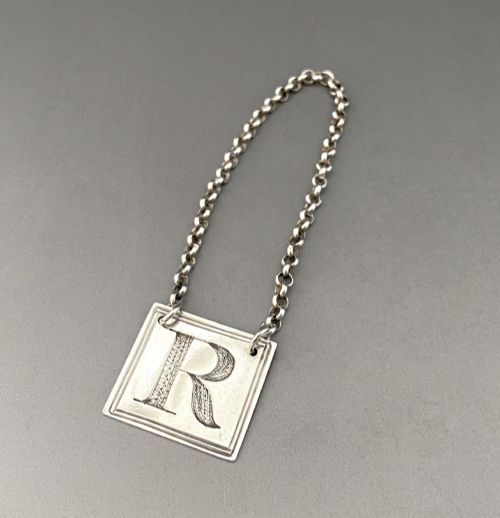
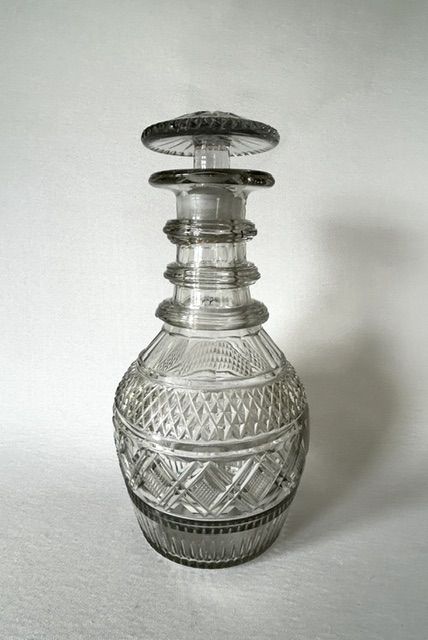
The most common finds on this page are cut glass decanters featuring distinctive three-ring necks and pillar cutting, often accompanied by matching pairs of coasters in Old Sheffield plate, mahogany, or black papier-mâché. You will also discover associated barware such as silver wine funnels, toddy lifters, and engraved labels that complete the formal table setting.
Originating mostly from English workshops, these items reflect a period of exceptional craftsmanship in both glass and metalwork. Whether you encounter a low, stable ship's decanter meant for life at sea or a grand pedestal cellarette, each object served the single purpose of holding and pouring fine wine.
How they were made
Glassware from this era relies on lead crystal, blown into moulds or free-blown before receiving deep facet, pillar, or prism cutting by hand. The resulting weight and sharp refractive qualities separate these pieces from later, lighter production.
Metal items utilise Old Sheffield plate, fusing a thin layer of sterling silver to a copper base, or employ solid sterling silver marked with London hallmarks. Wooden items like coasters and cellarettes employ dense timbers such as mahogany and rosewood, sometimes accented with carved details or papier-mâché construction.
Regency Wine Decanter Retail Price Guide 2026
Typical asking prices for regency wine decanter among the pieces listed under this phrase on Sellingantiques today, from the lower quarter to the upper quarter. They describe what is for sale here now, not the wider market.
Ship's decanters were built wide at the base so guests could enjoy a glass without chasing rolling wine across the cabin floor.
What varies in quality
The distinction between ordinary and exceptional glass lies in the crispness of the cutting and the clarity of the metal, where sharper facets catch the candlelight with greater brilliance. In silver plate and coasters, the integrity of the base metal underneath and the depth of the applied borders dictate the overall standard.
Proportion and weight also govern value, as heavier crystal bodies and substantial timber turnings demonstrate superior original cost and ambition. Items retaining matching sets, original stoppers, or clear silversmith marks naturally hold greater interest for collectors.
Solomon Hougham·Matthew Boulton·James Mein of Kelso·John and Thomas Settle
The Regency Wine Decanter Glossary
- Decanter
- A vessel used for holding and serving wine, typically fitted with a ground-glass stopper. Regency examples often feature three rings around the neck for a secure grip.
- Old Sheffield Plate
- An early method of fusing silver sheet to a copper core, producing durable metalware before electroplating was invented. Edges often reveal thin lines of exposed copper.
- Cellarette
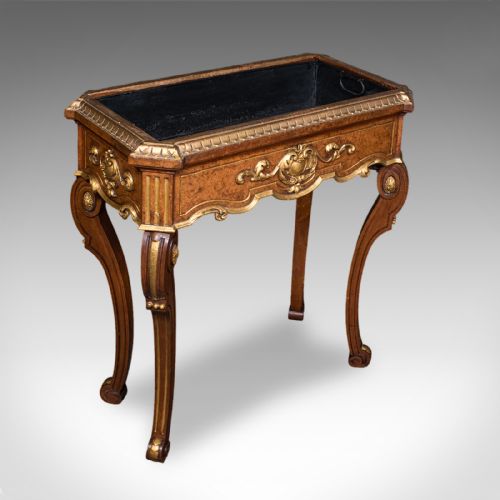
- A lockable cabinet or standalone container used to store bottles of wine near the dining table. They frequently incorporate fitted wooden interiors to protect the glass.
- Toddy Lifter
- A small glass implement shaped like a pipette, used to transfer hot punch or toddy from a communal bowl into individual glasses. Users seal the top hole with a finger to hold the liquid.
- Ship's Decanter
- A decanter with a wide, heavy base and sloping sides designed to prevent tipping aboard a rolling vessel. Their low centre of gravity made them equally useful on dining tables.
Regency Wine Decanter: Frequently Asked Questions
What is a ship's decanter?
A ship's decanter is a specialised wine bottle with a broad, conical base that keeps it stable on rolling tables. The wide footprint prevents spills during dining or transit.
These pieces feature heavy glass walls and stepped necks, combining practical utility with the brilliant cut patterns typical of the early nineteenth century.
What is Old Sheffield plate?
Old Sheffield plate is a composite material made by fusing a sheet of silver to a copper ingot through heat and pressure. This technique predates modern electroplating and produces a rich, warm lustre.
Close inspection of edges or wear points may reveal the underlying copper core, which confirms the traditional manufacturing method used during the Georgian era.
How were wine coasters used?
Wine coasters were placed on the dining table to hold bottles and prevent rings on polished mahogany surfaces. Guests would slide the coasters around the table after the servants withdrew.
These stands often feature felt or green baize on the bottom and incorporate wooden, silver, or papier-mâché bodies designed to match the dining room's decor.