
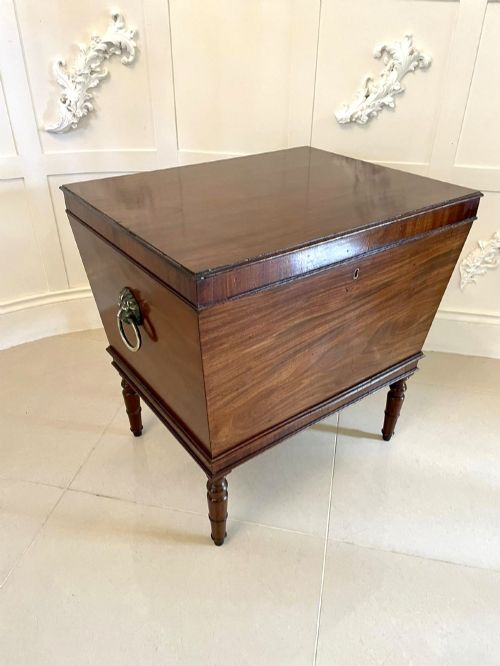
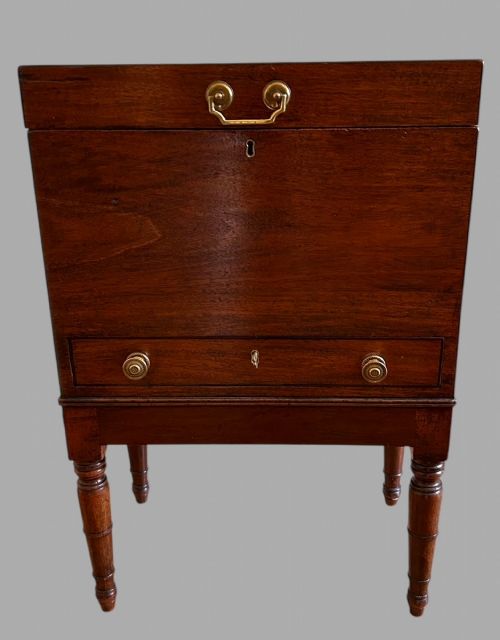


Regency Wine Cooler on Legs
A regency wine cooler on legs brings stately proportion and practical elegance to a room, holding bottles with timeless ceremony.
Regency Wine Cooler on Legs
A regency wine cooler on legs sits among the most striking drinking furniture of the early nineteenth century, combining architectural presence with utility. When searching for a regency wine cooler on legs, collectors generally encounter cellarettes and wine coolers spanning the Regency and Georgian eras.
Most examples on this page date from the Regency and wider nineteenth century, with occasional pieces stretching back to the eighteenth century or forward to the nineteen-twenties. The forms range from compact box cellarettes to grand sarcophagus shapes, often elevated on sturdy stands or legs.
Makers designed these vessels to chill wine or hold bottles safely in dining rooms, utilising rich timbers suited to formal interiors. The assortment includes distinct variations in height and mounting, though solid mahogany remains the prevailing choice across the selection.
How they were made
Cabinet makers constructed these pieces primarily from solid mahogany and flame mahogany, often selecting timber with deep grain patterns to catch the light. Interior linings frequently incorporate zinc to hold ice and water without damaging the surrounding woodwork.
Brass and ormolu mounts provide structural reinforcement and decorative contrast against the dark timber. Joinery relies on traditional box and carcase construction, paired with fitted legs or stands designed to bear the weight of bottles and ice.
Some nineteenth-century makers lined these wooden boxes in zinc so they could double as indoor planters when the wine ran dry.
What varies in quality
Quality rests in the choice of timber and the precision of the cabinet work, particularly in how flame mahogany veneers are matched across the lid and sides. Superior examples display crisp detailing in their brass or ormolu mounts and retain original interior linings.
Proportion and stance dictate the visual success of the piece, separating standard workshop production from finer cabinet work. The integration of the stand with the main body reveals the maker's hand, where balanced lines elevate a utilitarian object into high furniture.
Gillows of Lancaster and London
The Regency Wine Cooler on Legs Glossary
- Cellarette
- A lockable container used for storing and cooling wine bottles in the dining room. These vessels stood beneath sideboards or on their own dedicated legs during meals.
- Sarcophagus shape
- A distinctive tapered form resembling an ancient stone coffin, popular for large wine coolers during the Regency period. This profile maximised internal capacity while maintaining a classic silhouette.
- Ormolu
- Gilt bronze decoration applied to furniture to accent corners, handles, and panels. The technique involves coating bronze in gold amalgam to create a bright, durable finish.
- Flame mahogany
- A highly figured cut of mahogany timber showing rippled, flame-like patterns. Cabinet makers reserved this wood for prominent exterior surfaces like lids and drawer fronts.
Regency Wine Cooler on Legs: Frequently Asked Questions
How were these coolers used?
Servants filled the internal compartments with ice or cold water to keep wine chilled before serving to guests at the dining table. The lockable lids kept valuable vintages secure between meals.
They stood conveniently near the dining table or sideboard for easy access by the host.
How do I date a wine cooler?
Dating relies on examining the timber, construction methods, and prevailing decorative styles such as Regency or Georgian. Brass mounts, leg designs, and overall proportions provide further clues to the period.
Earlier pieces often show hand-cut joinery and simpler brasswork, while later revivals adopt different manufacturing traits.
How do I live with a cellarette?
A cellarette works well as a striking side table, a container for magazines, or a display piece in a living room or study. Its rich mahogany tones pair easily with traditional and modern interiors alike.
Care involves keeping the wood polished and avoiding placement near direct heat sources that might dry the timber.