

Regency Vanity Table
A regency vanity table brings architectural proportion and rich timber to the bedroom, offering neat drawers and adjustable glass for morning routines.
Regency Vanity Table
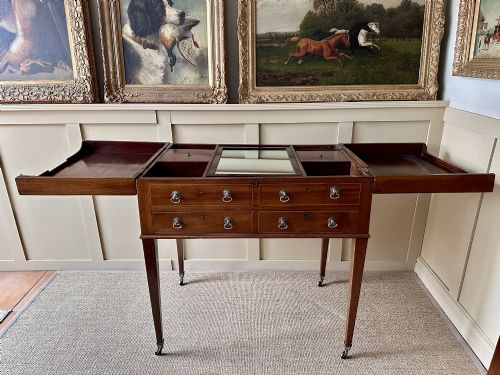
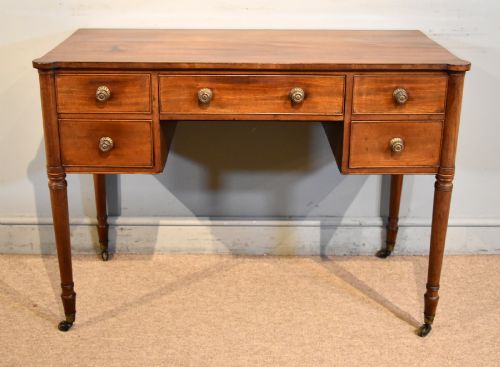
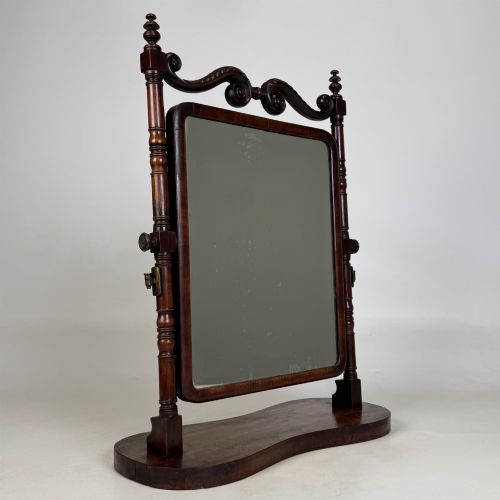
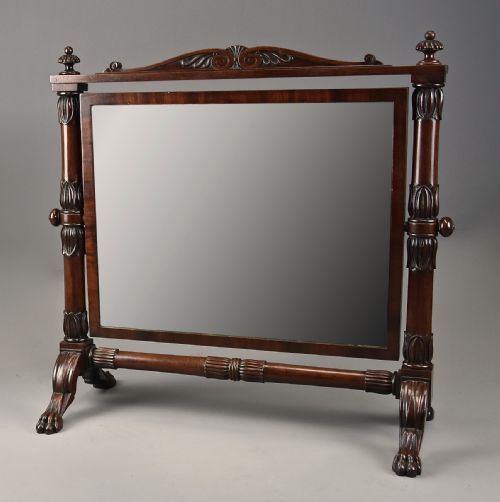
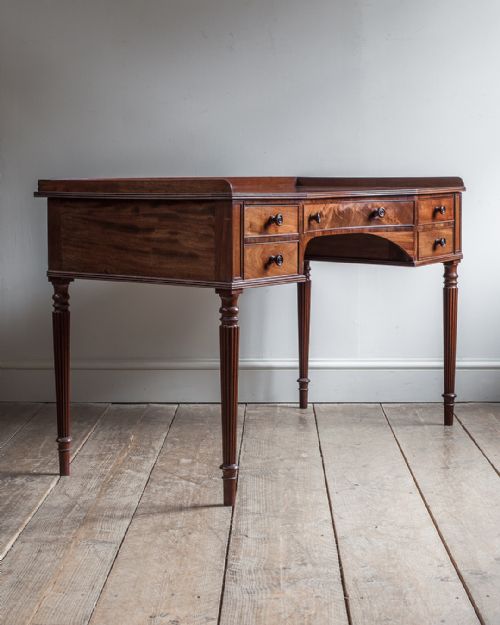
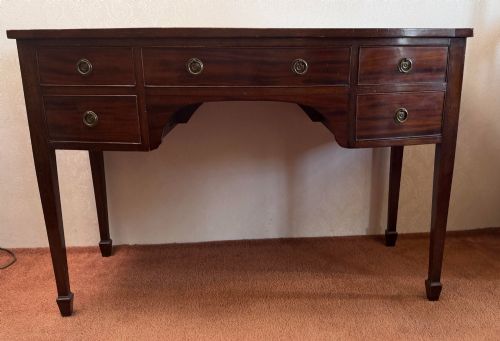
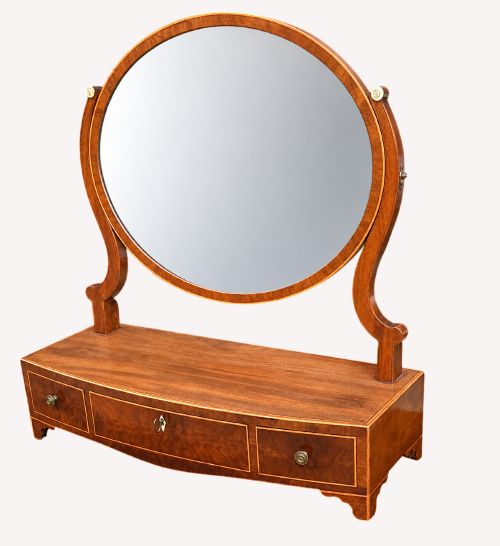
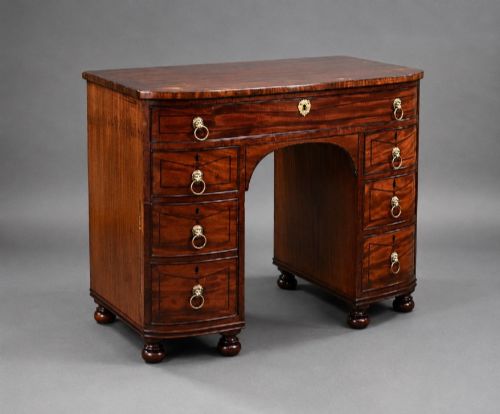
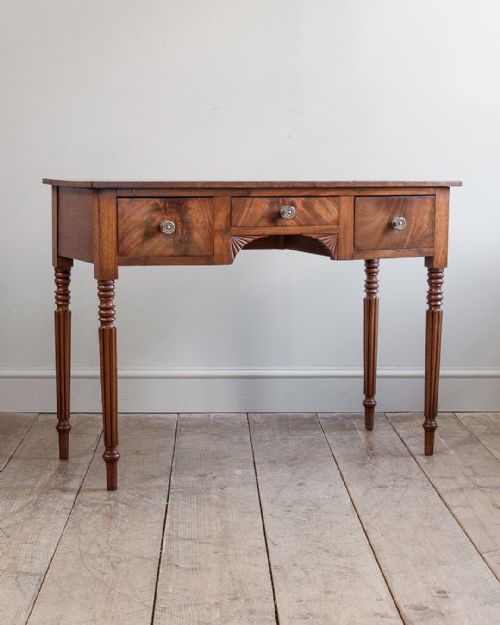
A regency vanity table encompasses everything from compact toilet mirrors designed for chest tops to larger dressing chests, kneehole desks, and washstands. The pieces on this page mostly date from the nineteenth century, including the Regency and Georgian periods, alongside later revival pieces.
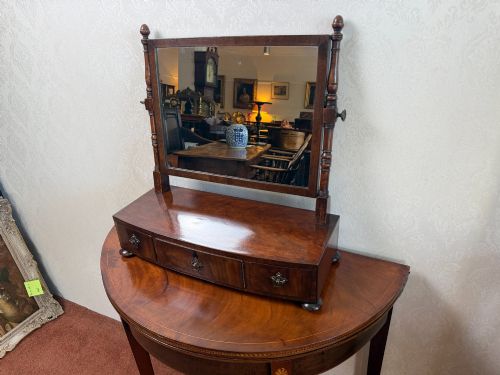
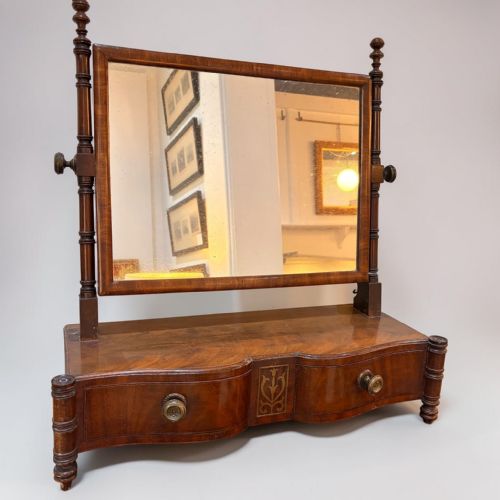
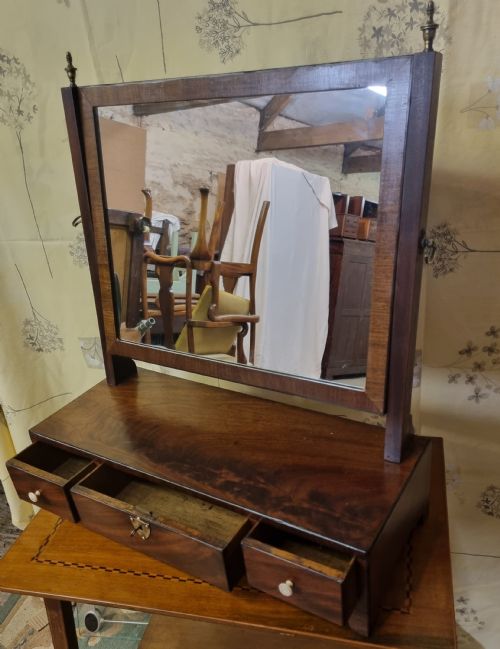
The primary forms found here are dressing tables with multiple drawers, swing mirrors mounted on boxes or pedestals, and specialised pieces like cheval mirrors and gentleman's dressing chests. Mahogany is the dominant timber, often enhanced by flame veneers or brass mounts.
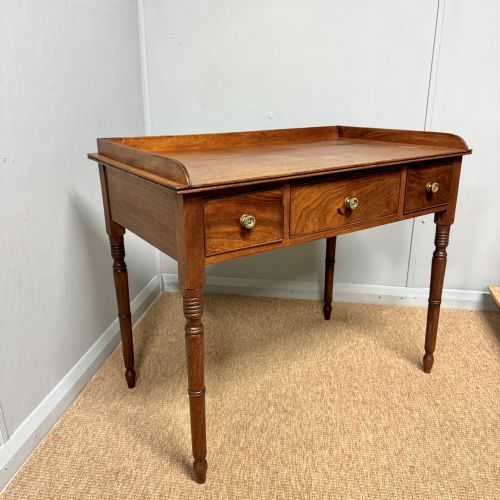
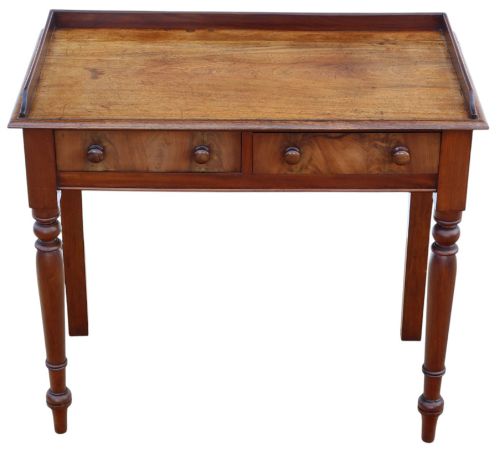
Buyers frequently encounter smaller table top toilet mirrors alongside full-size dressing and writing tables fitted with galleries. These items combine practical storage for grooming equipment with clean linear styling typical of the period.
Distinguishing levels of quality
Quality reveals itself in the selection of timber, particularly the symmetry and depth of flame mahogany veneers across drawer fronts and mirror frames. Superior pieces exhibit crisp reeding, finely turned legs, and well-proportioned brass fittings rather than heavy, plain mouldings.
The integrity of the mirror glass and the smoothness of the pivoting mechanism separate finer examples from standard workshop production. Drawer construction with tight dovetails and matching secondary timbers indicates higher standards of original craftsmanship.
Regency Vanity Table Retail Price Guide 2026
Typical asking prices for regency vanity table among the pieces listed under this phrase on Sellingantiques today, from the lower quarter to the upper quarter. They describe what is for sale here now, not the wider market.
One extraordinary vanity mirror even carries a direct provenance linking it to Holkham Hall.
P and MA Nicholson
The Regency Vanity Table Glossary
- Cheval mirror
- A full-length dressing glass suspended on a vertical frame with four supporting legs. This allows the user to tilt the entire mirror plate to different angles.
- Toilet mirror
- A smaller tabletop mirror fitted to a small box or chest base, usually containing one or more small drawers. These sat atop larger pieces of furniture for close-up grooming.
- Kneehole dressing table
- A desk-style dressing table featuring a central recessed space for the legs, flanked by banks of drawers. They often incorporate a three-quarter gallery surround to keep items from sliding off.
- Flame mahogany veneer
- A sliced layer of timber cut from the fork of a mahogany tree to produce a distinctive, flickering wave pattern. Cabinet makers applied this to prominent surfaces for visual impact.
- Washstand
- A specialised piece of furniture designed to hold a basin and jug, frequently featuring marble tops or splashbacks. Some examples include enclosed storage for washing accessories.
Regency Vanity Table: Frequently Asked Questions
What is the difference between a toilet mirror and a dressing table?
A toilet mirror is a compact glass set into a small box with drawers, designed to sit on top of an existing chest or table. A dressing table is a complete, freestanding piece of furniture with its own legs and work surface.
While both served grooming functions in bedrooms, toilet mirrors offer a portable solution whereas dressing tables provide dedicated floor-standing workspace with multiple drawers.
How do I spot a genuine Regency piece?
Genuine Regency pieces display characteristic architectural restraint, classical proportions, and specific timber choices such as Cuban mahogany. Details like brass paw feet, reeded legs, and fine boxwood stringing help separate the period from later Edwardian or twentieth-century revivals.
Construction methods inside the drawers, including hand-cut dovetails and the use of secondary woods like oak or pine, also confirm the age of the piece.
Were these tables used for writing as well?
Many tables from this era served dual purposes for both dressing and correspondence. Surviving examples often feature integrated inkwell compartments, leather writing surfaces, or shallow drawers sized for paper.
This versatility reflects period domestic spaces where specialised furniture often performed multiple daily tasks.
How should I care for a mahogany dressing table?
Keep the wood away from direct sunlight and strong heat sources to prevent the mahogany and its veneers from drying out or fading. Regular dusting with a dry, soft cloth preserves the polished finish without building up heavy wax residues.
Leather inserts and glass plates require gentle cleaning with appropriate, non-abrasive materials to protect the surrounding antique timber.