

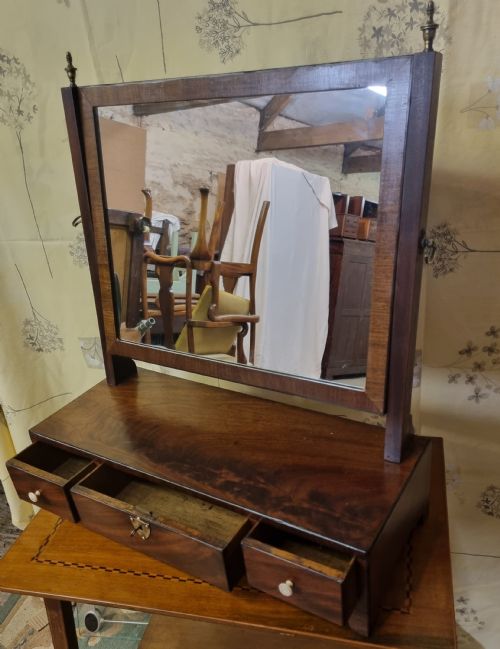
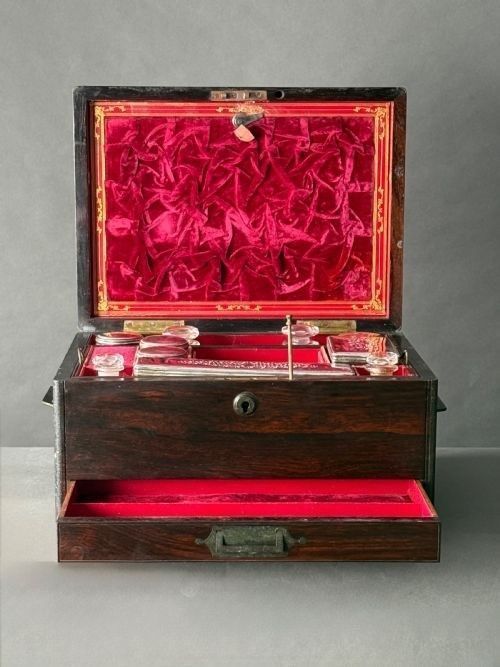
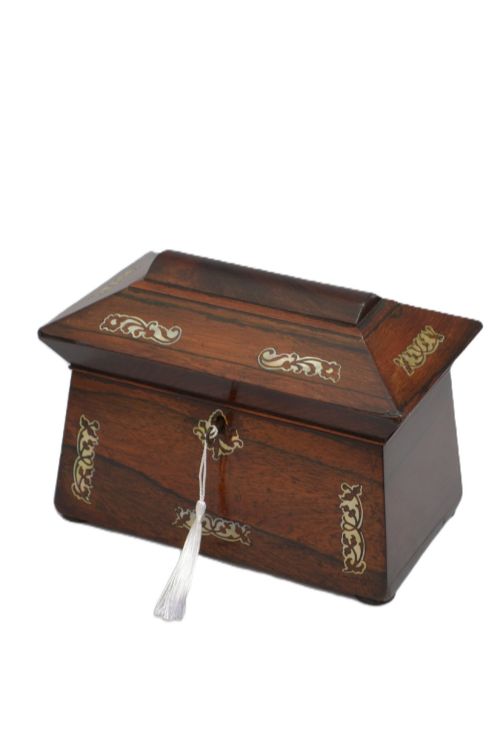

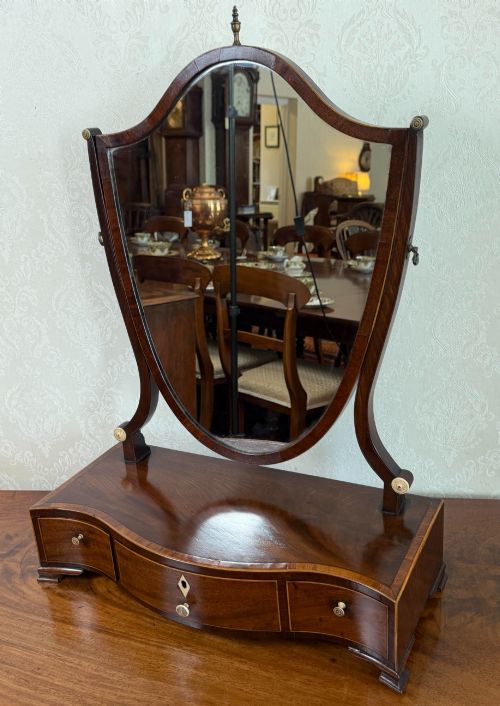


Regency Vanity Box
These regency vanity box examples bring portable elegance to a dressing table, housing personal keepsakes with clever internal compartments.
Regency Vanity Box
A regency vanity box serves as a portable container for personal grooming items, jewellery, and correspondence, often featuring fitted interior trays. The pieces gathered here span the Georgian, Regency, and William IV periods, crossing over with dressing mirrors and writing slopes.
Mahogany and rosewood dominate the selection, frequently enhanced by brass stringing, mother of pearl, or boxwood inlay. Collectors encounter compact table top variants alongside more substantial campaign type dressing cases equipped with original silver fittings.
Materials and Construction
Cabinet makers utilised dense timbers such as mahogany, rosewood, kingwood, and calamander, often applying fine veneers over solid secondary woods. Brass inlays, escutcheons, and corner brackets provide structural reinforcement and decorative contrast against the dark grain.
Interiors rely on precision joinery to create secret drawers, folding writing surfaces, and tailored slots for glass bottles and bone utensils. Silk, velvet, and leather line the compartments, securing delicate glass and metal accessories during travel.
Listings feature woods including mahogany, rosewood, kingwood, calamander, satinwood, and amboyna, alongside decorative bone and mother of pearl.
Assessing Craftsmanship
The distinction between standard containers and exceptional pieces lies in the complexity of the interior fitments and the preservation of original elements. Superior examples retain their complete set of glass jars, silver hallmarked fittings, and working brass locks with matching keys.
Execution of decorative details, from finely engraved brass stringing to precise boxwood and tortoiseshell inlays, separates ordinary output from master workshop production. The integrity of the timber grain and the smoothness of folding mechanisms indicate the original maker's skill.
The Regency Vanity Box Glossary
- Campaign type
- A portable box or piece of furniture designed for travel, featuring recessed brass carrying handles and robust corner reinforcement.
- Escutcheon
- A protective plate surrounding a keyhole, frequently cast in brass and occasionally engraved with owner initials.
- Sarcophagus-shaped
- A box design featuring a steep sloped lid and stepped base, popular during the Regency and William IV eras.
- Stringing
- Thin lines of contrasting wood or metal inlaid into the surface of a box to create geometric borders.
- Necessaire
- A small fitted case containing essential personal grooming or sewing tools such as scissors and bodkins.
Regency Vanity Box: Frequently Asked Questions
What is a regency vanity box used for?
These boxes served individuals for storing cosmetics, jewellery, and letters, functioning as portable dressing stations before fitted bathrooms existed.
Travellers and homeowners alike placed them on tables to keep valuable personal items organised and secure.
How do I tell a Regency box from a Victorian one?
Regency pieces often display restrained classical proportions, brass stringing, and rich rosewood or mahogany veneers. Victorian examples frequently incorporate heavier ornamentation, mother of pearl inlay, and differing internal layouts.
Examining the secondary woods and lining materials helps clarify the period of manufacture.
Did these boxes come with fitted mirrors?
Many vanity boxes feature a lid that opens to reveal an adjustable mirror held on a folding wooden strut. Some designs separate the mirror entirely from the storage compartment below.
Surviving mirrors often retain their original mercury silvering behind the glass.
How should I clean the wood on my box?
Dust the exterior gently with a dry, soft cloth to prevent scratching the delicate veneer and inlay work. Avoid modern chemical polishes and apply microcrystalline wax sparingly to preserve the antique finish.
Keep wooden boxes away from direct sunlight and radiators to prevent the timber from warping or splitting.