
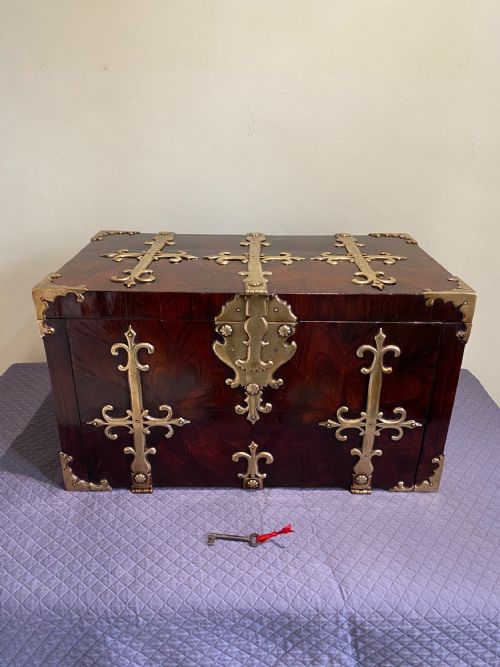


Wooden Treasure Chest Box
A wooden treasure chest box offers tangible history in miniature, holding keepsakes while bringing centuries of craftsmanship into modern rooms.
Wooden Treasure Chest Box
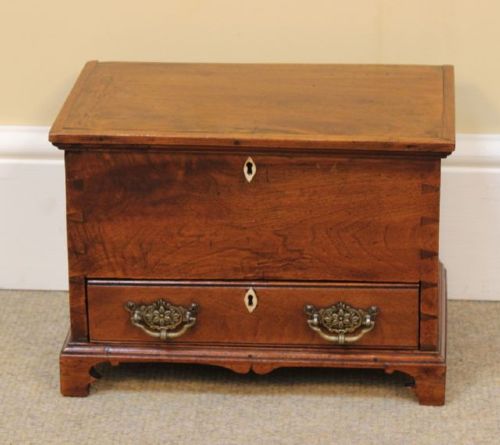
A wooden treasure chest box brings together centuries of utilitarian storage and decorative craft, spanning periods from the sixteenth century to the Victorian era. When searching for a wooden treasure chest box, buyers encounter forms ranging from miniature apprentice pieces and trinket keepsakes to substantial iron-bound trunks and strongboxes.
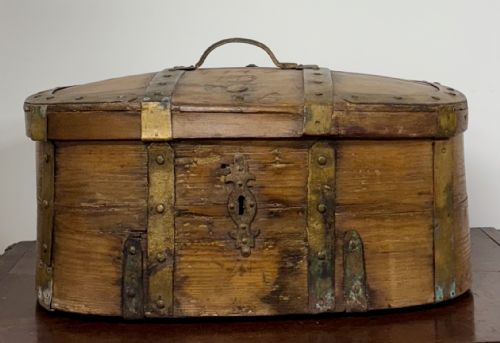
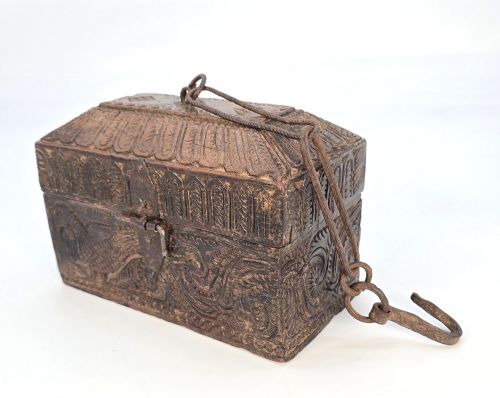
Origins stretch across regions and workshops, covering English oak, Scandinavian pine, German marquetry, Iberian kingwood, and Chinese hongmu. The selection frequently includes strongboxes and travelling chests designed for security or transit, alongside spice boxes and presentation caskets.
Materials and construction
Construction relies heavily on timbers such as oak, walnut, pine, teak, and kingwood, often shaped into sturdy boxes and chests. Workshops enhanced these wooden structures using applied veneers like kingwood oyster veneer, intricate marquetry, or hand-painted surfaces.
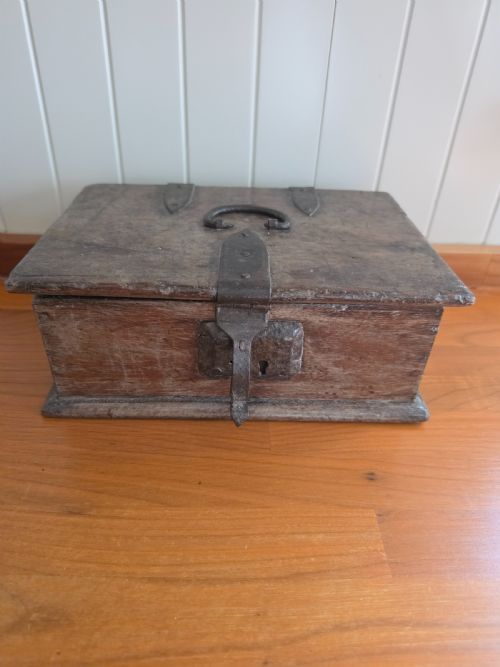
Metal reinforcement defines many examples in the evidence, incorporating brass fittings, wrought iron bands, and robust iron mountings to secure the lids and corners. Leather coverings and carved details further distinguish specific regional traditions.
Periods represented span from the 16th century through the Georgian and Regency eras to the late 19th century.
Assessing quality and finish
Quality rests in the precision of the joinery and the selection of timber, distinguishing simple utility containers from refined presentation pieces. The integration of decorative elements, such as detailed hand-carving or complex marquetry, marks the upper tier of execution.
The durability and finish of metal hardware, including wrought iron straps and brass locks, separate standard storage boxes from exceptional strongboxes designed for travel and security.
The Wooden Treasure Chest Box Glossary
- Strongbox
- A secure container reinforced with metal bands and robust locking mechanisms designed for transporting valuables.
- Coffre fort
- A French term for a strongbox or safe, frequently applied to seventeenth-century and eighteenth-century locking chests.
- Marquetry
- The art of applying pieces of veneer to a structure to form decorative patterns and pictorial designs.
- Oyster veneer
- Cut cross-sectionally from branch wood to produce circular patterns resembling oyster shells.
Wooden Treasure Chest Box: Frequently Asked Questions
What is a wooden treasure chest box used for?
These pieces serve primarily as decorative storage for small valuables, documents, and keepsakes. Their historic designs allow them to function as striking tabletop display items in modern interiors.
They bring an authentic period aesthetic to living spaces while keeping personal items organised and secure.
How do I date an old wooden box?
Dating relies on identifying the primary wood species, construction techniques, and metal hardware. Eighteenth-century and earlier pieces often feature hand-cut joints and forged iron mounts.
Victorian and later examples tend to show more standardised fixings and machine-cut elements alongside distinct period styling.
Are these boxes secure?
While many historical examples include original locks and heavy iron banding, they are collected today for their craftsmanship and history rather than modern security.
Their locking mechanisms vary from simple latches to complex iron bolt systems characteristic of seventeenth and eighteenth-century strongboxes.
Where were these chests made?
The pieces originate from diverse international workshops, spanning English, Scandinavian, German, Iberian, and Asian traditions. Each region utilised local timbers and distinct decorative techniques.
Scandinavian makers favoured pine and hand-painted finishes, while English workshops frequently employed oak and walnut.