


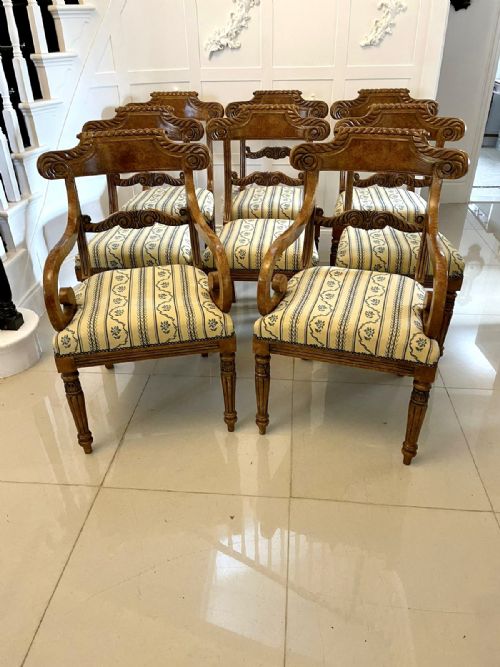

Regency Upholstered Arm Chair
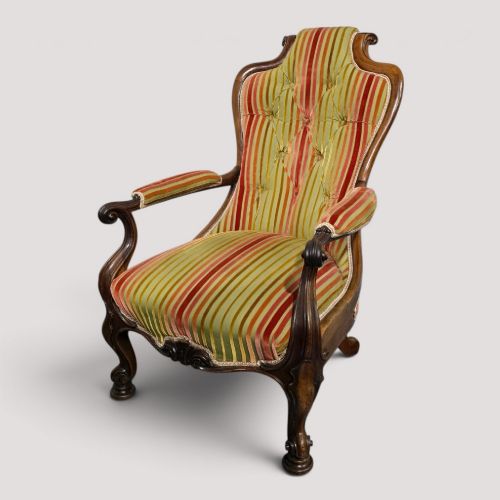
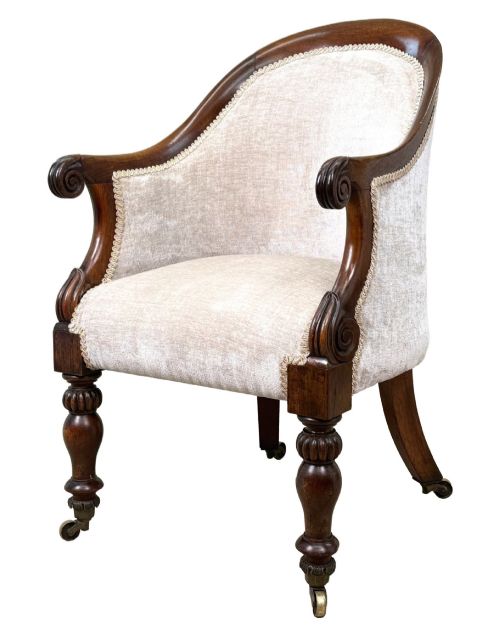
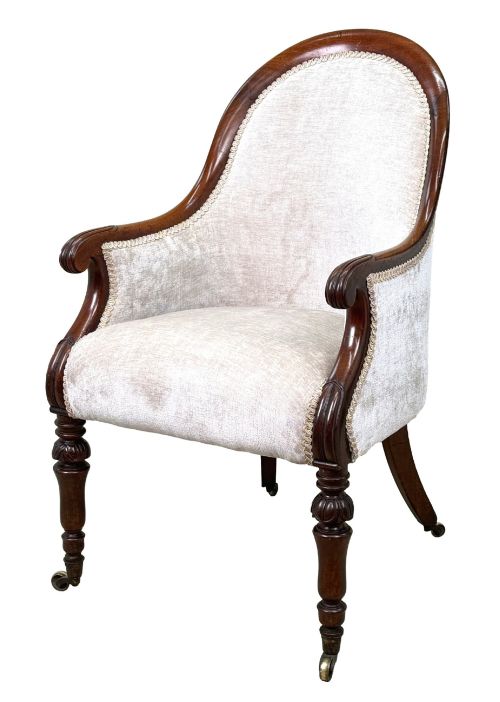
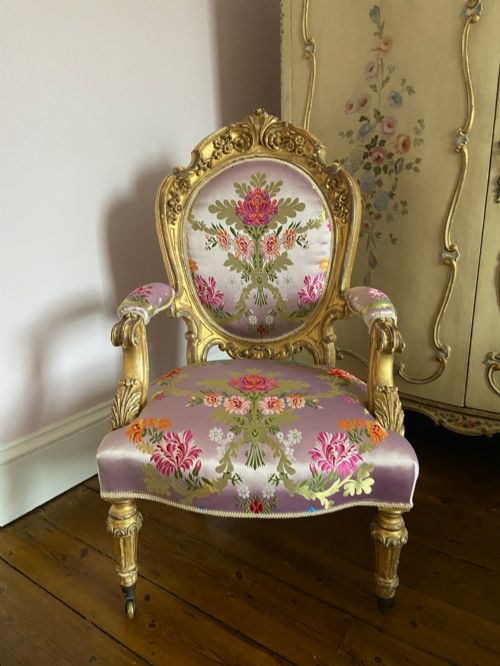
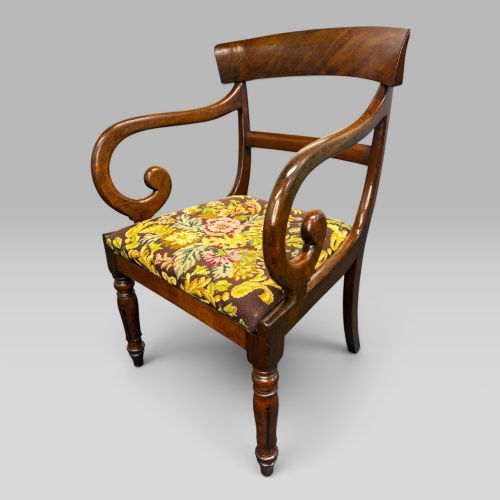
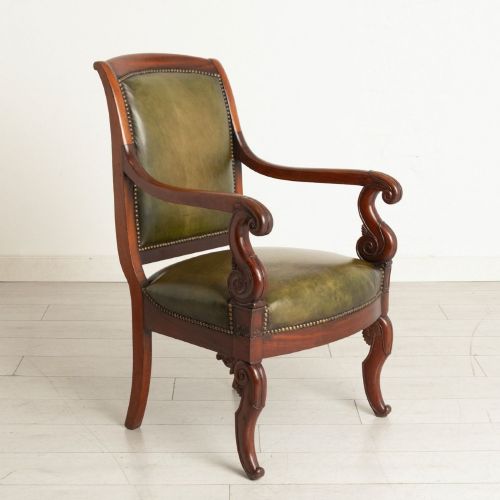
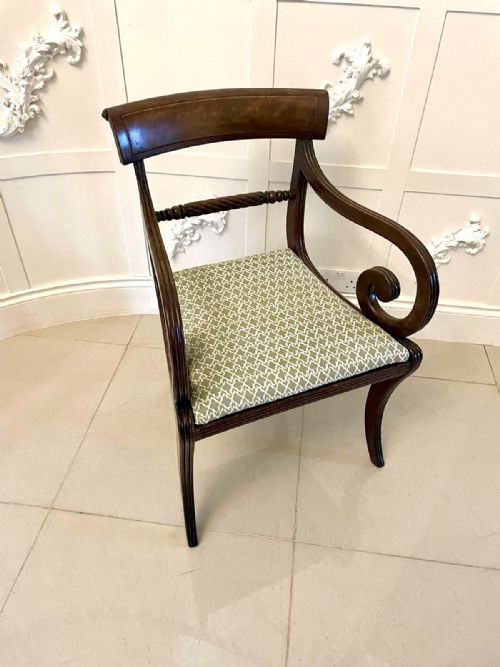
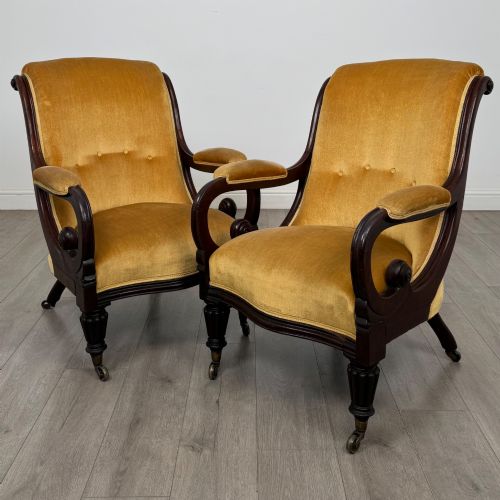
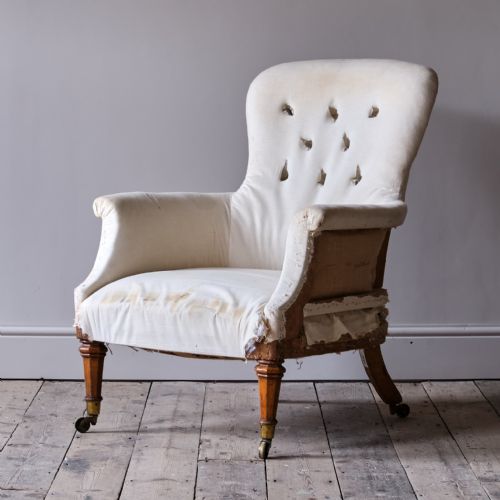
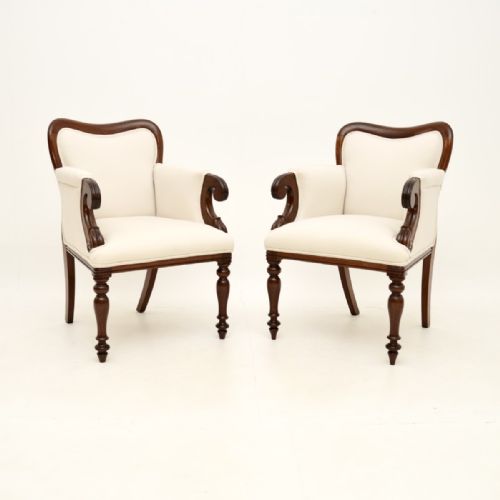
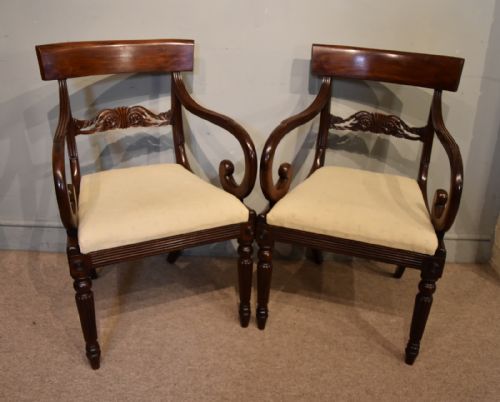
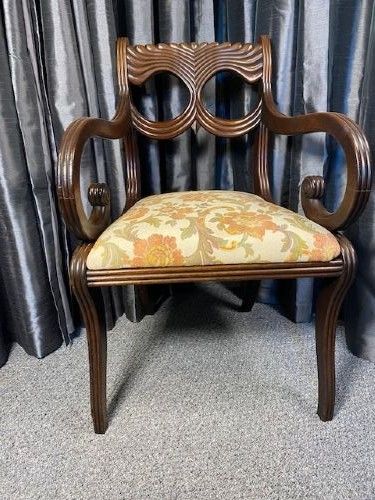
These pieces are a regency upholstered arm chair, built for library, desk, and drawing room use.

Regency Upholstered Arm Chair
A regency upholstered arm chair is a substantial seating form designed for the library, study, or drawing room, encompassing library chairs, desk armchairs, and tub armchairs. These pieces emerge primarily from the nineteenth century, carrying the stylistic marks of the Regency, William IV, and George IV periods alongside later revivals.
The materials span solid timbers like mahogany, rosewood, and walnut, paired with upholstery in leather, velvet, and various fabrics. Forms range from open armchairs and tub library chairs to carver chairs and bergères, often featuring carved wood, reeded members, or brass inlay.
How they were made
Makers constructed these chairs from dense hardwoods such as mahogany and rosewood, frequently incorporating brass for inlay or fittings. Woodwork involved turning, reeding, and carving, yielding structural frames designed to support heavy upholstery.
Upholstery techniques utilised traditional fillings covered in leather, velvet, or standard fabric, secured directly to the wooden framework. Frameworks also incorporated decorative elements like giltwood finishes and carved details in the manner of established cabinet makers.
What varies in quality
Quality in a regency upholstered arm chair rests on the crispness of the timber carving and the selection of fine primary woods like figured mahogany or rosewood. Superior examples display refined proportions, such as well-balanced scroll arms or lyre supports, rather than plain structural mass.
The integration of brass inlay and the handling of secondary woods reveal the maker's hand, distinguishing standard workshop production from finely detailed pieces. Upholstery choices also reflect a hierarchy of finish, from simple fabric covers to high-grade leather and velvet.
The Regency Upholstered Arm Chair Glossary
- Bergère
- An enclosed upholstered armchair with wooden framing exposed around the sides and back. This French-influenced form appears frequently in nineteenth-century drawing rooms.
- Library chair
- A heavy, comfortable armchair designed for reading and study, often fitted with leather upholstery. These chairs frequently feature open arms or enclosed tub designs.
- Carver chair
- An armchair designed to match a set of dining chairs, usually placed at the head of the table. They share stylistic traits with the smaller dining chairs in the same suite.
- Reeding
- Parallel convex moulding carved into wooden legs or arm supports. This decorative technique creates a fluted effect reversed.
- Tub armchair
- An upholstered chair with a continuous curved back and arms forming a single circular enclosure. This form provides enclosed support for the sitter.
Regency Upholstered Arm Chair: Frequently Asked Questions
What is a regency upholstered arm chair used for?
These chairs served multiple domestic functions in the nineteenth century, primarily as seating for reading in libraries, writing at desks, or relaxing in drawing rooms. Their sturdy wood frames and upholstered seats were built for daily utility.
Over time, their roles expanded into bedroom and hallway seating, while retaining the comfort required for prolonged sitting during study or correspondence.
How do I tell Regency from William IV?
Regency pieces often display lighter proportions, refined brass inlay, and classical restraint influenced by Greek and Roman design. The woodwork tends toward slender reeded legs and elegant curves.
William IV pieces, by contrast, typically present heavier, bolder proportions with robust scrollwork and substantial mahogany frames. The carving becomes more prominent and structural mass increases.
What woods were used for these chairs?
Mahogany forms the primary material for the vast majority of these chairs, valued for its strength and dark reddish grain. Rosewood appears frequently in finer pieces, offering a distinctively figured surface.
Walnut, satinwood, and various other hardwoods also occur across different periods, occasionally enhanced with giltwood finishes or decorative faux maple painting.
How do I live with antique armchairs?
Placing these chairs in stable environments away from direct heat sources protects the antique wood and prevents timber splitting. Regular dusting keeps the polished surfaces preserved.
Upholstery in leather or fabric benefits from gentle cleaning suited to the specific material, ensuring the historical surface remains intact during everyday domestic use.