

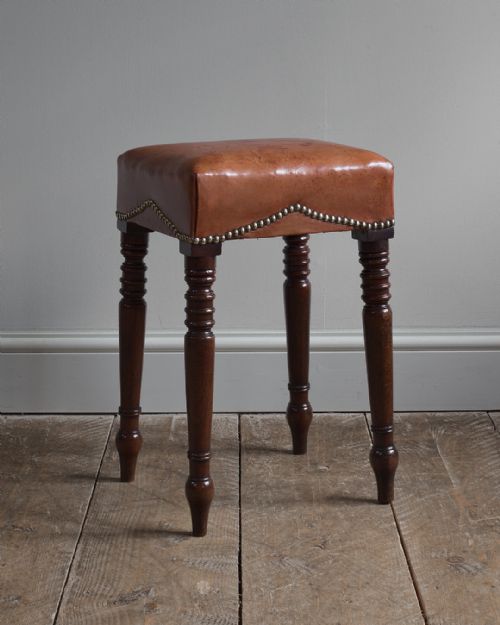
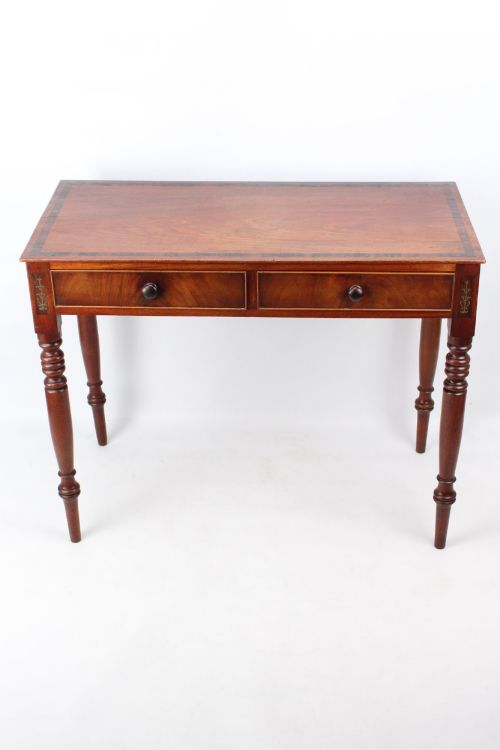
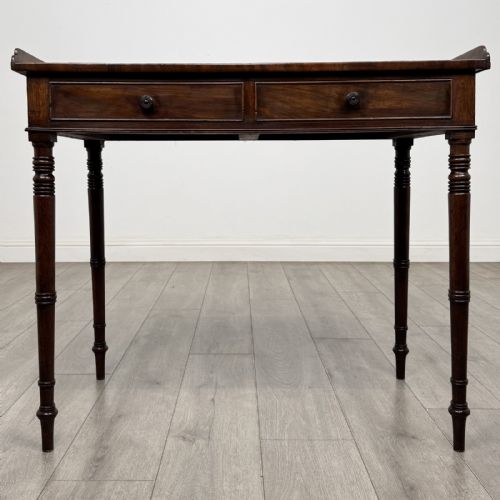
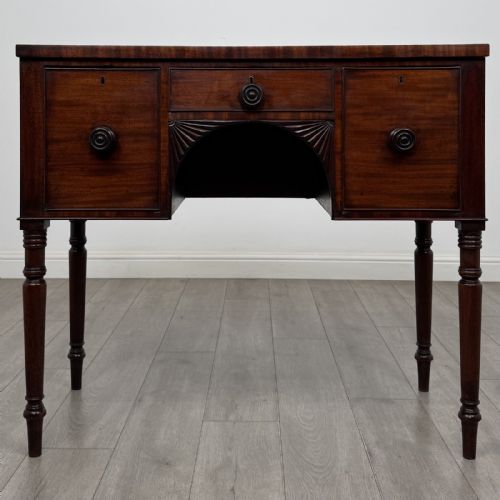
Regency Turned Leg Desk
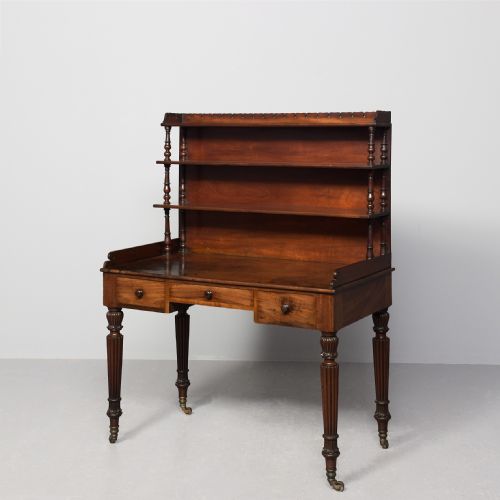
A regency turned leg desk brings architectural symmetry and warm mahogany tones to a study, offering a compact writing surface grounded by slender uprights.
Regency Turned Leg Desk
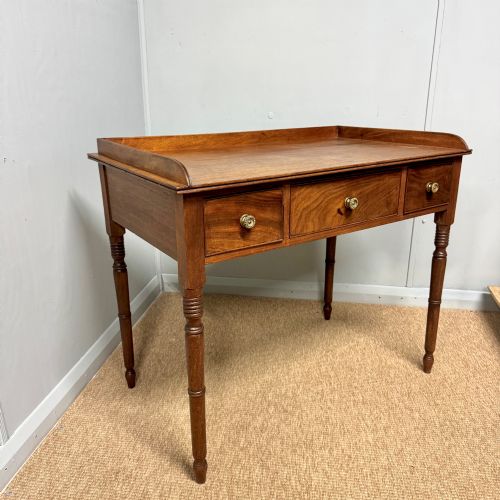
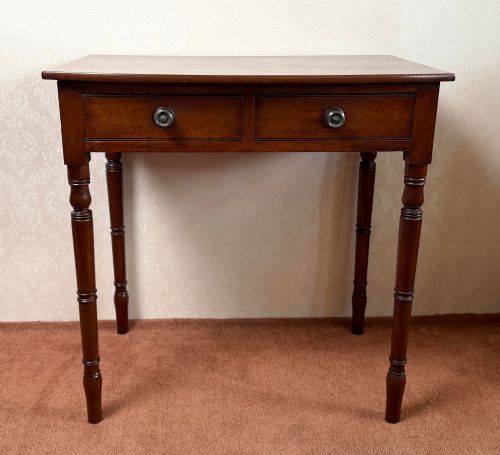
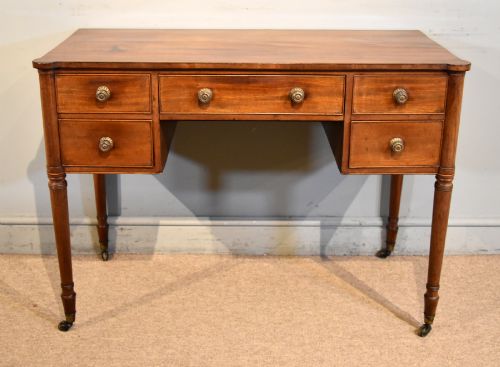
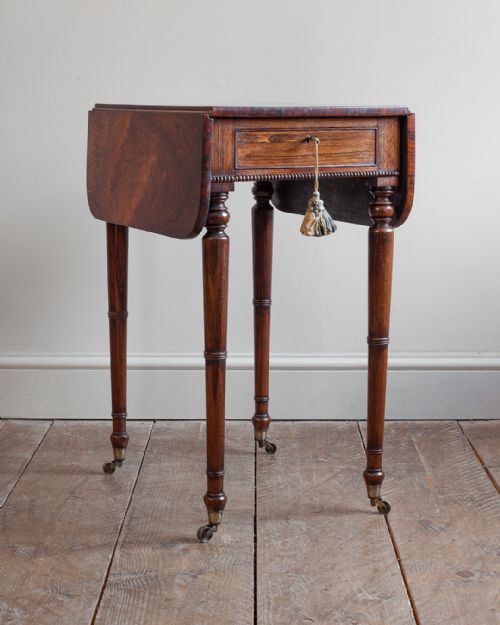
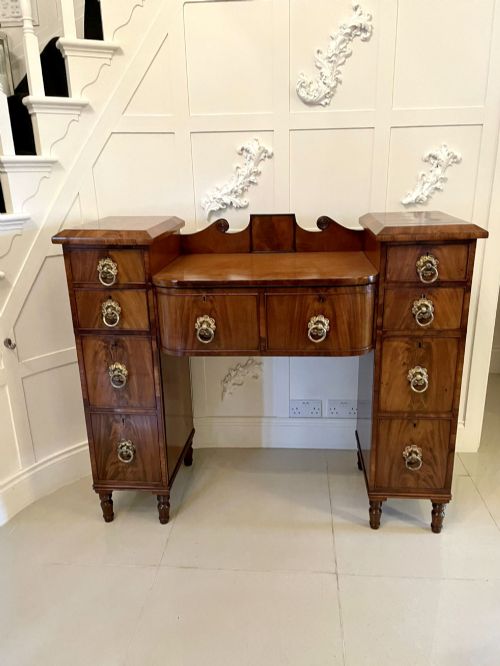
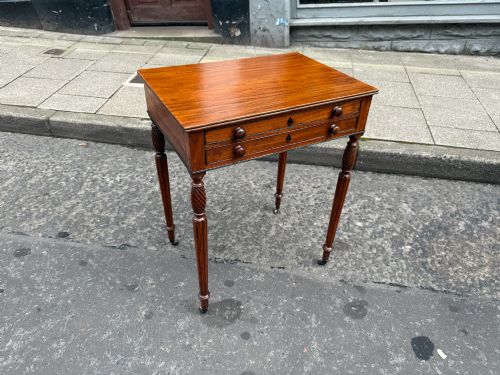
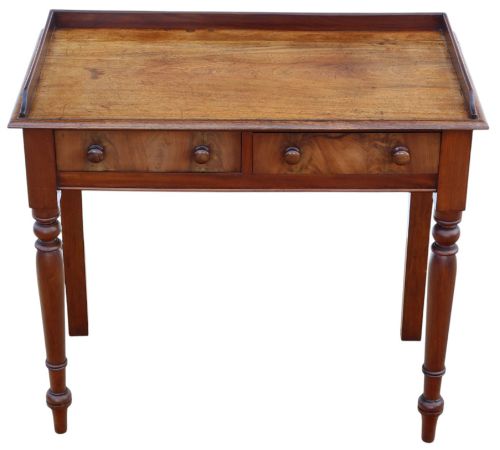
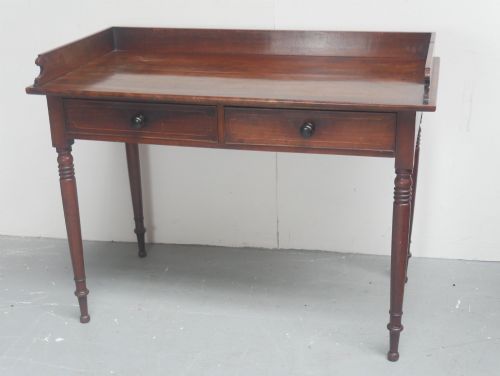
A regency turned leg desk comprises writing tables, dressing tables, and secretaire pieces built primarily during the nineteenth century under Regency and Georgian influences. These forms emphasise clean rectangular carcases, often fitted with drawers and supported by circular or reeded uprights rather than heavy cabriole supports.
The version most commonly met on this page combines a rich mahogany structure with brass inlays, leather writing surfaces, or a gallery top. Makers of the period occasionally utilised rosewood or satinwood, but mahogany remains the dominant timber across the selection.
Alongside dedicated writing desks, the category encompasses library tables, work tables, and sideboards adapted for correspondence. Their proportions suit modern home offices while retaining the precise cabinetwork of the early eighteen hundreds.
Materials and Construction Techniques
Cabinetmakers constructed these desks from dense tropical hardwoods, chiefly solid mahogany and rosewood, sometimes over secondary pine framing for drawer linings and internal divisions. Timber selection prioritized straight grain and deep natural figuring, polished to a satin finish rather than high gloss.
The distinctive turned supports were shaped on a lathe, featuring reeded or ring-moulded details that catch the light along the vertical axis. Brass fittings, including escutcheons, castors, and stringing inlay, were hand-cast and meticulously fitted into recessed channels within the timber.
Writing surfaces frequently incorporated inset panels of tooled leather or fabric, secured with timber beadings. Drawers utilised hand-cut dovetail joints, reflecting structural longevity and traditional workshop practices of the period.
Regency Turned Leg Desk Retail Price Guide 2026
Typical asking prices for regency turned leg desk among the pieces listed under this phrase on Sellingantiques today, from the lower quarter to the upper quarter. They describe what is for sale here now, not the wider market.
Some nineteenth-century writing desks include hidden compartments originally designed for secret love letters and miniature portraits.
Markers of Quality and Craftsmanship
The distinction between standard utility furniture and superior examples lies in the selection of timber and the crispness of the turning. Finer pieces display matched grain patterns across drawer fronts and harmonious proportions that govern the relationship between top and legs.
Attention to secondary details elevates a piece, such as fine brass inlay, well-executed cockbeading around drawer margins, and finished backs that allow freestanding placement. Lesser examples rely on plain pine carcasses with minimal secondary detailing and simpler hardware.
The integrity of the original surface patination dictates the visual weight of the desk. Uninterrupted ageing and faded timber tones demonstrate careful preservation over two centuries, marking out superior workshop origin.
James Mein of Kelso
The Regency Turned Leg Desk Glossary
- Reeding
- A decorative moulding consisting of parallel convex strips resembling bundled reeds. It appears frequently on the vertical supports of Regency furniture.
- Gallery
- A raised ornamental border running along the edge of a tabletop or desk surface. It prevents small objects or papers from sliding off.
- Secretaire
- A cabinet or desk incorporating a pull-down writing flap that conceals a fitted interior of small drawers and pigeonholes. This form combines storage with a dedicated writing surface.
- Patina
- The surface sheen and colour developed by timber through age, handling, and light exposure. A desirable patina shows depth and warmth accumulated over generations.
- Cockbeading
- A narrow semi-circular projection framing the edge of a drawer front. It protects the drawer edges from impact and provides a neat visual boundary.
Regency Turned Leg Desk: Frequently Asked Questions
How do I identify a genuine regency desk?
Look for period construction methods such as hand-cut dovetails on drawer boxes, turned or reeded legs, and native timbers like mahogany or rosewood. Proportions tend to be compact and architectural, reflecting design patterns of the early nineteenth century.
Examine the secondary woods inside the drawers and the style of the brass hardware. Consistent wear patterns and traditional polishing techniques further confirm age.
Where should I place a freestanding desk?
A freestanding writing table is designed to be viewed from all sides, making it ideal for the centre of a room rather than pushed against a wall. Ensure there is adequate clearance around the turned legs and chair space.
Keep the piece away from direct heat sources and strong sunlight to protect the leather writing surface and prevent the mahogany timber from drying out.
How do I care for antique leather writing surfaces?
Maintain the leather insert by dusting it gently with a dry, soft cloth and avoiding chemical cleaning agents. Occasional treatment with neutral leather balms helps prevent cracking.
Keep sharp objects and damp items off the surface to preserve the gold tooling and the integrity of the hide over years of daily use.