

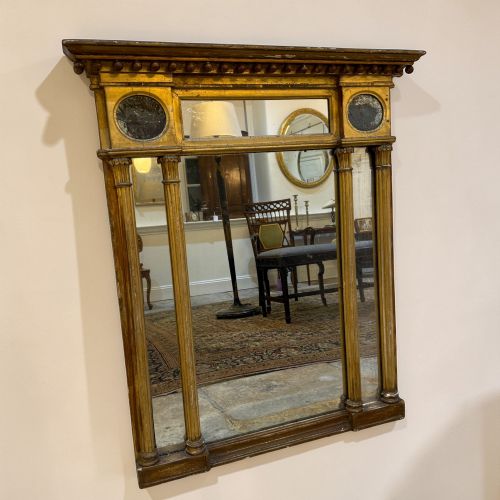
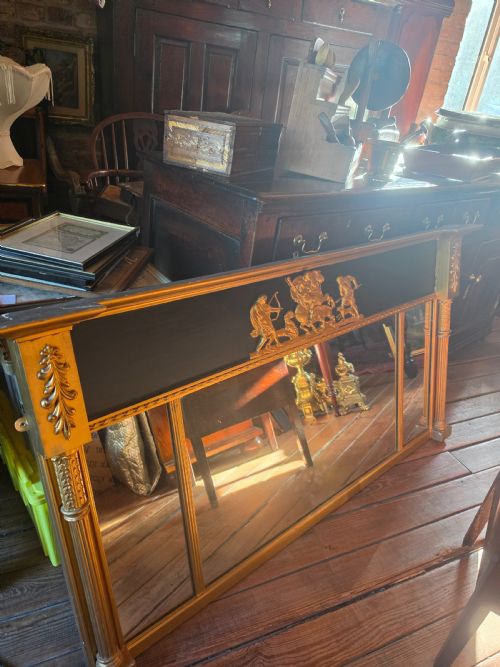
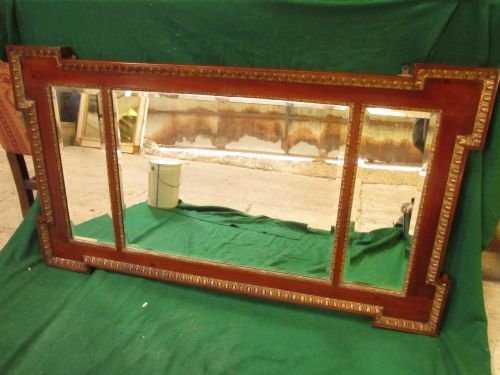
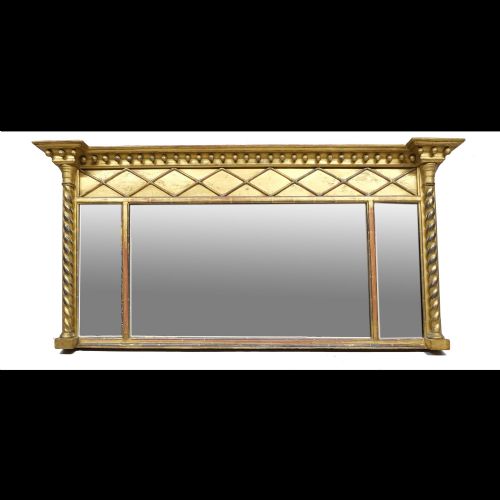


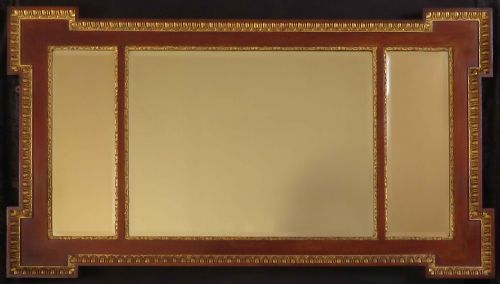


Regency Triple Mirror
A regency triple mirror brings architectural scale and three-plate division to a room, offering the expansive reflection that period interiors demand.
Regency Triple Mirror
A regency triple mirror takes the form of an overmantel or landscape mirror designed to sit above a fireplace. These pieces divide their reflection across three distinct glass plates, creating a wide horizontal format.
The pieces listed here span the nineteenth century, including Regency, late Georgian, William IV, and Victorian periods. Most examples combine giltwood and gesso, though mahogany and painted finishes also appear.
Overmantel mirrors dominate the selection, functioning as principal wall pieces that anchor the proportions of a traditional drawing room or parlour.
How they were made
Wood carvers and gilders built the frames using timber carcasses overlaid with gesso and composition ornament. Artisans applied thin sheets of gold leaf over red or yellow priming layers to create the bright gilt surfaces.
Makers set three separate mirror plates into the internal rebates, often dividing the sections with slender colonnettes or moulding strips. Decorative friezes featuring motifs like laurel wreaths and griffins were moulded in composition and applied to the upper wooden panels.
Regency Triple Mirror Retail Price Guide 2026
Typical asking prices for regency triple mirror among the pieces listed under this phrase on Sellingantiques today, from the lower quarter to the upper quarter. They describe what is for sale here now, not the wider market.
Materials recorded across the selection include giltwood, gesso, mahogany, glass, and paint.
What varies in quality
The crispness of the carved or moulded ornament distinguishes finer pieces from simpler ones. Superior frames retain sharp relief in details like laurel wreaths and friezes, whereas lower grades show softened edges in the composition material.
The integration of the three plates and the choice of primary wood or gilding technique mark the distinction between standard production and exceptional craftsmanship. Richer patination on the giltwood and well-proportioned framing elevate the architectural presence of the mirror.
The Regency Triple Mirror Glossary
- Giltwood
- Wood carved and coated with gold leaf. This material defines the bright, reflective frames characteristic of Regency and Victorian overmantels.
- Gesso
- A plaster mixture applied to wood frames to provide a smooth base for gilding. Artisans carved intricate details directly into this layer.
- Overmantel mirror
- A wide mirror designed specifically to hang above a fireplace mantelpiece. These pieces frequently utilise triple plates to span the width of the hearth.
- Composition
- A moulded putty material made from whiting, resin, and glue. Makers pressed this compound into decorative ornaments like friezes and applied it to the wooden frame.
- Triptych
- An artwork or object divided into three panels. In these mirrors, it refers to the arrangement of three distinct glass plates within a single frame.
Regency Triple Mirror: Frequently Asked Questions
Where should a regency triple mirror be hung?
These mirrors are traditionally positioned directly above a fireplace mantelpiece, where their wide horizontal format balances the hearth below. They also function effectively along a primary salon wall to increase perceived room depth.
Ensure the wall construction supports the considerable weight of the wooden frame and multiple glass plates, anchoring the fixings securely into structural studs or masonry.
How do I identify a Regency period mirror?
Regency pieces often display classical architectural motifs such as laurel wreaths, griffins, and reeded mouldings executed in giltwood or painted finishes. The integration of three distinct glass plates within a landscape format is characteristic of the early nineteenth century.
Compare the construction methods and wood types against later Victorian interpretations, noting the transition in decorative crispness and framing proportions.
What is the difference between an overmantel and a wall mirror?
An overmantel mirror is specifically proportioned to sit above a mantelpiece, featuring a wide horizontal layout that spans the width of a fireplace. Standard wall mirrors may follow vertical or square formats suited to general wall placement.
Both forms utilise similar giltwood and gesso techniques, but the overmantel prioritises the triple plate landscape configuration.
How do I clean a giltwood frame safely?
Dust the carved and gilded surfaces gently with a soft, dry brush to remove particulate matter without disturbing the delicate gold leaf. Avoid liquid cleaners, moisture, or chemical solvents, which can damage the underlying gesso and composition ornament.
Treat the antique frame with care during maintenance to preserve the original gilding and patina accumulated over the centuries.