
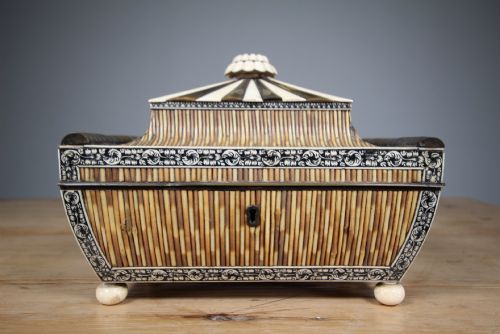

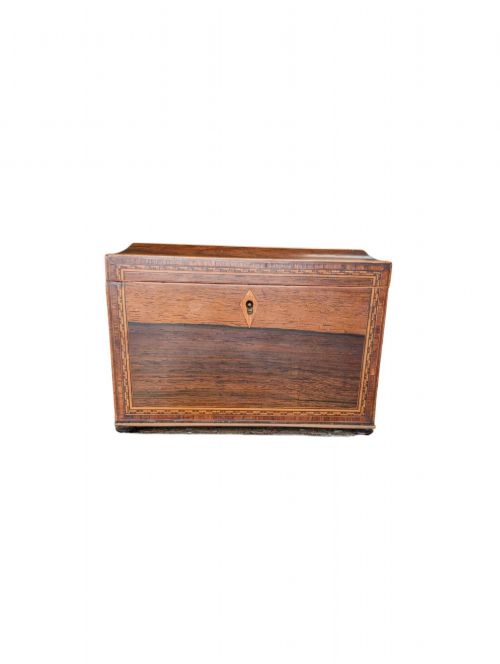

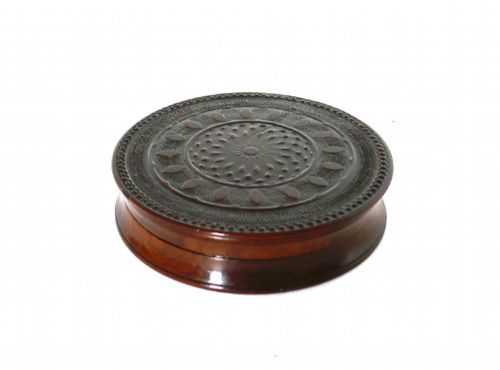


Regency Trinket Box
A regency trinket box brings disciplined elegance and rich timbers to a desk, holding small treasures with understated grace.
Regency Trinket Box
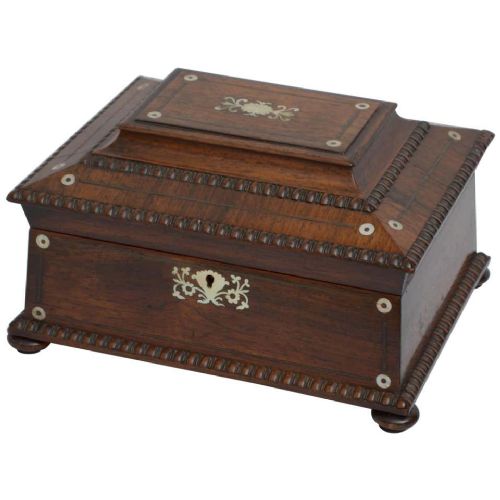
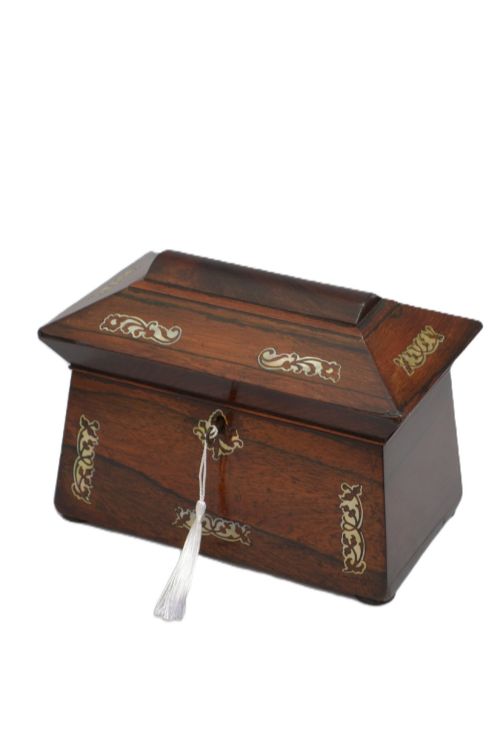
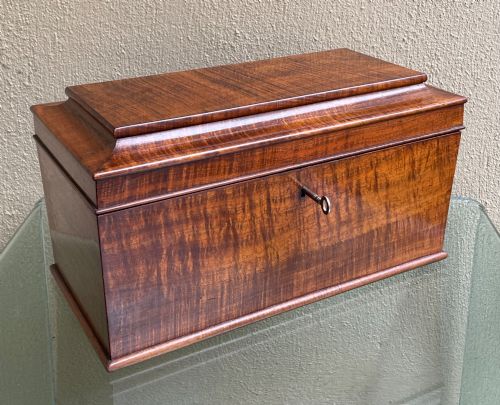
The selection on this page draws heavily from the Regency, Georgian, and wider nineteenth-century periods, capturing styles like Anglo-Indian Regency and Victorian. Rosewood, mahogany, and sterling silver dominate the physical evidence, often displaying brass inlay or tortoiseshell veneers.
Makers utilised diverse materials to shape these objects, producing table top jewellery boxes alongside pocket-sized snuff boxes and vinaigrettes. The variety spans functional tea caddies, needlework boxes, and decorative containers designed for elite domestic interiors.
Materials and Technique
Cabinetmakers shaped dense hardwoods such as rosewood, mahogany, satinwood, and yew into boxes, applying brass inlay and tortoiseshell panels for visual depth. Tunbridge ware and penwork techniques introduced intricate geometric patterns and hand-drawn surface decoration onto sycamore and other light woods.
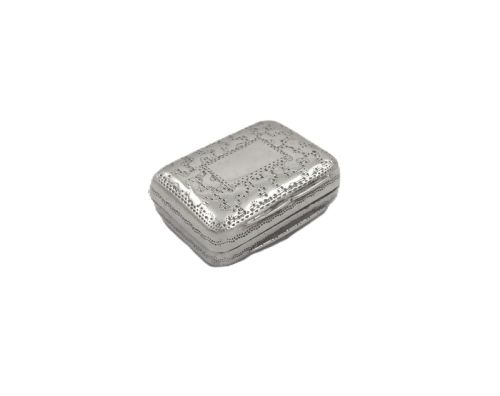
Silversmiths hammered and cast sterling silver and gold to create snuff boxes and vinaigrettes, frequently employing engine turning and silver gilt finishes. Interior fitments incorporated leather, paint, and ink, uniting fine carpentry with delicate metalwork.
Variations in Quality
Quality rests upon the precision of the cabinetwork, the integrity of the timber veneers, and the crispness of any brass inlay or penwork detail. Superior examples display tightly fitted joints, well-matched wood grains, and original interior linings rather than later replacements.
Silver and gold pieces distinguish themselves through the clarity of London or provincial hallmarks, the depth of engine-turned decoration, and the refinement of engraved crests or scenic lids.
Giles Loyer·Alexander J Strachan·Joseph Wilmore·John Bettridge·G Cobb·Charles Rawlings
The Regency Trinket Box Glossary
- Vinaigrette
- A small pocket container fitted with a pierced internal grille, designed to hold a sponge soaked in aromatic vinegar. These silver or gold items were carried during the Georgian and Victorian eras.
- Penwork
- A decorative technique using Indian ink to draw fine architectural scenes, flora, or geometric borders onto a light wood ground. Brighton Chain Pier boxes often employ this meticulous method.
- Tunbridge Ware
- Woodworking characterised by mosaic patterns assembled from thousands of tiny tinted wood prisms. Makers in Tunbridge Wells applied these mosaics to the lids of small boxes and tea caddies.
- Sarcophagus
- A box shape featuring a domed, sloping lid resting on a rectangular or stepped base, mimicking ancient stone coffins. Regency cabinetmakers favoured this classical silhouette for tea caddies and quill boxes.
- Treen
- Small handmade wooden household objects turned on a lathe or carved by hand. Early laburnum and sycamore examples display concentric engine-turned rings.
Regency Trinket Box: Frequently Asked Questions
What fits inside a regency trinket box?
These small containers hold personal items like rings, letters, documents, or sewing tools depending on the specific internal partitions.
Larger variations accommodate stationery and tea leaves, while pocket pieces secure snuff or scented sponges.
How do I identify a genuine Regency piece?
Examine the timber species, construction methods, and hardware such as brass lion paw feet or campaign handles.
Period pieces utilise solid secondary woods, hand-cut dovetails, and genuine veneers characteristic of early nineteenth-century workshops.
Where were these boxes placed?
Owners kept them on dressing tables, writing desks, and parlour side tables as both decorative objects and secure storage.
Table top jewellery boxes sat prominently in bedchambers, while tea caddies resided in formal reception rooms.
What is the difference between a tea caddy and a trinket box?
Tea caddies feature internal lidded compartments designed to store dry leaves and prevent moisture from spoiling expensive imports.
Trinket and jewellery boxes offer open wells, trays, or velvet-lined partitions tailored for personal ornaments and keepsakes.