

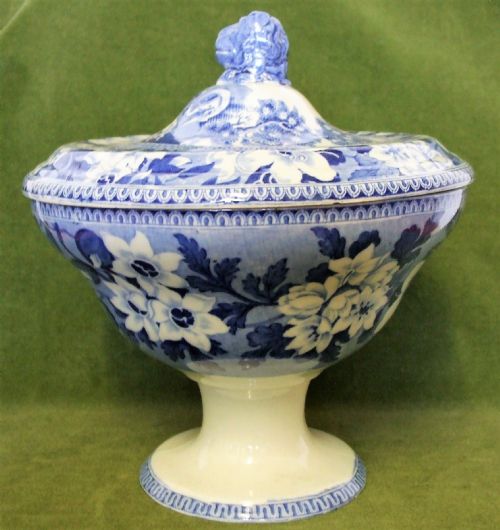


Regency Transferware Pottery
Regency transferware pottery brings bold monochrome prints and cream earthenware together for daily dining and display.
Regency Transferware Pottery
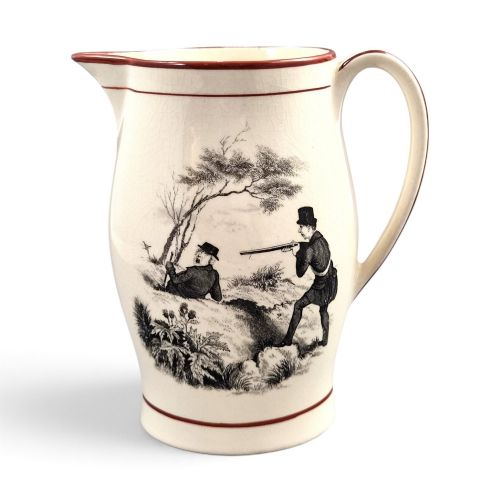
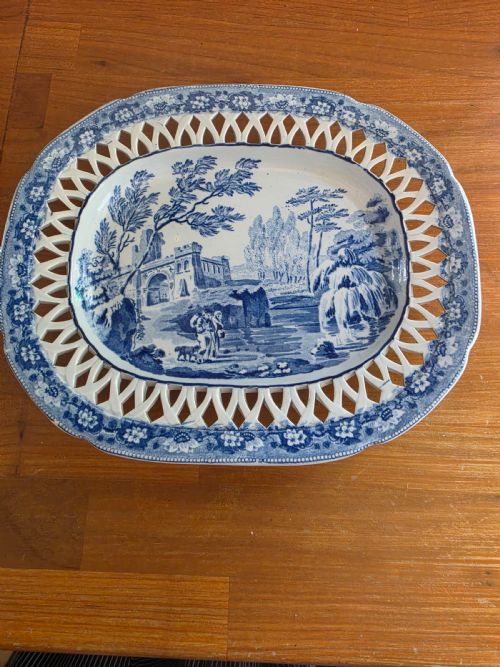
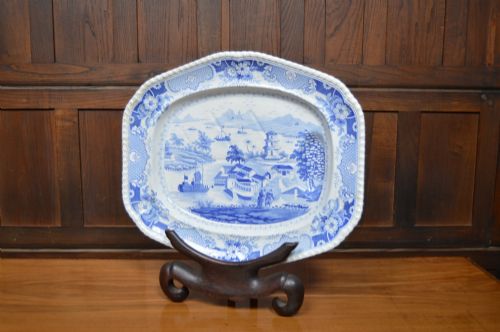
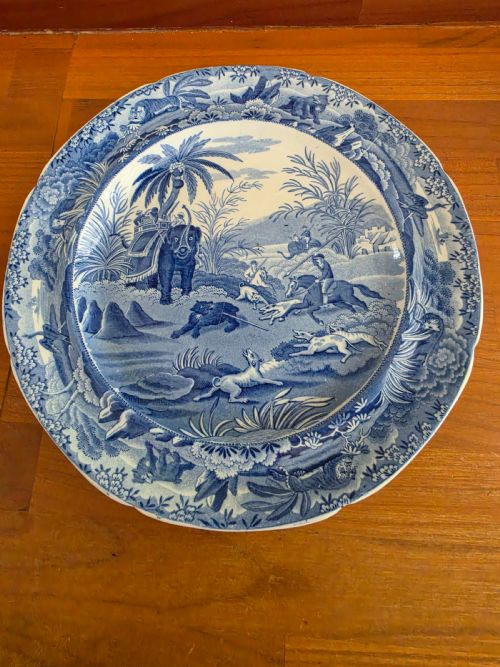
Regency transferware pottery encompasses serving platters, plates, bowls, and large footbaths decorated using inked copper plates pressed onto damp clay. Buyers encounter blue and white scenes most frequently, spanning pastoral landscapes, architectural views, and exotic motifs on earthenware bodies. These vessels served functional roles in Georgian and 19th-century households before evolving into decorative parlour items.
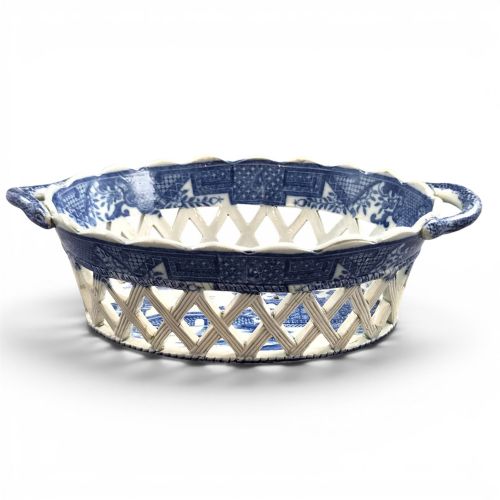
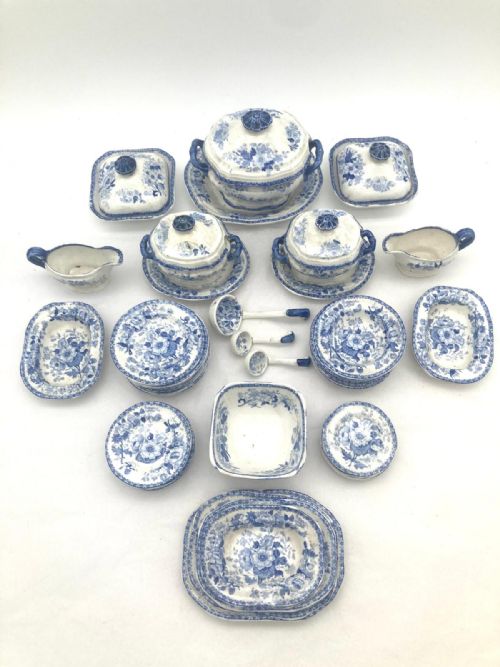
The objects listed range from intimate child's tea sets and tea bowls to massive meat platters, chestnut baskets, and soup tureens. Many carry specific topographical or narrative titles like India Temple, Death of the Bear, or London Bridge. Collectors navigate a mix of domestic dining wares and specialised serving pieces shaped during the Georgian and Victorian eras.
Materials and technique
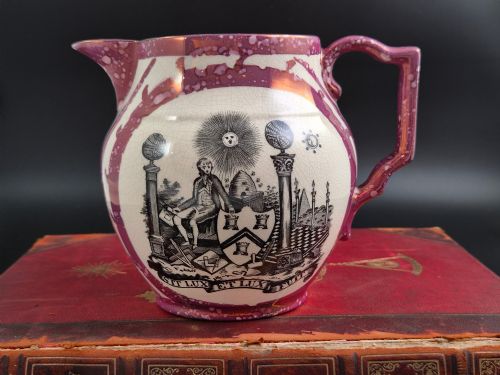
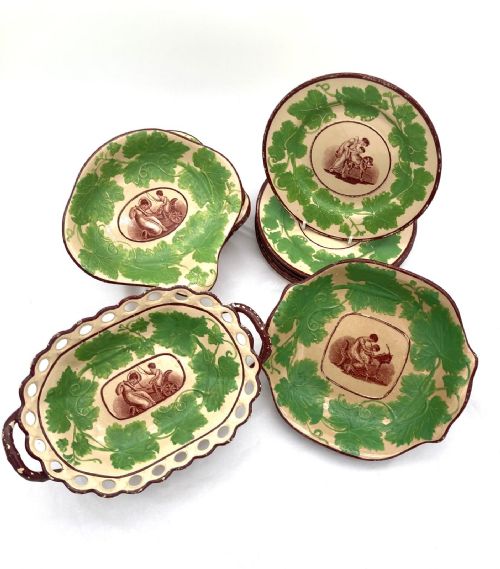
Potters shaped these pieces using earthenware, creamware, and pearlware bodies, finishing them with glossy ceramic glazes that protected the transfer-printed design. Artisans engraved copper plates with intricate patterns, applied oil-based pigments, and transferred the inked image onto tissue paper before pressing it onto the biscuity clay surface. Metallic glazes like pink splash lustre also appear on specific wares, adding shimmering highlights to the fired monochrome surface.
Once printed and glazed, the pottery went into kilns for high-temperature firings that fused the design permanently into the glassy surface. This mechanised copperplate technique allowed potteries to produce consistent, highly detailed pictorial scenes across large dinner services and singular display chargers alike.
Listings feature earthenware bodies decorated with blue and white transfer prints, alongside rarer metallic glaze lustre wares.
Judging quality and execution
Quality rests in the crispness of the transfer print and the clarity of the underlying ceramic glaze. Superior examples display sharp lines without blurring, smudging, or overlapping at the pattern joins, while lesser pieces suffer from muddy ink bleed or patchy glaze coverage.
The ambition of the form also separates standard production from finer output. Reticulated pierced borders, moulded lion-head handles, and complex multi-piece tureen sets demand greater ceramic skill than simple flat plates or straightforward circular chargers.
Davenport·Spode·Minton·John Rogers and Son·Ridgway·Heathcote·Copeland and Garrett·Sewell·Wedgwood
The Regency Transferware Pottery Glossary
- Transferware
- Pottery decorated by printing an engraved design from a copper plate onto paper and then transferring it onto the ceramic body before glazing. This method revolutionised British pottery production by enabling detailed pictorial patterns at scale.
- Pearlware
- A refined form of earthenware developed in the late 18th century featuring a bluish-tinted glaze that pooled in recesses to mimic Chinese porcelain. It forms the body of many early transfer-printed plates and jugs.
- Creamware
- A fine earthenware perfected in Staffordshire with a warm, pale yellow or ivory glaze. It provided a smooth, light canvas for early transfer-printed table services.
- Lustreware
- Earthenware finished with a metallic glaze that fires to a reflective, metallic sheen. Pink splash lustre appears frequently on 19th-century Masonic jugs and tea wares.
- Reticulated
- Pierced or openwork pottery designs created by cutting patterns into wet clay before firing. This decorative technique appears on chestnut baskets and specialised dessert stands.
Regency Transferware Pottery: Frequently Asked Questions
What is regency transferware pottery?
Regency transferware pottery consists of ceramic tableware and serving vessels decorated with mechanically printed pictorial designs in blue and other monochrome colours. Makers applied these detailed prints onto earthenware bodies such as pearlware and creamware.
These pieces reflect the Georgian taste for scenic and exotic imagery on everyday dining items.
How do I date these pieces?
Dating relies on identifying ceramic bodies like pearlware, observing the shade of the blue transfer print, and matching specific named patterns to known pottery registers. Maker marks stamped or printed on the underside also help narrow down the production decade.
Stylistic clues like border motifs and shape profiles provide further chronological context.
How were large tureens used?
Large tureens and footbaths held soups, stews, or water for washing dining accessories at the table during formal Georgian meals. Their substantial size and matching covers kept contents warm throughout long dining courses.
Today, collectors often display these large vessels as decorative centerpieces.
Can I use transferware daily?
While durable enough for historical dining, antique transferware requires careful hand washing to protect the historic glaze and ceramic body. Modern dishwashers and microwaves can cause crazing or damage to the delicate antique surfaces.
Most collectors prefer gentle display or occasional careful use rather than heavy daily service.