


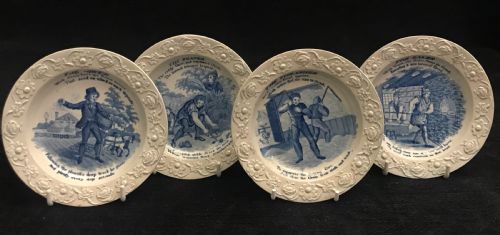
Regency Transfer Printed Pottery
Regency transfer printed pottery brings blue and white scenes directly to the table through earthenware, pearlware, and creamware.
Regency Transfer Printed Pottery
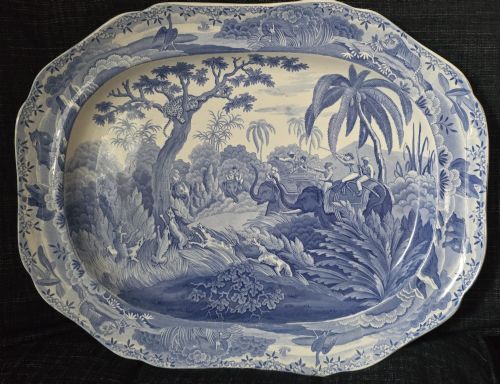
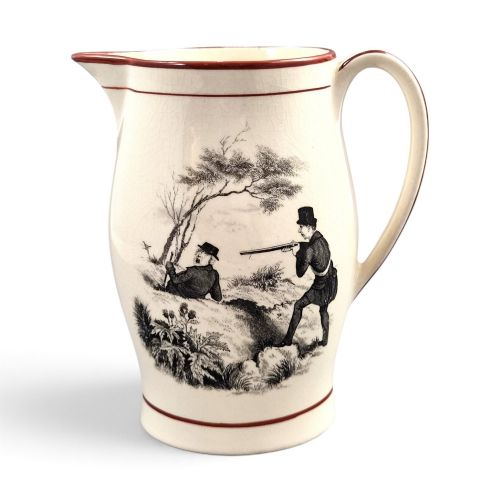
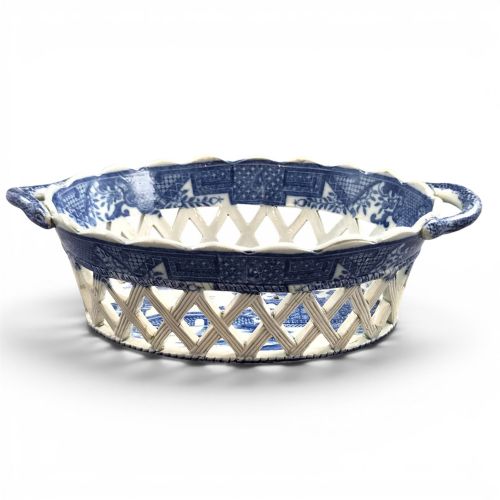
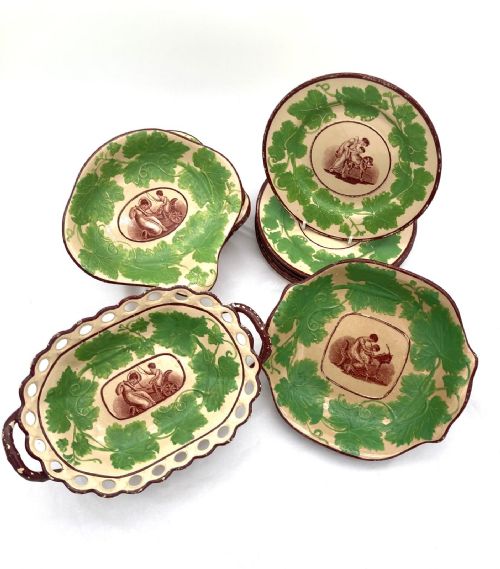
Regency transfer printed pottery comprises tableware, decorative plates, platters, jugs, chestnut baskets, dessert services, footbaths, and custard sets. These items date primarily from the nineteenth century, Georgian, and Regency periods.
Buyers will encounter specific forms such as blue and white plates, meat platters, child's toy tea sets, and sauce tureens. The designs incorporate British and exotic subjects printed onto ceramic bodies.
The objects originate from English factories and workshops operating during the early eighteen-hundreds. Earthenware and pearlware bodies form the structural basis for these transfer-printed items.
Materials and production
Potters utilised earthenware, creamware, and pearlware as the ceramic base for these decorated pieces. A clear glaze covers the body to protect the printed transfer design.
Makers applied monochrome transfer printing in blue and black pigments onto the ceramic surface before glazing and firing. Reticulated chestnut baskets and footbaths required specialised moulding alongside standard throwing and pressing techniques.
The listings span nineteenth-century, Georgian, and Regency periods, utilising earthenware, pearlware, and creamware.
Quality differences
The clarity of the transfer print defines the visual success of the piece, separating crisp impressions from blurred or smudged outlines. Potteries achieved different levels of precision in aligning the printed design across complex forms like hollowware and reticulated baskets.
The selection of the ceramic body, from standard earthenware to refined pearlware and creamware, influences the weight and finish of the object. Intricate forms such as footbaths and custard sets demonstrate greater skill in baseline ceramic manufacturing.
Spode·Heathcote·William Adam·Rogers
The Regency Transfer Printed Pottery Glossary
- Pearlware
- A refined earthenware body developed in the late eighteenth century featuring a subtle bluish glaze that pooled in recesses. This material was widely used for blue and white transfer printing.
- Transfer printing
- A method of decorating ceramics by engraving a design onto a copper plate, pulling an impression on tissue paper, and transferring it onto the unfired or biscuit ceramic body.
- Creamware
- A fine earthenware with a pale yellowish-buff tone developed during the eighteenth century. It served as a smooth surface for early transfer-printed wares.
- Reticulated
- Having a network or openwork pattern, commonly seen in the pierced walls of chestnut baskets and fruit baskets. This decorative technique required skilled piercing of the wet clay body.
- Footbaths
- Large ceramic vessels used for washing feet, often finished with handles and decorated with extensive topographical or pictorial transfer prints.
Regency Transfer Printed Pottery: Frequently Asked Questions
How are these pieces dated?
Dating relies on stylistic evidence, recorded pottery marks, and the specific characteristics of pearlware and creamware bodies. Printers often used contemporary topographical sources that help narrow the period.
Changes in ceramic composition and glaze tones across the nineteenth century also assist in establishing a reliable timeframe for each object.
What is transfer printing?
Transfer printing is a mechanical technique where an engraved copper plate transfers an inked image onto tissue paper. The paper is then pressed onto the ceramic surface to leave the design.
This process allowed potteries to produce intricate pictorial scenes with consistency before the final glazing and firing stages.
How should I display them?
Large platters, footbaths, and chestnut baskets work well on sturdy sideboards or tables where their scale and printed scenes remain visible. Plates and smaller sets benefit from plate hangers or dedicated display shelving.
Keeping them away from direct sunlight preserves the glaze and prevents any cumulative fading of the printed pigments over time.
Why is pearlware blue?
Pearlware appears bluish because potters added a small amount of cobalt to the transparent lead glaze to counteract the natural yellowish tint of the underlying earthenware body. This created a whiter appearance that resembled Chinese porcelain.
The pooling of this tinted glaze in crevices provides a useful indicator for identifying early nineteenth-century ceramics.