




Blue Pearlware Serving Dish
A blue pearlware serving dish brings robust Georgian pottery and deep cobalt scenes straight to the dining table.
Blue Pearlware Serving Dish
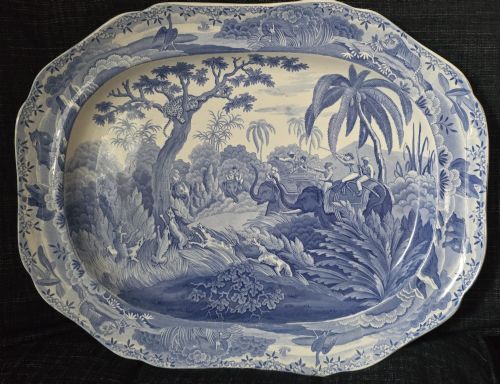
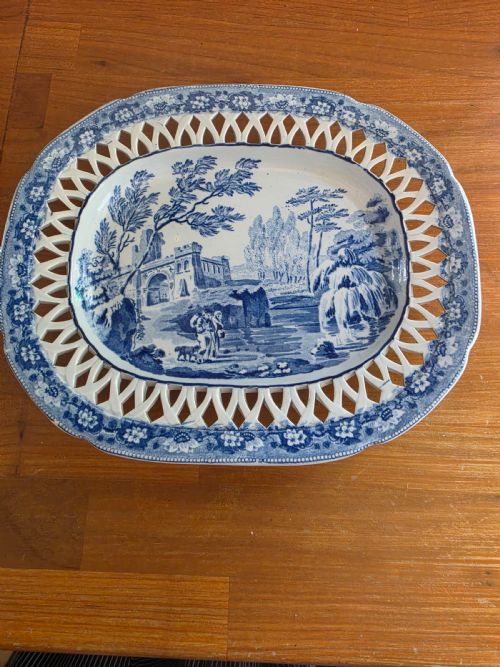
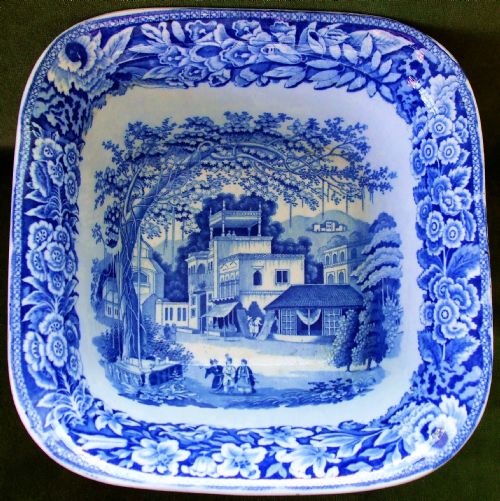
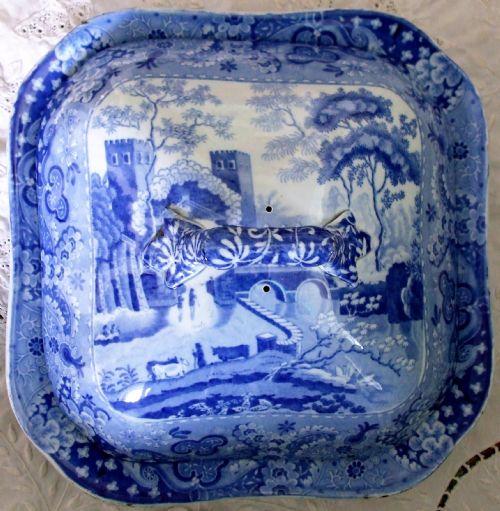
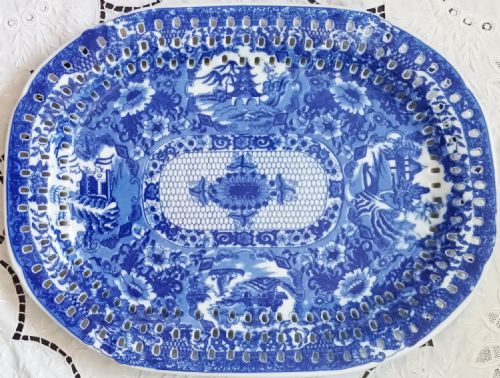
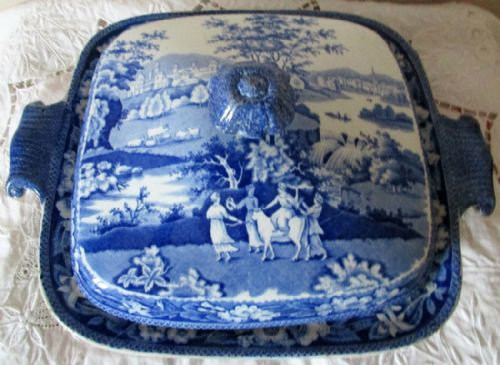
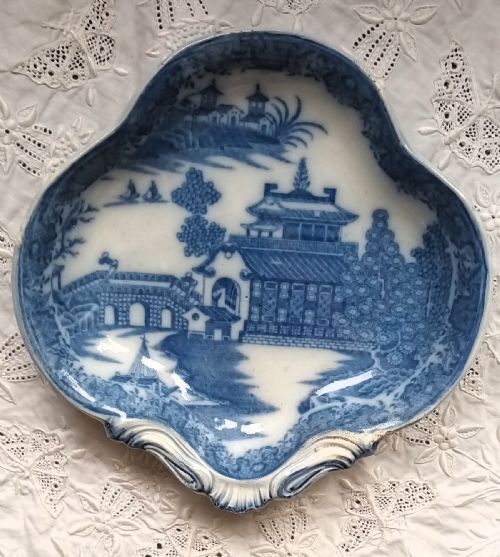
When you search for a blue pearlware serving dish, you encounter substantial earthenware vessels intended for presentation and table service during the Georgian, Regency, and early Victorian periods. These pieces include large platters, pierced serving dishes, vegetable tureens, and sauce stands decorated in rich blue transfer print designs.
The selections found here showcase classic topographical and exotic subjects, ranging from classical ruins and Eastern street scenes to the distinct zebra and London Bridge patterns. Platters often feature drained wells and reservoirs, whilst smaller dishes take fretted or trefoil forms designed for passing at dinner.
Materials and production methods
Potters built these serving pieces from refined earthenware bodies, applying a subtle bluish-tinted lead glaze over the porous clay to mask its natural cream colour. This distinctive glaze pooled faintly blue in crevices, creating the characteristic appearance that distinguishes pearlware from earlier creamware.
Makers decorated the dry or biscuit fired ceramic using cobalt pigment applied via copperplate transfer printing. Skilled artisans transferred intricate engraved designs onto the pottery before firing the piece a second time to fuse the cobalt glaze securely beneath the glossy surface.
Listings feature earthenware serving dishes and platters spanning the Georgian, Regency, and Victorian periods.
Factors determining quality
Quality in a blue pearlware serving dish rests largely on the crispness of the transfer printing and the depth of the cobalt pigment. Superior examples display sharp, clear lines where the engraved copperplate transferred every detail of the pattern without blurring or smudging across the surface.
The sophistication of the form itself elevates certain pieces above standard utility wares. Pierced reticulated borders, integrated draining reservoirs, and complex multi-piece tureen sets demand greater skill from the potter than simple platters, resulting in a more desirable object.
Davenport·J. and R. Riley·J. and R. Clews·Spode·Thomas Lakin·Don Pottery·John Rogers and Son
The Blue Pearlware Serving Dish Glossary
- Pearlware
- A refined type of earthenware developed in the late eighteenth century featuring a thin glaze with a slight bluish tinge. This formulation aimed to emulate the whiteness of Chinese porcelain.
- Transfer printing
- A decoration technique where an engraved copperplate transfers an inked design onto tissue paper, which is then pressed onto the ceramic body. This method allowed intricate patterns to be reproduced consistently.
- Tureen
- A deep covered serving vessel used for bringing soups, vegetables, or sauces to the table. These often rested upon matching ceramic stands.
- Fretted
- Describes an openwork or pierced border pattern cut into the rim of a dish before firing. This decorative technique lightened the heavy earthenware profile.
Blue Pearlware Serving Dish: Frequently Asked Questions
How do I use a pearlware dish today?
These robust earthenware platters and bowls remain entirely suitable for serving dry foods at the dining table. Hand washing protects the historical glaze and cobalt decoration from modern detergents.
Displaying them on open dressers or hanging them securely on walls allows you to appreciate the transfer printed patterns daily without risking modern thermal shock.
How do I tell pearlware from creamware?
Creamware exhibits a warm, buttery yellow tone across the body and glaze. Pearlware uses a subtle cobalt additive in the glaze to achieve a whiter, cooler appearance.
Examining the pooled glaze around foot rims or moulded details reveals the distinct bluish tint characteristic of pearlware production.
What is a transfer print?
Transfer printing is a mechanical decoration process that revolutionized ceramic production. Artisans engraved copper plates with detailed illustrations, inked them with cobalt pigment, and pressed the image onto the pottery.
This technique replaced hand painting for complex scenes, ensuring uniform patterns across large dinner services.
Why do some platters have wells?
Carving platters incorporated reservoirs and drainage channels to collect meat juices during the slicing of joints at the table. This practical design kept the meat elevated and neat.
Such functional additions mark the piece out as a specialised serving vessel rather than a flat display plate.