
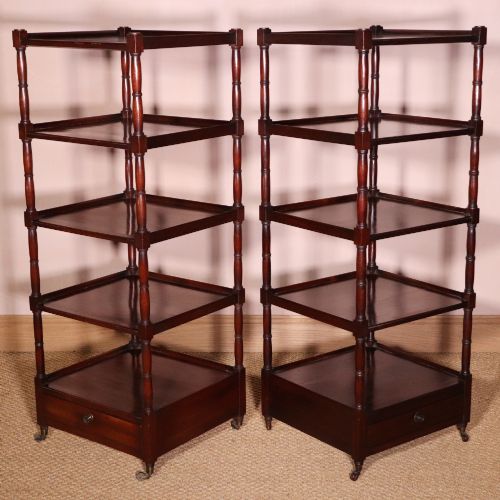
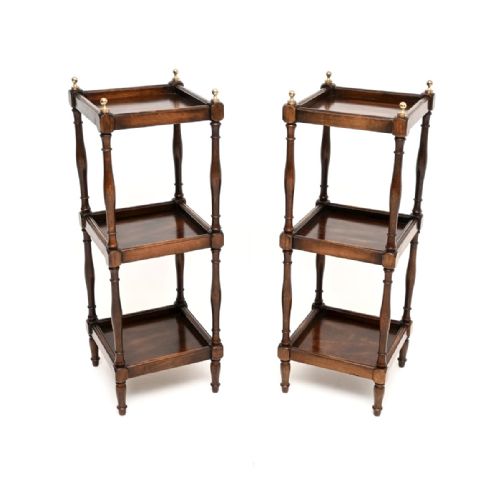
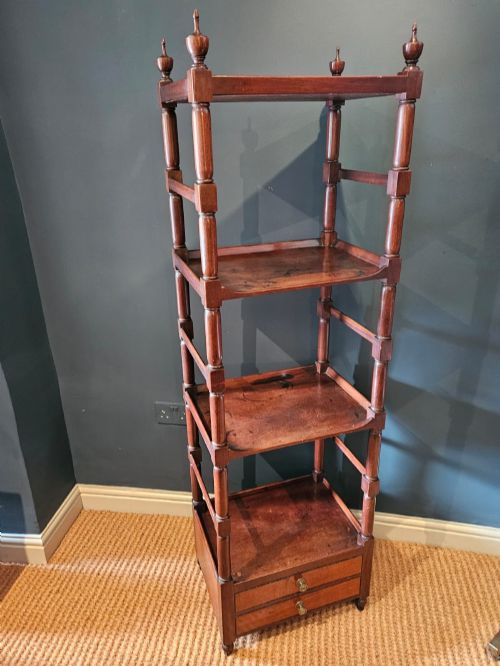
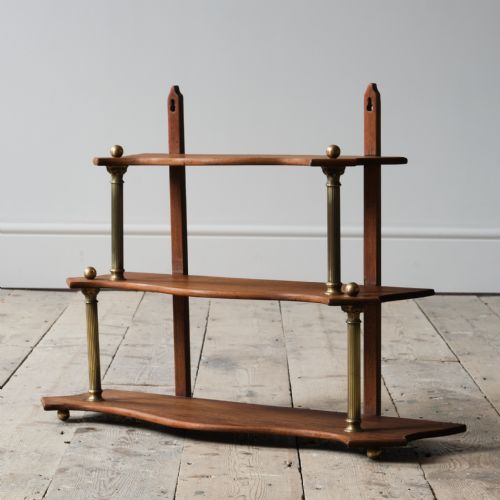
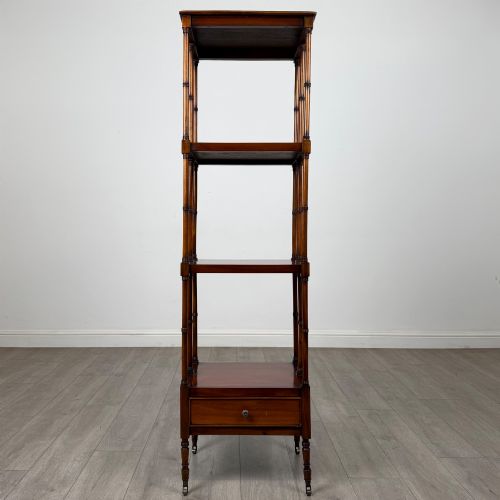
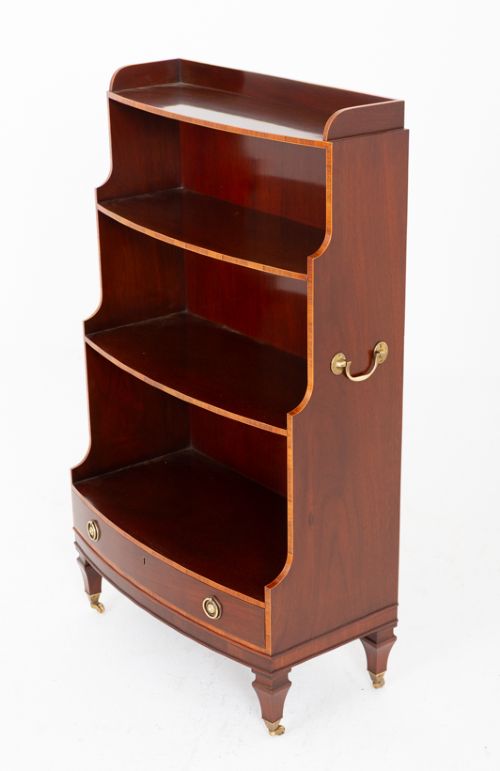
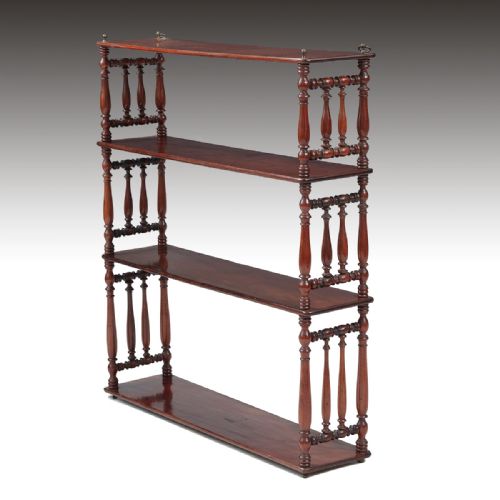
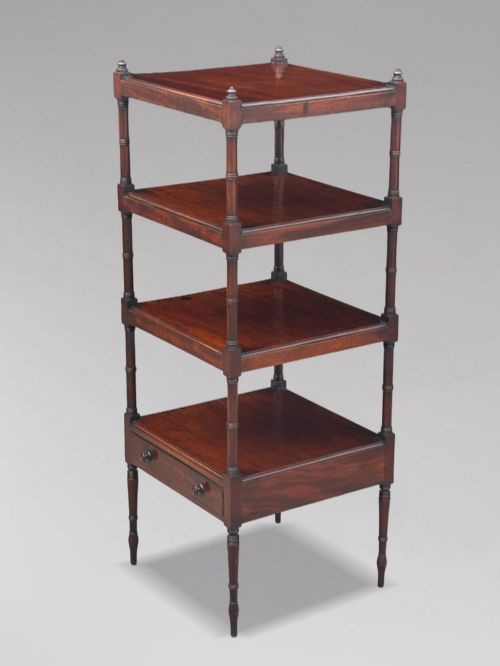
Regency Tiered Display
Regency tiered display pieces combine practical multi-level shelving with refined woodwork to showcase treasured objects in any room.
Regency Tiered Display
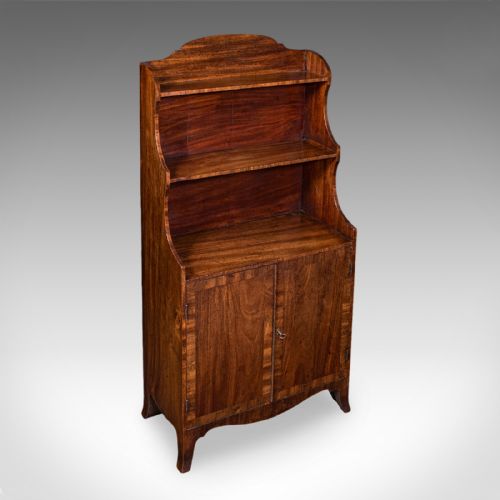
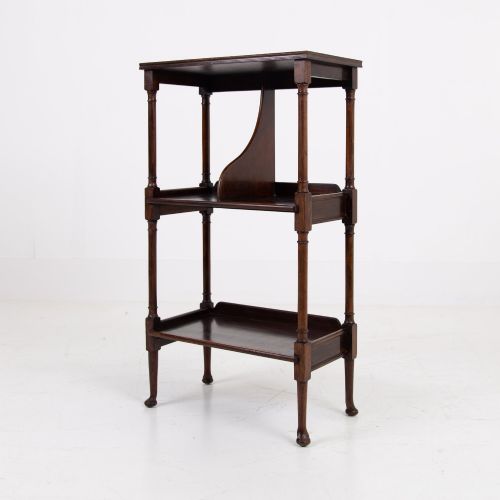
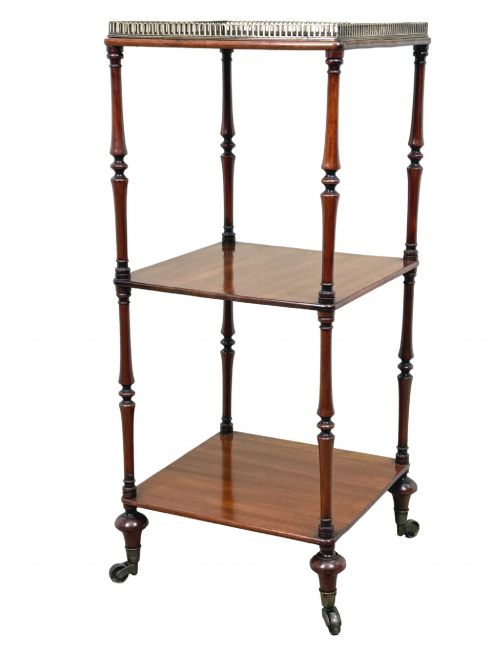
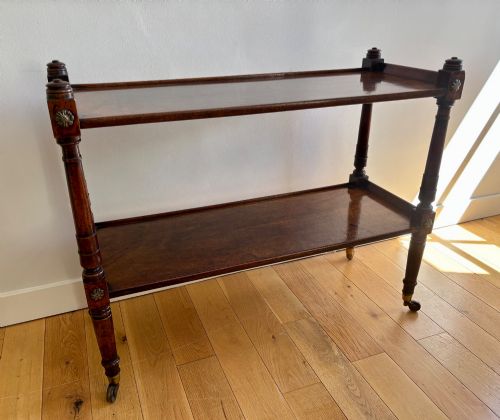
A regency tiered display encompasses various forms of multi-level storage and presentation furniture, most commonly appearing as whatnots, etagere units, and waterfall bookcases. These pieces serve to organise and exhibit books, ceramics, and ornaments across stacked horizontal surfaces.
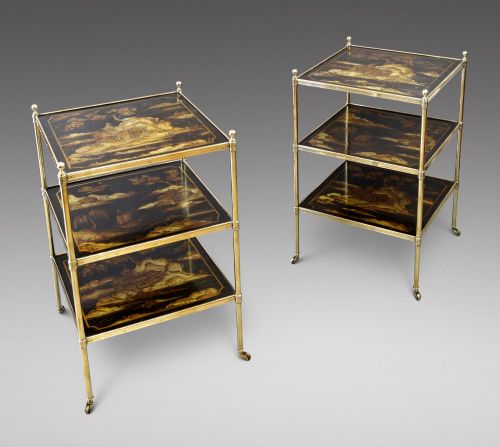
The selections span distinct periods, drawing heavily from the Regency, George III, George IV, and William IV eras, alongside later revival pieces from the Victorian, Edwardian, and twentieth-century periods. Mahogany and rosewood dominate the structural forms, frequently augmented by brass details.
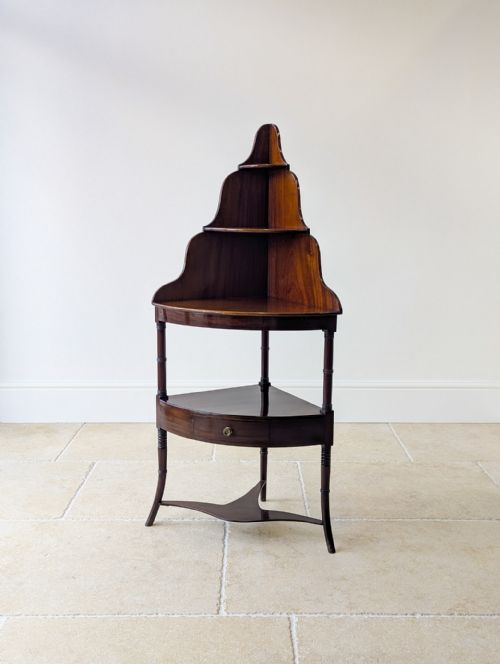
Buyers encounter freestanding floor models alongside wall-hanging shelves and corner stands. The scale ranges from petite hanging shelves to tall four-tier bookcases and music stands fitted with lower cupboards or cellarettes.
What varies in quality
The refinement of timber selection dictates the visual impact of each piece, distinguishing simple utility items from superior display furniture through rich grain patterns in flame mahogany and rosewood. The choice of secondary metals, such as finely cast brass details and supports, elevates the overall finish.
Proportion and scale separate standard regional pieces from exceptional examples attributed to skilled workshops. The crispness of turning on upright supports and the integration of functional additions like cellarettes or drawers define the level of craftsmanship.
Period origins range from George III and Regency epochs through Victorian interpretations to twentieth-century revivals.
Gillows
The Regency Tiered Display Glossary
- Whatnot
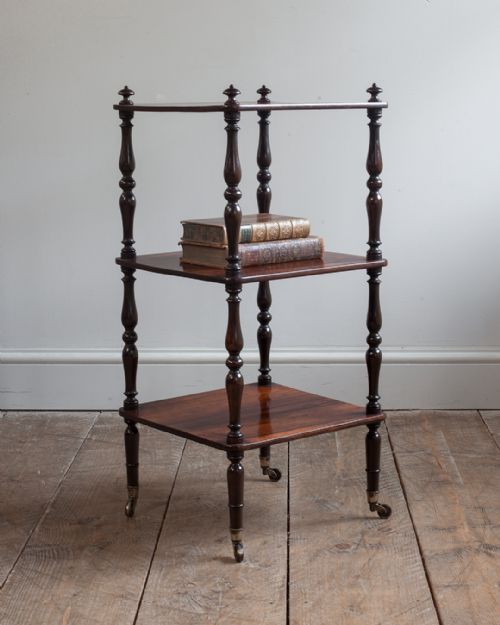
- A piece of furniture consisting of a set of open shelves for displaying small objects or books. They typically feature three or four tiers supported by slender uprights.
- Etagere
- A piece of furniture with a set of open shelves for displaying ornaments. The term is frequently used interchangeably with whatnot in nineteenth-century contexts.
- Waterfall bookcase
- A set of open bookshelves where the side panels resemble steps, making each shelf narrower than the one below it. These emerge frequently in mahogany and rosewood forms.
- Cellarette
- A lockable container or compartment designed to hold bottles, occasionally incorporated into the lower section of a tiered whatnot stand. It provides secure enclosed storage beneath open display tiers.
- Parcel gilded
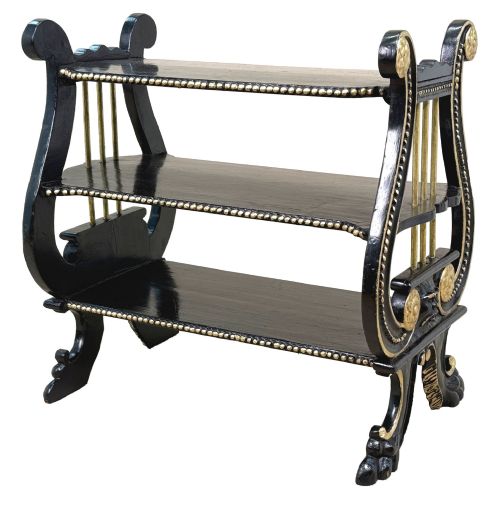
- Partially covered with gold leaf or gilt paint to highlight specific carved details or mouldings. This decorative technique appears on ebonised display units.
Regency Tiered Display: Frequently Asked Questions
What is a regency tiered display used for?
These pieces were originally designed to hold books, ceramics, and decorative objects within principal rooms. Multiple open levels allowed owners to arrange and exhibit small collections for daily use.
Today, they function similarly in domestic interiors, offering vertical storage and display space without dominating floor areas.
How do I tell a Regency whatnot from a later revival piece?
Early nineteenth-century examples often display timber selections like dense mahogany and rich rosewood with hand-finished turned supports. Construction methods typically utilise traditional joinery appropriate to the period.
Revival pieces from the Edwardian or later eras tend to show different secondary woods and uniformity in turning that reflects industrial manufacturing shifts.
Where should I place a tiered display unit?
Freestanding whatnots and etageres suit corners or open wall spaces where light can reach the displayed items from multiple angles. Wall-hanging shelves require secure fixings into solid masonry or studwork to bear the weight of books and objects.
Smaller corner stands and portable bookshelves adapt easily to narrower rooms or hallways needing compact display surfaces.
What maintenance do rosewood and mahogany shelves need?
Timber surfaces benefit from occasional dusting with a soft, dry cloth and protection from direct sunlight and extreme temperature fluctuations. Avoiding harsh chemical polishes preserves the original finish and timber grain.
Checking brass supports and structural joints periodically ensures stability across all stacked tiers.