
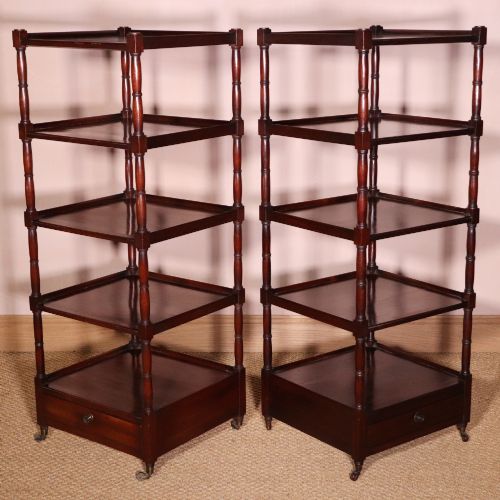
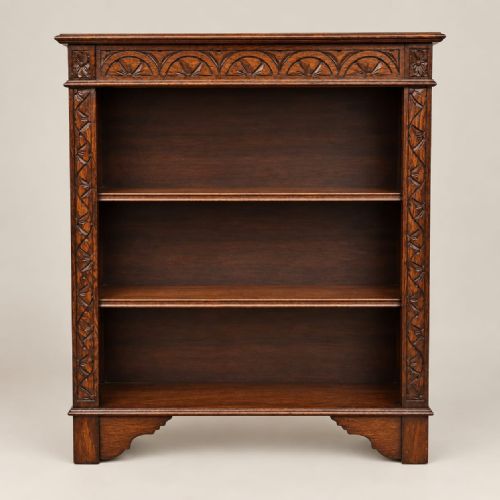
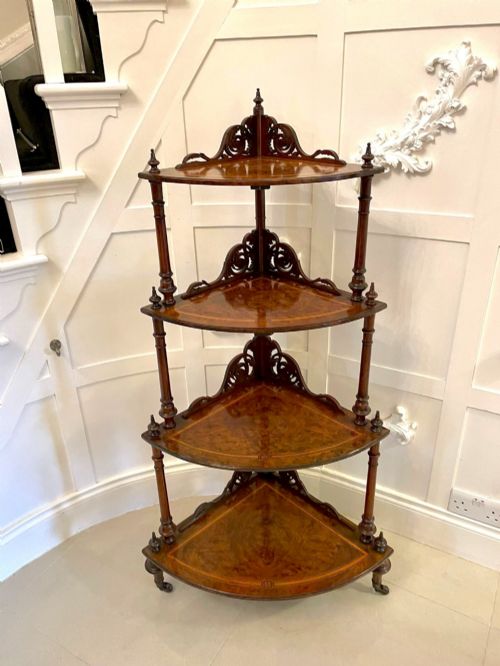
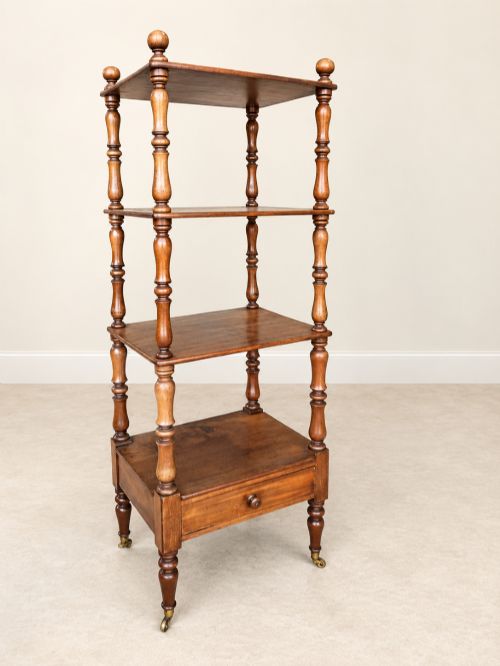
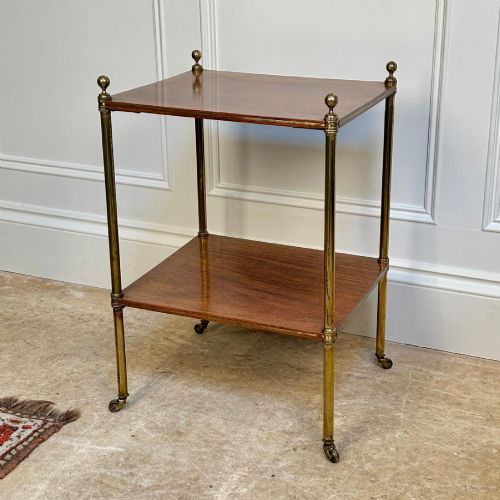
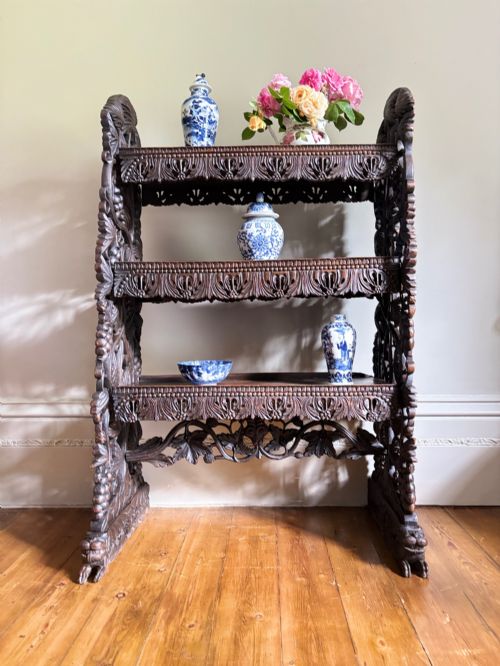
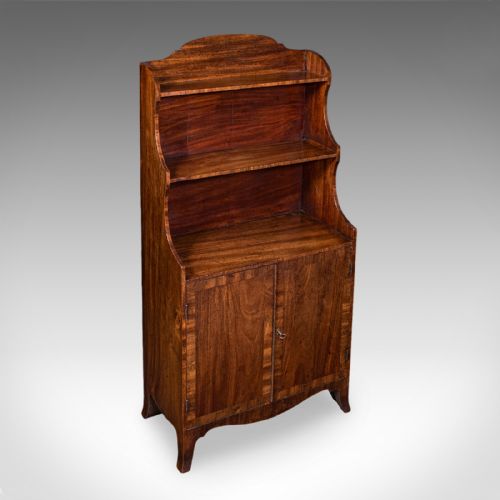
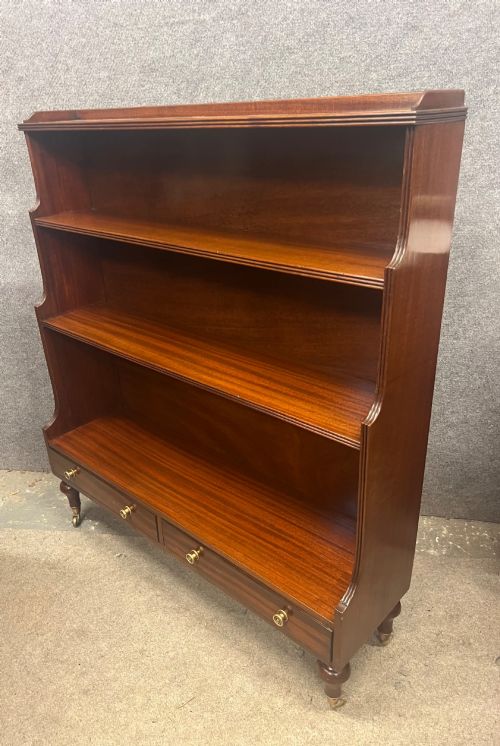
Tiered Shelving Unit
These tiered shelving unit pieces offer multi-level display and storage, bringing vertical elegance and practical organisation to any room.
Tiered Shelving Unit
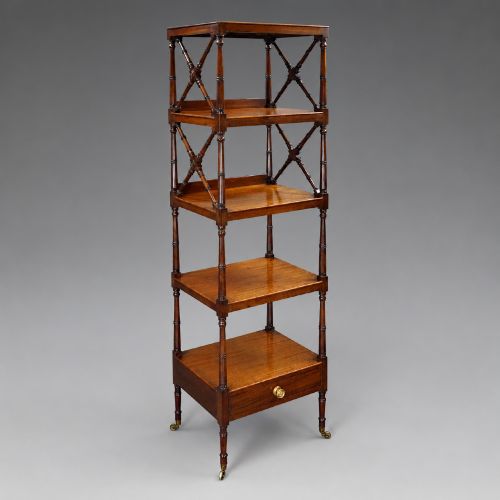
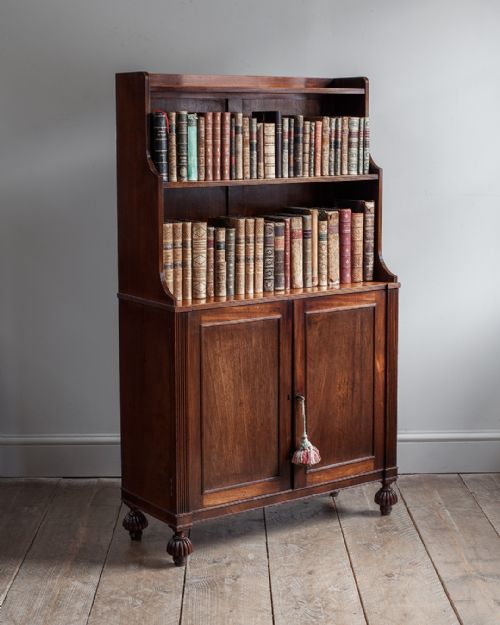
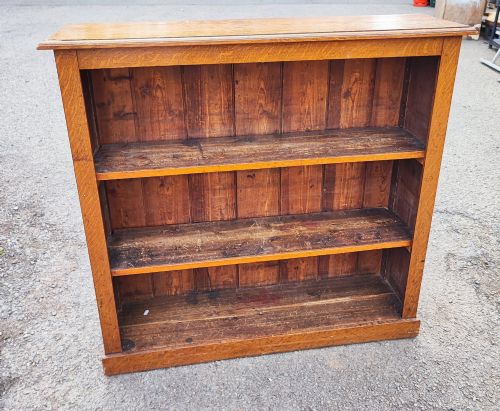
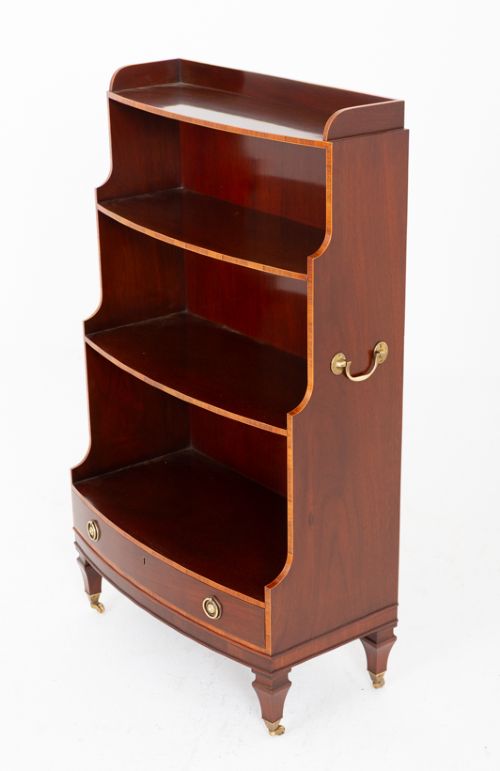
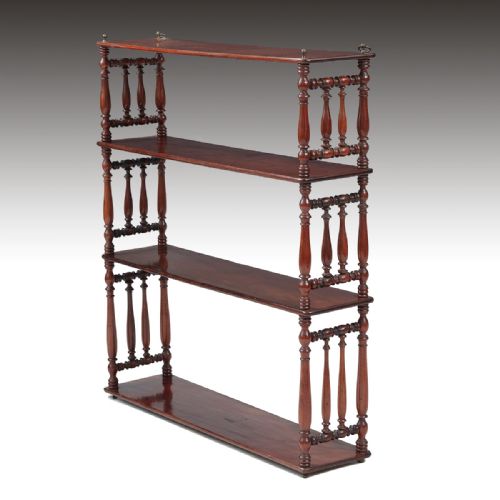
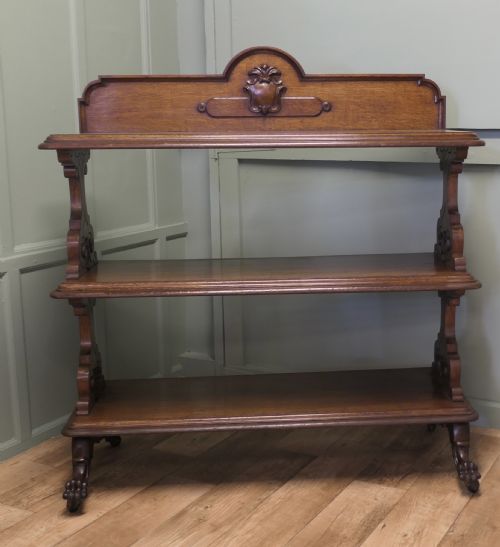
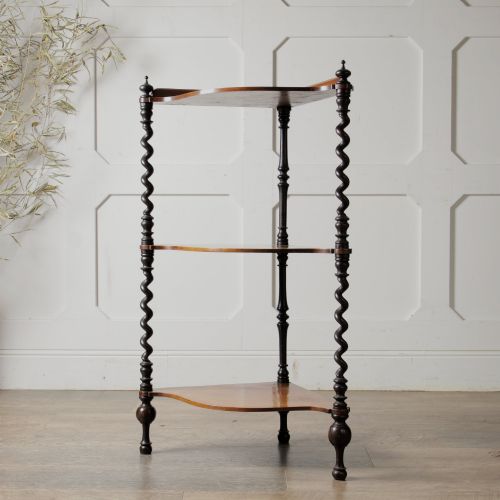
A tiered shelving unit provides multiple ascending or stacked levels for books, display and storage across various historical periods. The search phrase encompasses forms such as whatnots, etageres, waterfall bookcases, and open bookcases that utilise graduated tiers.
Buyers frequently encounter nineteenth-century examples in mahogany, walnut, and rosewood, alongside lighter Edwardian designs in oak. These pieces range from compact corner whatnots to tall bookcases and multi-tiered etageres.
Originating largely from the Regency, Victorian, and Edwardian eras, these units reflect shifts in domestic display habits from closed cabinetry to open, accessible shelving. Pieces appear in distinct regional expressions, including English cabinet-making and Anglo-Indian production.
Assessing quality in tiered shelving
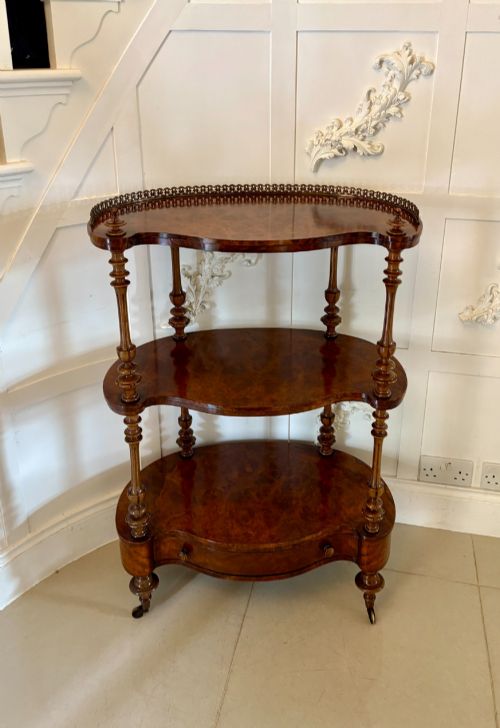
Quality rests in the selection of timber, the crispness of turned supports, and the structural integrity of the tiered junctions. Superior pieces display carefully matched burr walnut veneers, precise joinery, and substantial timber thickness rather than thin laminates.
The refinement of carved detailing, the presence of original brass hardware, and the balance of the proportions distinguish standard utility items from masterwork pieces. Finer examples maintain rigid tier stability without sagging across wider shelf spans.
Listings for this phrase feature pieces spanning the Regency, Victorian, and Edwardian periods, constructed in mahogany, walnut, rosewood, oak, and pine.
Heals
The Tiered Shelving Unit Glossary
- Whatnot
- A moveable set of open shelves, typically with three or more tiers, designed for displaying ornaments and books. It gained widespread popularity during the nineteenth century.
- Etagere
- A piece of furniture consisting of a number of open tiers for holding ornaments, sharing a similar form to the whatnot. French walnut and rosewood versions often feature turned legs.
- Waterfall bookcase
- A shelving unit where the shelves recede in depth from bottom to top, following a stepped profile. Regency and Victorian makers produced these in mahogany and inlaid timbers.
- Barley twist
- A carved wooden support shaped like a helix or spiral, frequently utilised as upright posts in Victorian whatnots. This decorative turning technique adds visual texture to vertical members.
- Dwarf bookcase
- A low open bookcase designed to sit beneath dado height, allowing items to be displayed on the top surface. These appear in Regency and later nineteenth-century forms.
Tiered Shelving Unit: Frequently Asked Questions
What is a tiered shelving unit?
A tiered shelving unit is a multi-level piece of furniture designed for storage and display, encompassing forms like whatnots, etageres, and waterfall bookcases.
These pieces feature stacked horizontal surfaces supported by vertical columns, uprights, or enclosed sides, offering open access from multiple angles.
How were these units used historically?
Historically, these units served to display decorative ornaments, porcelain, and books in drawing rooms, parlours, and libraries. Their open design allowed owners to exhibit curated collections in prominent domestic spaces.
Smaller corner whatnots and movable etageres provided flexible storage that could be repositioned as room layouts changed.
How do I care for antique wood shelves?
Maintain antique timber shelves by keeping them away from direct sunlight and extreme humidity fluctuations, which can cause wood to warp or veneers to lift. Dust regularly with a soft, dry cloth rather than applying silicone-based polishes.
Periodically nourish hardwood surfaces with appropriate wax to preserve the finish and prevent the timber from drying out.
How do I tell a Victorian whatnot from a Regency one?
Regency pieces typically feature cleaner architectural lines, linear mahogany grains, and classical proportions, often reflecting restraint in ornamentation. Victorian examples frequently employ richer, more heavily figured timbers like burr walnut, alongside bolder turnings such as barley twists.
Victorian pieces also tend towards greater elaboration, including carved crests, serpentine shelves, and inlaid decoration.