



Regency Tier Server
A regency tier server is a multi-level timber stand built for dining rooms, offering tiered tiers of surface space for serving food and drink.
Regency Tier Server
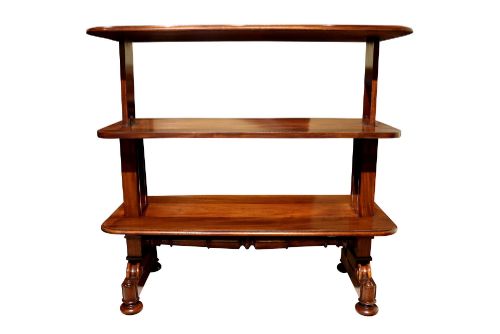
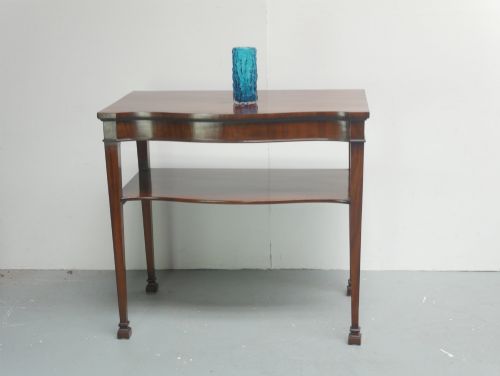
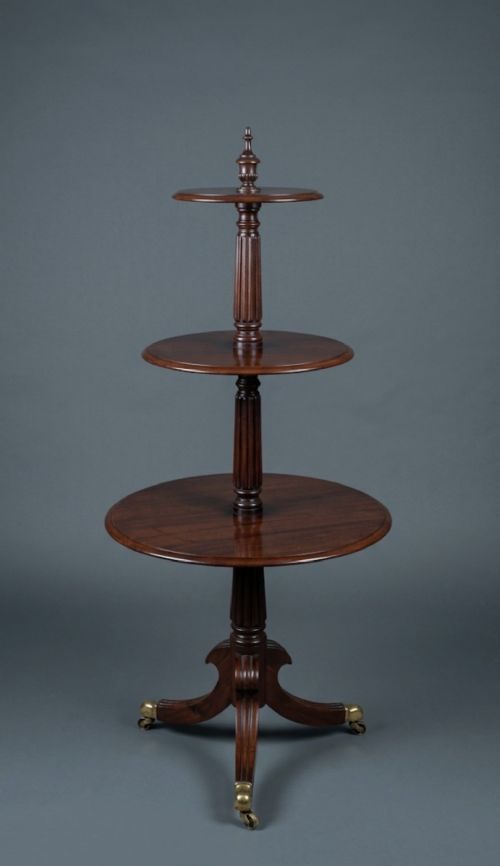
When you examine a regency tier server on this page, you encounter multi-level pieces designed to hold dishes and serving items during meals. The forms span circular tiered dumb waiters, multi-tier buffets, and serving tables originating from the nineteenth century.
You are most likely to meet mahogany examples featuring two or three tiers, alongside occasional variants in pollard oak or oak. These pieces reflect the dining customs of the Georgian, Regency, and William IV periods.
The objects function as practical serving furniture, combining revolving shelves, folding mechanisms, or fixed tiers. Their proportions range from compact round stands to grand dining room buffets.
What separates the finest examples
The quality of a regency tier server rests in the selection of timber figure, the crispness of turned pillars, and the mechanical integration of moving tiers. Superior workshops achieved balanced proportions and robust joints that withstand the weight of heavy serving vessels.
Finer iterations display thoughtful detailing such as brass castors of heavy gauge, finely carved mouldings, and clever metamorphic functions that alter the height or configuration of the shelves.
Regency Tier Server Retail Price Guide 2026
Typical asking prices for regency tier server among the pieces listed under this phrase on Sellingantiques today, from the lower quarter to the upper quarter. They describe what is for sale here now, not the wider market.
Some tier servers fold flat when the butler needs to clear the floor after the port has been poured.
The Regency Tier Server Glossary
- Dumb waiter
- A tiered serving stand designed to hold food and utensils without the presence of servants. These pieces typically feature circular rotating shelves supported on a central pillar.
- Buffet
- A serving piece or sideboard used for displaying or holding food during meals. In nineteenth-century examples, these often incorporate multiple tiers or shelves.
- Metamorphic
- Describing furniture that transforms its shape or function through mechanical devices. Examples include servers with rise and fall mechanisms or folding shelves.
- Pollard oak
- Timber taken from trees that have been pollarded, producing a dense wood with distinctive clustered grain patterns. This material appears on select high-status nineteenth-century servers.
- Fiddleback mahogany
- Mahogany timber exhibiting a rippled, undulating grain pattern resembling the back of a violin. Cabinetmakers utilised this highly decorative veneer on prominent surfaces.
Regency Tier Server: Frequently Asked Questions
What is a regency tier server used for?
These tiered stands served dining rooms by holding dishes, bottles, and glasses close to the table. They reduced the need for attending servants during family meals.
Today, they function as display stands or occasional tables in living spaces, holding books, plants, or decorative objects on their multiple shelves.
How many tiers do these servers have?
Most examples featured in the listings possess two or three tiers graduated in size from top to bottom. Circular models often utilise a central turned column to support each revolving shelf.
Some larger buffet formats incorporate serving surfaces paired with lower shelves or raised backs for display purposes.
What wood was used for these pieces?
Mahogany is the predominant timber found across these listings, appearing in straight-grained varieties as well as decorative figures like fiddleback. Oak and pollard oak also feature in select nineteenth-century examples.
Secondary materials include brass for castors and mechanical joints, adding durability to the structural columns and tier supports.
How do I identify a period piece?
Period pieces from the Regency and William IV eras display traditional hand-cut joinery, timber shrinkage appropriate to age, and original brass hardware. Construction methods rely on solid mahogany framing and turned pillars rather than modern fasteners.
Stylistic cues include classical column supports, reeded edges, and traditional patination developed through decades of polishing.