

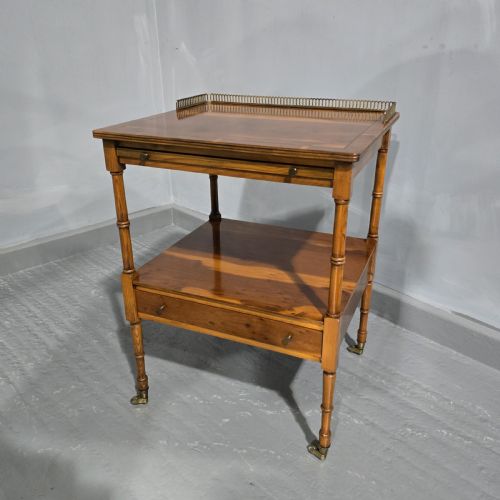


Regency Wooden Etagere
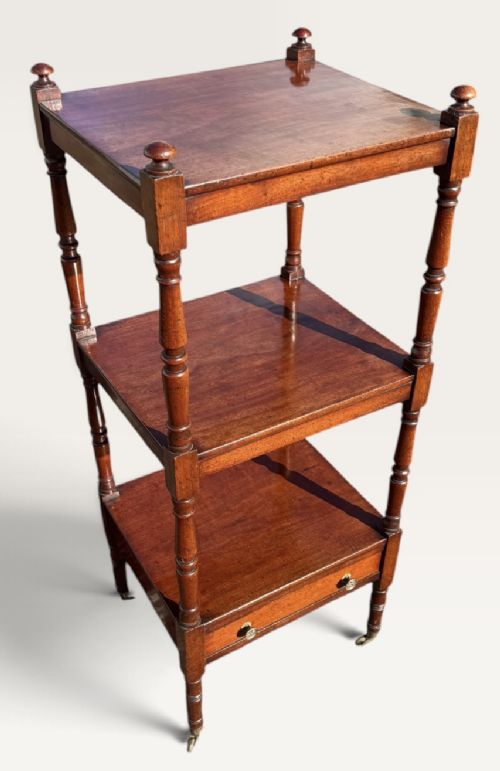
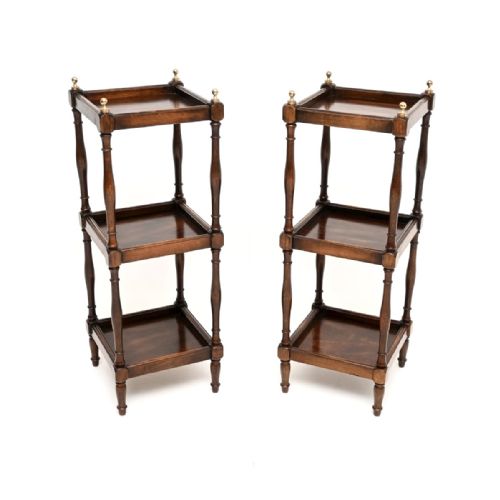
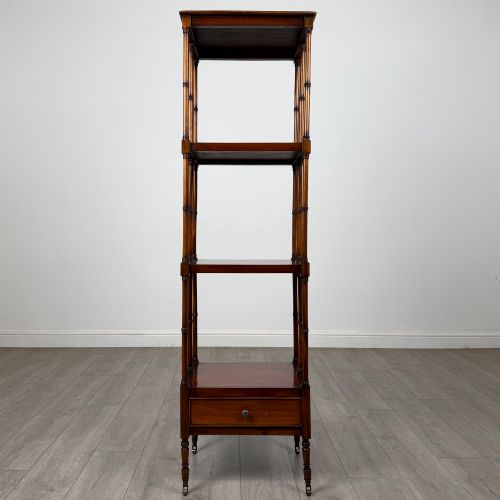
A regency wooden etagere provides tiered open shelving designed to display books and porcelain with lightness and proportion.
Regency Wooden Etagere
A regency wooden etagere brings tiered shelving into sitting rooms and libraries, serving as a display stand or small bookcase. These pieces take the form of whatnots, buffets, and open shelf units designed to hold small decorative objects.
The versions met most frequently on this page span the Regency, George IV, and Georgian periods, alongside later revival pieces. Mahogany forms the predominant timber, accompanied by yew, burr walnut, and birdseye maple.
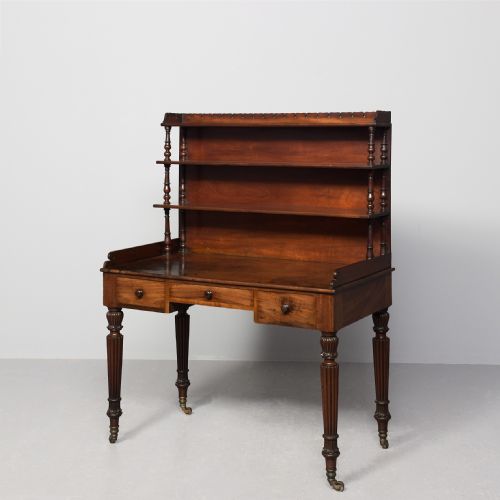
Makers fashioned these stands with multiple tiers supported by slender upright columns, occasionally incorporating cupboards or drawers beneath the shelves. The forms range from floor-standing A-frame units to wall-mounted hanging shelves.
How they were made
Cabinetmakers utilised dense timbers such as mahogany, yew, and walnut, selecting figured veneers like burr walnut and birdseye maple for visual contrast. Turners shaped slender columns and supports to bear the weight of the graduated tiers without bulk.
Joinery techniques relied on precise framing and pegging to stabilise multi-tiered structures, while brass castors and fittings provided mobility and structural accents. Timber surfaces received hand-rubbed finishes that highlighted the natural grain and colour of the wood.
Regency Wooden Etagere Retail Price Guide 2026
Typical asking prices for regency wooden etagere among the pieces listed under this phrase on Sellingantiques today, from the lower quarter to the upper quarter. They describe what is for sale here now, not the wider market.
Some nineteenth-century makers squeezed cupboards into the lowest tier of a tall whatnot, just in case open shelving proved too revealing.
What varies in quality
The standard of timber selection defines the upper tier of these pieces, distinguishing finely figured mahogany and burr veneers from plain commercial stock. Craftsmanship shows in the crispness of turned supports and the tight fit of joints across multiple shelf levels.
Proportion and utility separate accomplished design from standard workshop production, with superior examples exhibiting balanced tier heights and considered detailing such as mirrored backs or integrated cupboards.
James Mein of Kelso
The Regency Wooden Etagere Glossary
- Etagere
- A piece of furniture consisting of a set of open shelves for displaying small objects. These tiered stands developed in France before becoming popular in British interiors.
- Whatnot
- A multi-tiered stand used for storage or display in nineteenth-century rooms. This term appears interchangeably with etagere in many period descriptions.
- Birdseye maple
- A decorative timber figured with small circular patterns resembling bird's eyes. Cabinetmakers used this wood for contrasting veneers on cabinetwork.
- A-frame
- A structural configuration where upright supports taper inward toward the top. This geometric form provided stability for tall tiered shelving units.
Regency Wooden Etagere: Frequently Asked Questions
What is a regency wooden etagere?
A regency wooden etagere is a multi-tiered open shelf unit designed for displaying decorative objects or books. These pieces use slender uprights to support graduated platforms.
Cabinetmakers built them in various forms, including whatnots, buffets, and wall-mounted shelves. They served primarily in sitting rooms and libraries during the nineteenth century.
How were etageres used originally?
Original owners used these tiered stands to hold porcelain, silver, books, and small decorative items. Their open construction kept collections visible and accessible in principal rooms.
Some examples incorporated enclosed cupboards at the base for supplementary storage. Wall-mounted variants freed up floor space while providing similar display capacity.
Where should I place an etagere?
An etagere suits corners, wall spaces, or beside seating where vertical display is required without heavy furniture bulk. Floor-standing models fit well against panelled or plastered walls.
Hanging shelf variants require secure wall fixings to support the timber weight and displayed objects. Their shallow depth allows placement in narrower circulation spaces.
How do I identify a Regency period piece?
Regency pieces display classical proportions, restrained classical ornament, and dark dense timbers such as mahogany and rosewood. Turning on upright supports often follows architectural orders.
Comparison with George IV and later revival items involves examining timber patination and construction methods. Earlier examples show hand-cut joinery and specific secondary woods.