
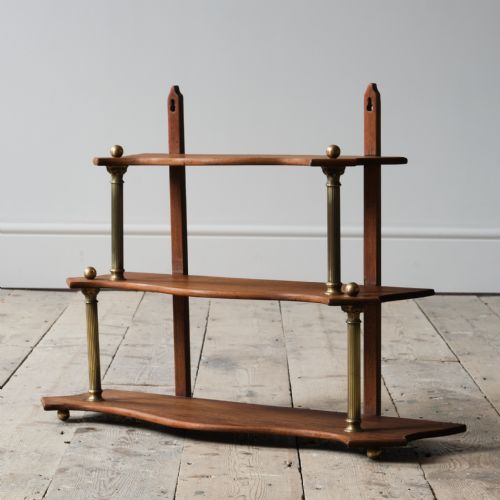
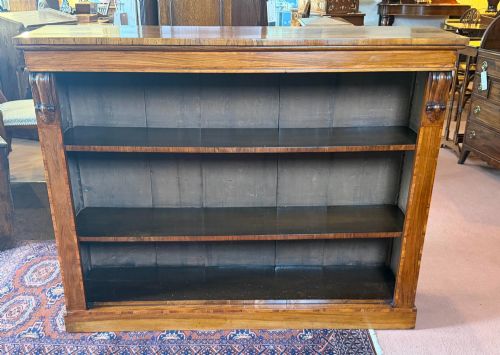
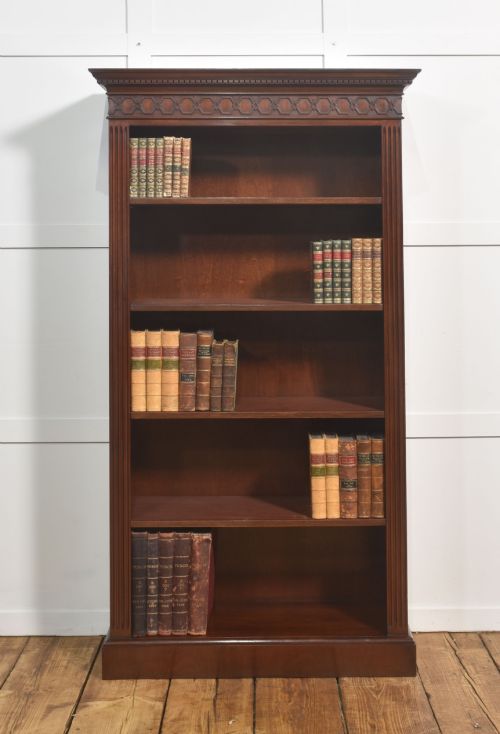
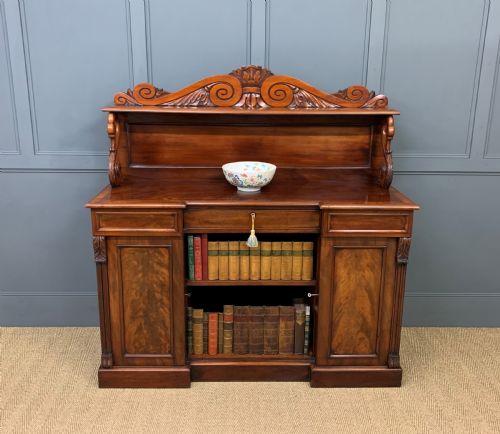



Regency Carved Shelf
A regency carved shelf brings architectural discipline and rich timber grain to a room, offering practical display space with distinctive period character.
Regency Carved Shelf
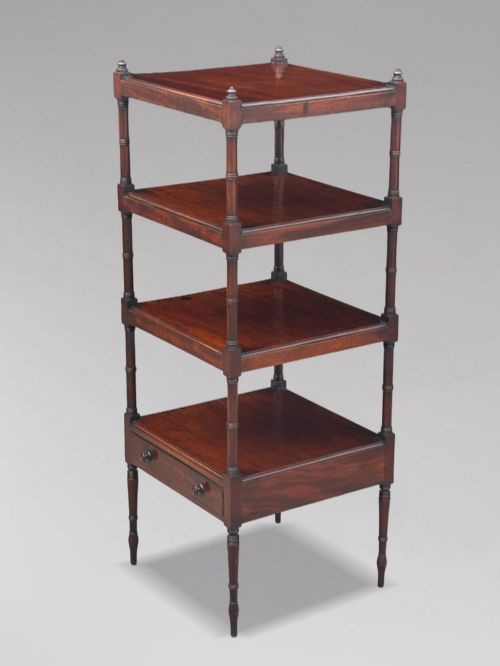
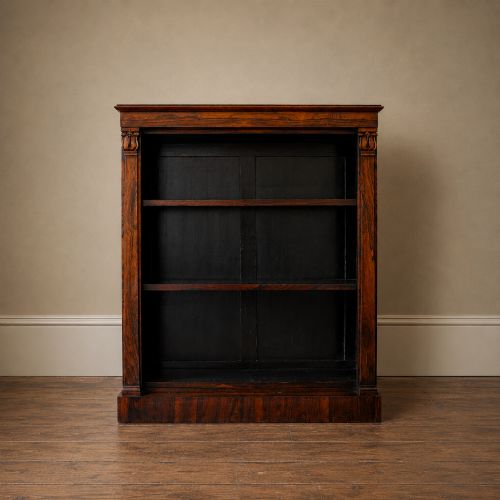
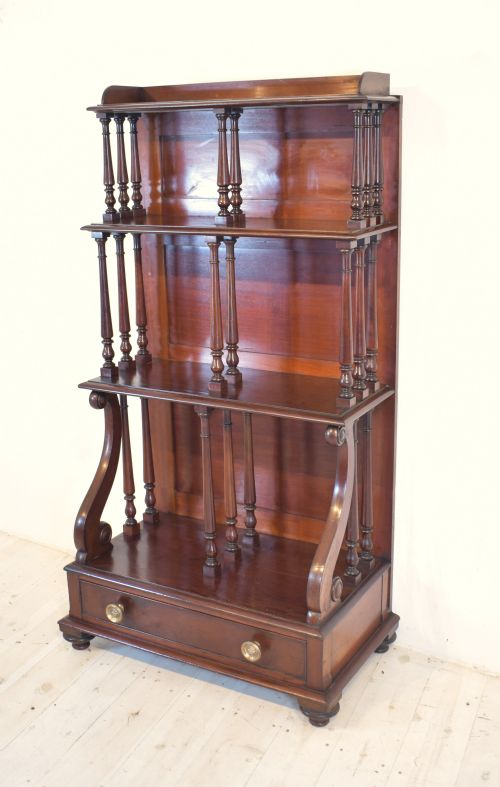
When searching for a regency carved shelf, buyers encounter wall brackets, multi-tiered whatnots, and open shelving units originating from the nineteenth century.
The selections on this page span the Regency, George III, George IV, and William IV eras, capturing the formal elegance typical of the period.
Makers utilised rich hardwoods to create practical storage pieces that served both functional display and decorative purposes in domestic interiors.
Materials and Construction
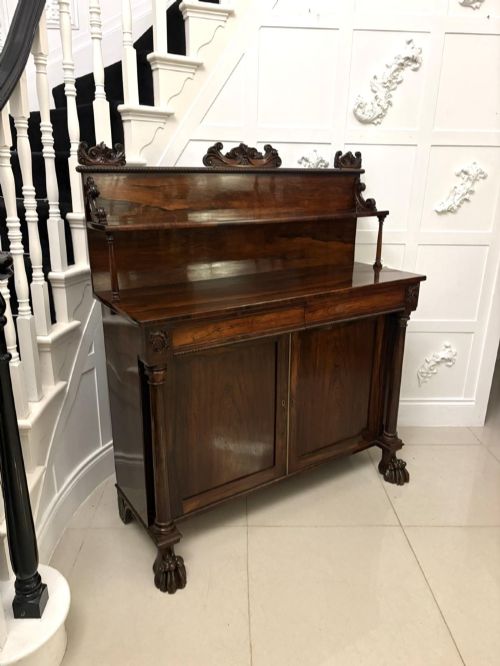
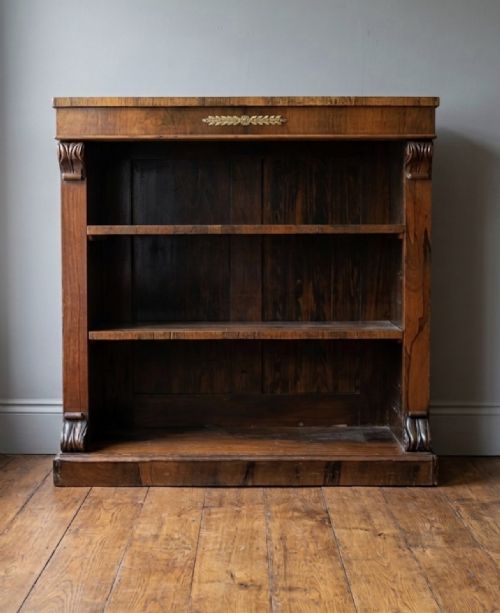
Cabinetmakers relied heavily on solid mahogany and rosewood, often accentuating surfaces with flame mahogany veneer to create striking visual depth.
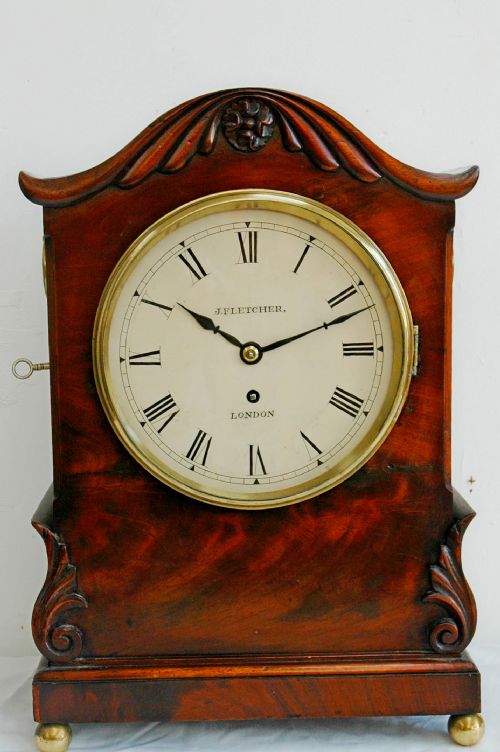
Giltwood elements and brass details provided contrast against dark timbers, while hand-carved motifs defined the structural trims and brackets.
Some shelves spent centuries holding heavy volumes before finding new life displaying eccentric ceramic collections.
Evaluating Construction and Finish
Superior examples display crispness in the hand-carved details and careful selection of figured wood veneers that match harmoniously across the piece.
The integrity of adjustable shelving mechanisms and the preservation of original patination distinguish master cabinetmaker output from standard workshop production.
Strahan of Dublin·Gillows·Barrett London·J Kingerley Manchester
The Regency Carved Shelf Glossary
- Flame mahogany
- A wood veneer cut from the fork of the mahogany tree, producing a distinctive flickering flame pattern. This decorative timber was favoured for high-status furniture fronts.
- Whatnot
- A moveable set of open shelves used for displaying ornaments and books. These tiered stands date predominantly from the nineteenth century.
- Giltwood
- Timber that has been coated with a thin layer of gold leaf or gesso. It provides bright reflective accents on mirrors and decorative brackets.
- Breakfront
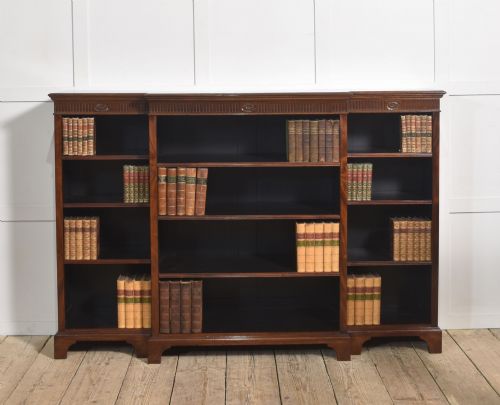
- A piece of furniture where the central section projects forward from the flanking sides. This architectural arrangement creates depth and shadow in large bookcases and cabinets.
- Rosewood
- A dense, heavily grained dark timber prized for its rich colour and polished finish. It appears frequently in Regency and William IV pieces.
Regency Carved Shelf: Frequently Asked Questions
How do I style a regency carved shelf?
Mount wall brackets securely onto structural studs to support the weight of heavy timber and displayed items.
Pair these shelves with traditional books, small bronzes, or ceramics to complement the nineteenth-century aesthetic.
What wood types are most common?
Mahogany and rosewood dominate the listings, frequently enhanced with flame veneers.
These dark timbers reflect the prevailing interior taste of the Regency and William IV periods.
Are these shelves suitable for books?
Many variants feature sturdy construction and adjustable shelves designed specifically for holding volumes.
Wall-mounted brackets suit lighter decorative objects rather than heavy library collections.
How do I identify a Regency period piece?
Look for architectural proportions, classical carved motifs, and specific timber choices like rosewood or flame mahogany.
Construction methods such as traditional joinery help confirm the nineteenth-century origin.