


Regency Teapoy
A regency teapoy is a grand freestanding box for storing loose tea, combining elegance with a practical social role in the period interior.
Regency Teapoy
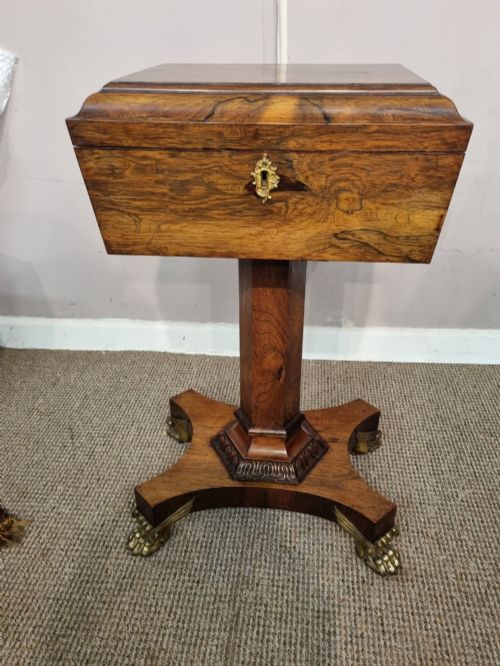
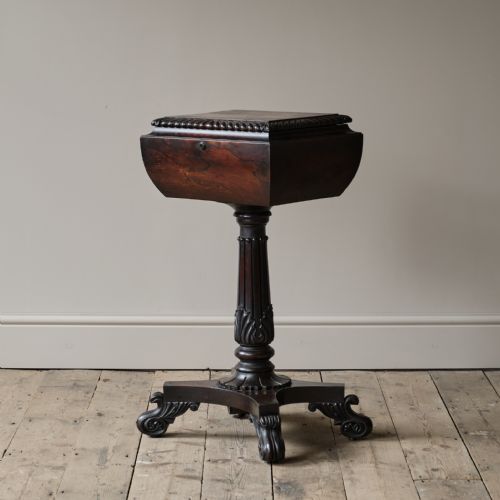
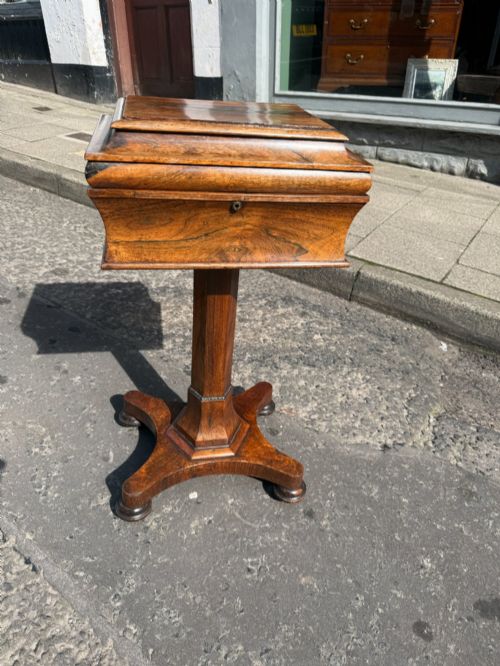
A regency teapoy sits on a central pedestal or four carved feet, taking the form of a sarcophagus shaped box or a circular lamp table designed to hold tea canisters. The pieces seen here span the Regency, William IV, Georgian and Victorian eras, originating from English and Scottish workshops.
Rosewood and mahogany dominate the listings, frequently enriched with brass inlay, satinwood or marquetry decoration. While primarily built to house tea, variations include converted interiors and work boxes or spirit tables.
The standard form stands at a convenient height beside a drawing room chair, presenting a fitted interior intended to keep valuable tea secure under lock and key.
How they were made
Cabinetmakers utilised dense timbers like rosewood, flame mahogany and satinwood, often applied as veneers over solid hardwood carcases. Burr maple, pollard oak and burr elm provide richly figured surfaces for high-status examples.
Brass inlay and delicate stringing punctuate dark wood grounds, requiring precise hand-cutting and fitting. Turning creates the central columns and tripod or platform bases that support the heavy boxes.
Materials span exotic rosewood and mahogany alongside native hardwoods like satinwood, burr maple and pollard oak.
What varies in quality
The distinction between standard production and top-tier work rests on the selection of timber veneers and the crispness of cabinetmaking. Flame mahogany and figured rosewood show superior grain movement, matched across all visible surfaces.
Attribution to known makers such as Gillows or Strahan elevates a piece, as does the survival of original internal caddies and working locks. The complexity of the base, from simple tripod legs to carved platform feet with brass inlays, defines the ambition of the design.
Strahan·Gillows·William Trotter
The Regency Teapoy Glossary
- Teapoy
- A small stand or box designed to hold tea canisters, originating in the late eighteenth century. These pieces often doubled as work tables or lamp tables.
- Sarcophagus
- A box shape featuring sloping sides and a flat lid, resembling a classical stone coffin. This form is common among Regency rosewood examples.
- Flame mahogany
- A veneer cut from the fork of a mahogany tree where the branches join the trunk. This method produces a distinctive swirling pattern resembling flickering flames.
- Marquetry
- The art of applying decorative pieces of veneer to a structure to form intricate designs. Cabinetmakers used contrasting woods to create geometric or floral motifs.
- Jardiniere
- An ornamental stand or pot for holding plants. Some examples in the evidence combine this function with tea storage or act as a tea stove.
Regency Teapoy: Frequently Asked Questions
What is inside a regency teapoy?
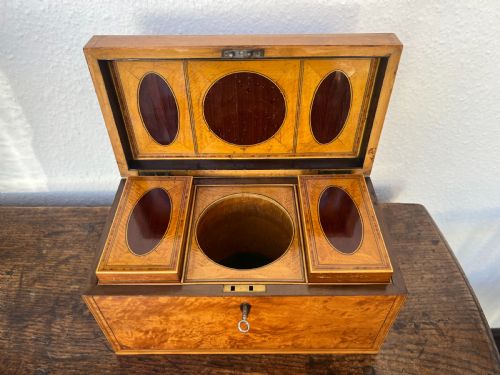
Inside, you typically find a set of small wooden or metal tea caddies alongside a mixing bowl space. These compartments kept different tea varieties separate and dry.
Many retain their original fitted interiors, though some underwent conversion into work boxes or spirits tables in later decades.
How do I date a teapoy?
Dating relies on stylistic shifts between the Georgian, Regency and William IV periods. Heavy brass inlay, sarcophagus shapes and rosewood point to the Regency era.
Carved feet and robust pillars often indicate the later William IV or early Victorian periods.
Where were teapoys placed?
They stood in the drawing room or parlour where the host prepared tea for guests. The height allowed easy access from a seated position.
Later adaptations functioned as lamp tables or occasional tables when the tea service fell out of daily practice.
Are Scottish teapoys different?
Scottish examples frequently utilise native mahogany or rosewood with distinct regional proportions. Workshops in centres like Edinburgh produced robust pieces attributed to makers such as William Trotter.
These share the classical vocabulary of English pieces while showing independent cabinetmaking traditions.