


Regency Teapoy Chest
A regency teapoy chest is a dedicated tea storage box on a stand, combining refined joinery with practical interior compartments for entertaining.
Regency Teapoy Chest
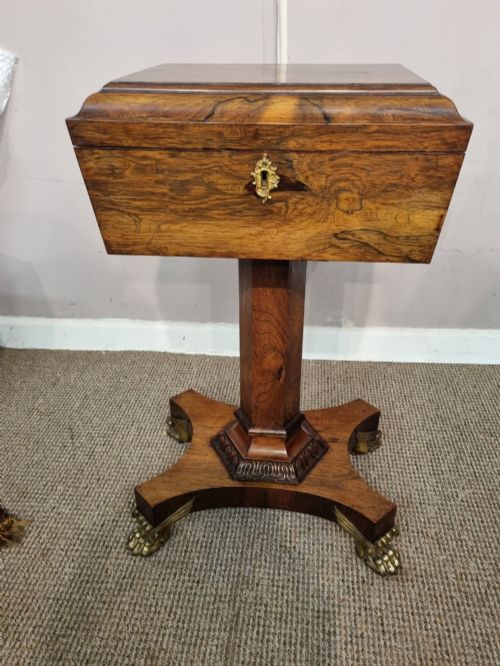
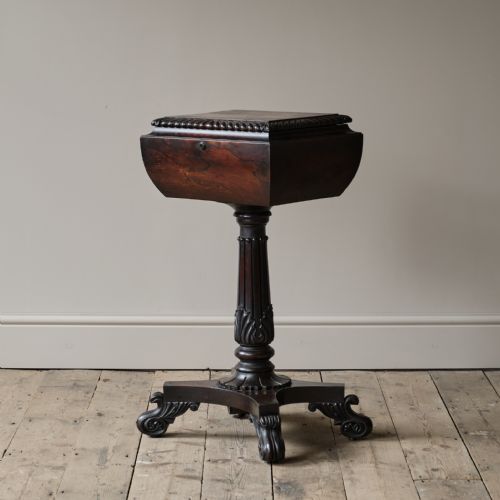
A regency teapoy chest is a specialised piece of furniture designed to hold tea canisters and mixing bowls securely during the Georgian and Regency periods. These items typically feature a lidded box mounted on a central pillar or set of carved feet, serving both domestic utility and a decorative function in the parlour.
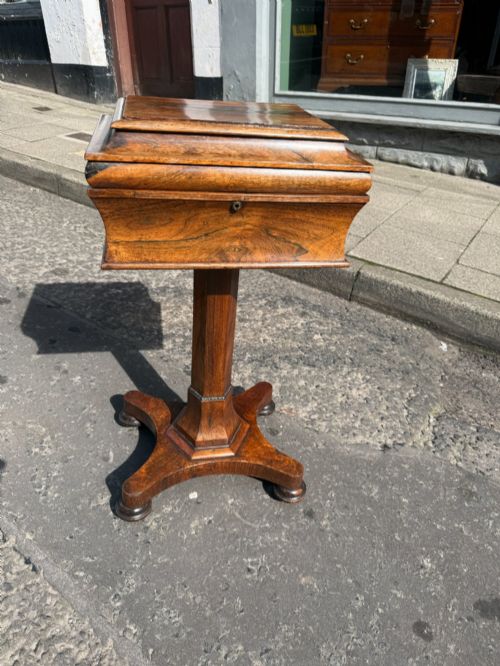
The versions most commonly met on this page date from the Regency and early nineteenth century, constructed from timbers such as mahogany and rosewood. Collectors encounter examples shaped like sarcophaguses as well as those with brass inlay or mounted on stands, reflecting the varied design choices of the era.
Materials and construction
Makers utilised dense hardwoods like mahogany and rosewood, frequently selecting flame mahogany veneers to create striking surface patterns across the box lid. Solid timbers provided the structural integrity required for the box and its supporting stand.
Brass inlay and glass elements appear as decorative details, alongside carved feet and specialist internal compartments. Joinery techniques ensured the timber accommodated seasonal humidity changes without splitting the delicate veneers.
Tea was once so valuable that servants kept the key to the chest on their person at all times.
What separates the finest examples
The distinction between standard domestic boxes and superior pieces lies in the precision of the cabinetwork and the choice of decorative veneers. Finer items incorporate meticulous brass inlay, intricate carving on the stand, and well-figured flame mahogany or rosewood surfaces.
Attribution to documented workshops or the presence of maker stamps elevates the standing of a piece within the field. The integrity of the internal fittings and the original condition of the timber finish further define the grade of the item.
Strahan·Gillows
The Regency Teapoy Chest Glossary
- Teapoy
- A small stand or box designed specifically for holding tea caddies and serving tea in the formal rooms of a house. These pieces range from simple tabletop caddies to elaborate chests on dedicated stands.
- Sarcophagus
- A box shape featuring convex sloping sides reminiscent of ancient stone tombs, popular for tea chests during the Regency period. This profile gave the timber surfaces greater visual depth.
- Flame mahogany
- A distinct wood grain pattern produced by cutting through the branch junctions of the mahogany tree, creating flickering flame-like figures. Cabinet makers prized this timber for prominent exterior surfaces.
- Brass inlay
- The technique of embedding thin strips or motifs of brass flush into the surface of rosewood or mahogany. This method created sharp geometric or floral contrasts against the dark wood.
Regency Teapoy Chest: Frequently Asked Questions
What is a regency teapoy chest used for?
These chests served as secure containers for storing high-value tea leaves under lock and key during a period when tea was an expensive commodity.
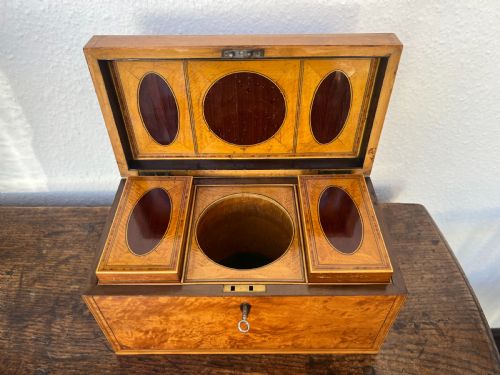
Inside the box, fitted compartments held individual caddies for different tea varieties and a glass bowl for blending the leaves before brewing.
How do I identify a Regency period piece?
Regency pieces often display characteristic design elements such as brass inlay, rosewood veneers, and sarcophagus-shaped box profiles.
Construction methods, timber choices, and specific foot styles help distinguish pieces made around eighteen hundred from later Victorian adaptations.
Where were teapoy chests placed in a home?
Tea chests stood in the drawing room or parlour where the host prepared tea for guests as part of polite social rituals.
The portable box or its matching stand allowed the arrangement to move near the fireplace or seating area during gatherings.
Did teapoy chests have internal fittings?
Most examples contained removable inner caddies and a central space usually reserved for a glass mixing bowl.
These interior components allowed the owner to measure and combine leaf varieties directly at the point of service.