


Georgian Pedestal Caddy Table
A georgian pedestal caddy table, often known as a teapoy, brings refined storage and elegant display to a period interior.
Georgian Pedestal Caddy Table
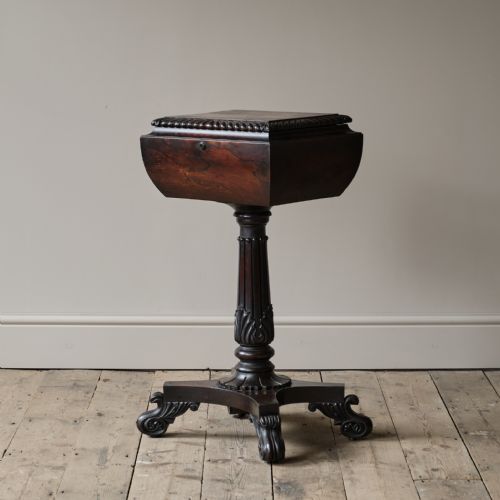
A georgian pedestal caddy table typically takes the form of a freestanding tea chest supported by a central column and solid base, designed to hold precious tea leaves securely in the drawing room. These items appear across the Regency, Georgian, and William IV periods, alongside related forms such as wine coolers and table snuff boxes.
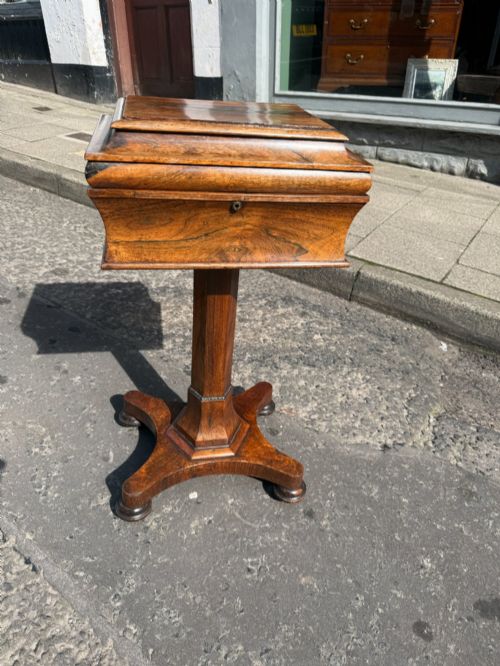
The most common versions met on this page are mahogany and rosewood teapoys featuring sarcophagus shaped boxes, mounted on pillar and claw feet. Makers constructed these pieces from the early nineteenth century through to the later Victorian era, utilising rich timbers suited to formal entertaining.
How they were made
Cabinetmakers constructed these tables using solid mahogany, flame mahogany, and rosewood, frequently applying satinwood inlay or intricate brass stringing to the exterior surfaces. The timber was selected for its grain pattern, particularly in flame mahogany and burr yew examples, ensuring a decorative finish.
Internal arrangements often included fitted compartments and glass mixing bowls supported by sturdy central pedestals resting on carved feet or platforms. Joinery techniques relied on precise dovetailing for the boxes and stable turning for the central columns.
Some tables hide tiny glass bowls inside, ready for the eighteenth-century hostess to mix her custom leaf blends.
What varies in quality
Quality rests upon the choice of timber veneer and the precision of the decorative inlays, such as contrasting satinwood or detailed brass work set into the rosewood lids. Superior examples display carefully matched flame mahogany grains that wrap evenly around the box.
The architectural proportion of the pedestal and the carving detail upon the feet distinguish finer workshop output from simpler provincial pieces. Interior completeness, including original glass mixing bowls and intact wooden caddy compartments, also elevates the standing of an individual table.
Gillows
The Georgian Pedestal Caddy Table Glossary
- Teapoy
- A small stand or box designed specifically for holding tea, usually mounted on a central pedestal.
- Sarcophagus
- A box shape featuring convex sloping sides reminiscent of a classical stone coffin, popular for Regency tea containers.
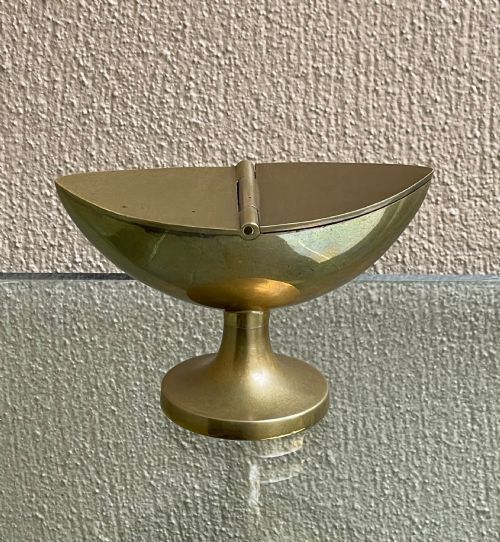
- Navette
- A boat-shaped decorative form with pointed ends, often seen in smaller Georgian boxes and table objects.
- Stringing
- A narrow line of contrasting inlay wood used to outline panels and geometric borders on fine cabinet furniture.
Georgian Pedestal Caddy Table: Frequently Asked Questions
What is a georgian pedestal caddy table used for?
These pieces served primarily to store expensive loose tea leaves safely under lock and key in the formal rooms of a grand house.
They also functioned as small side tables, with interior compartments holding canisters and mixing bowls for the host to prepare tea for guests.
How do I identify a Regency teapoy?
Regency examples typically display dark exotic timbers like rosewood, often enhanced with brass inlay or gilt mounts reflecting classical design influences.
They frequently feature sarcophagus or rectangular box forms mounted firmly atop a sturdy central pillar and platform base.
Where should I place a teapoy at home?
A teapoy sits comfortably as a freestanding accent piece beside a sofa or chair in a drawing room or study.
The enclosed top provides a convenient surface for a lamp or small decorative objects while maintaining its historical character.
What is the difference between a teapoy and a wine cooler?
While both stand on pedestals and date from similar periods, teapoys contain internal compartments specifically fitted for dry tea storage and mixing.
Wine coolers are generally deeper and lined to hold bottles safely during dining occasions.