

Regency Tallboy Drawers
Regency tallboy drawers combine vertical presence with elegant proportions, offering substantial storage without dominating a room.
Regency Tallboy Drawers
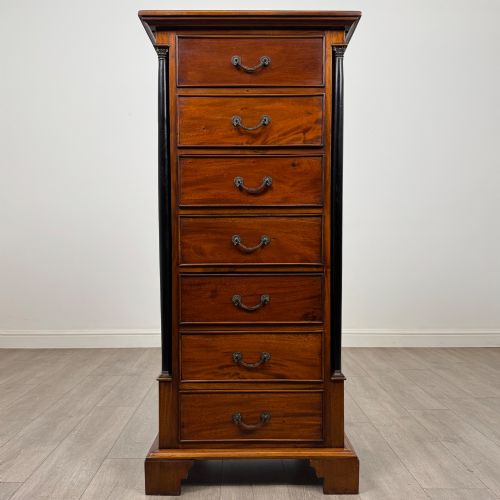
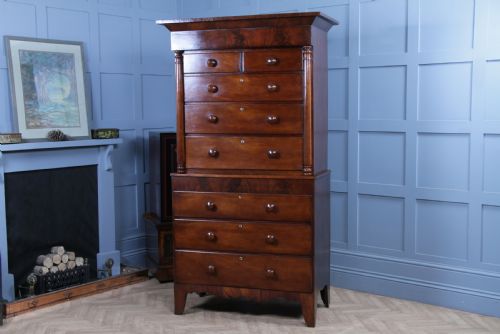
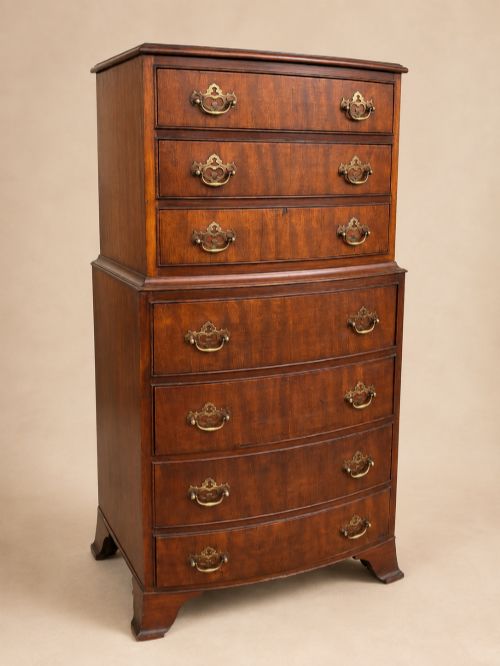
When you search for regency tallboy drawers, you encounter pieces that span the late eighteenth century through to the early nineteenth century, alongside later revivals. The form typically presents as a chest on chest or a tall multi-drawer unit, designed to maximise storage in bedrooms and dressing rooms.
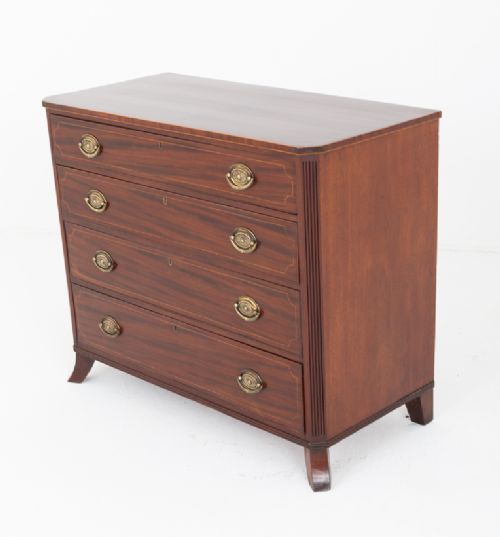
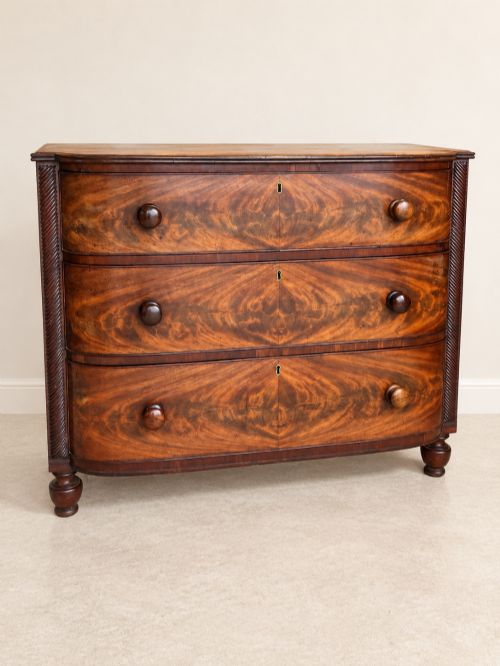
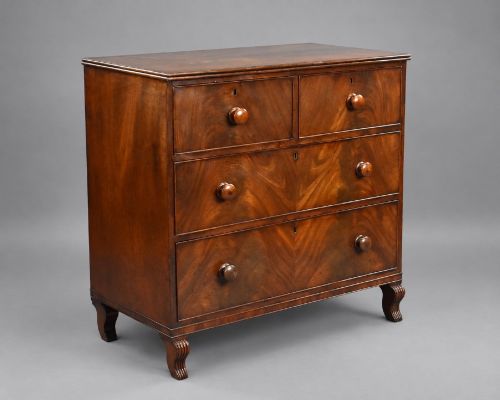
Mahogany dominates the selection, frequently paired with flame veneers, satinwood banding, and oak linings. You will also find painted pine and faux bamboo examples that demonstrate the stylistic variety within the period.
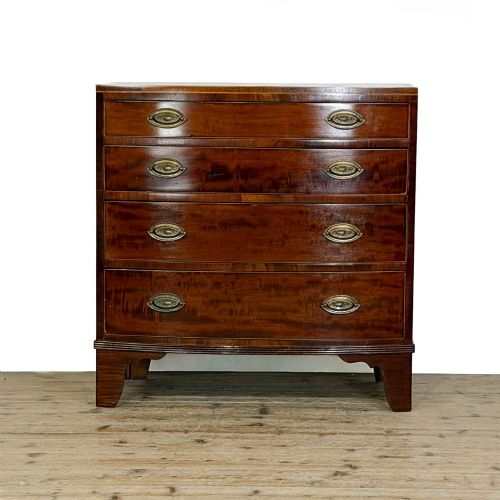
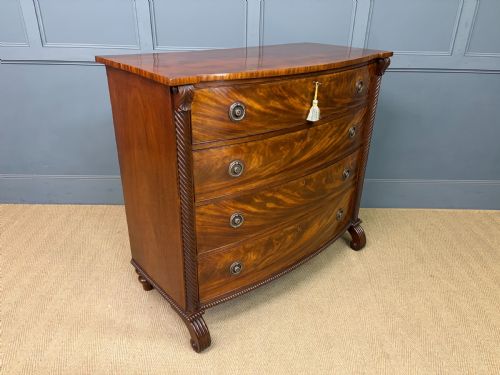
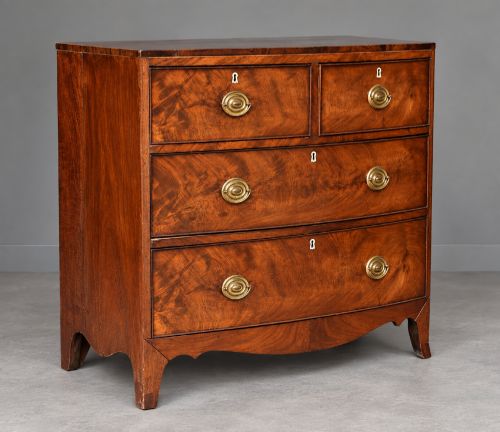
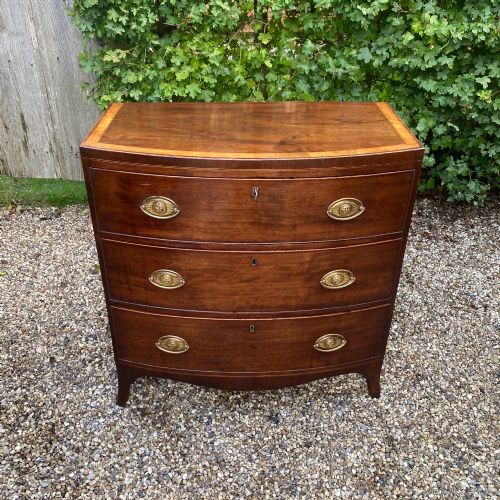
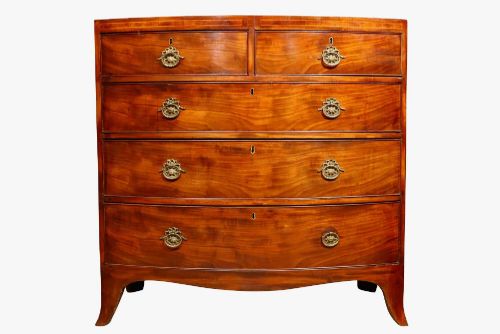
Bow front profiles and Scottish regional variations appear regularly among the listings, offering distinct silhouettes. These taller formats provide an imposing architectural quality while maintaining refined cabinetmaking details.
Materials and Technique
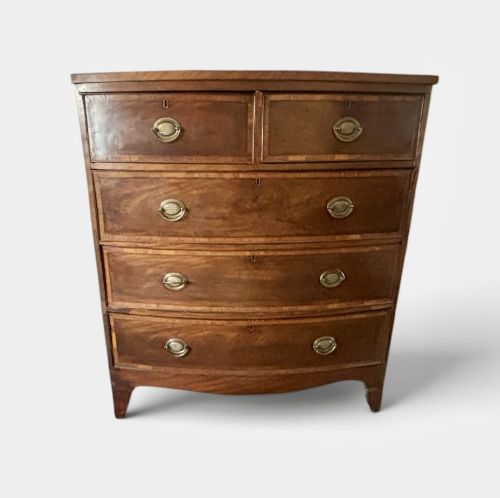
Cabinetmakers utilised solid mahogany and pine for structural carcases, applying figured flame mahogany veneers to drawer fronts to create striking visual patterns. Satinwood banding and crossbanding provided sharp contrasting borders on top surfaces and drawer edges.
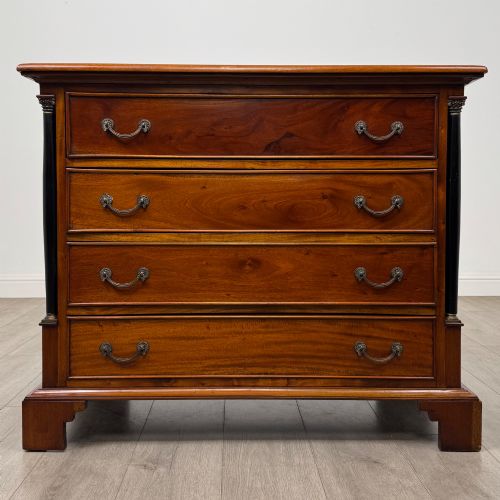
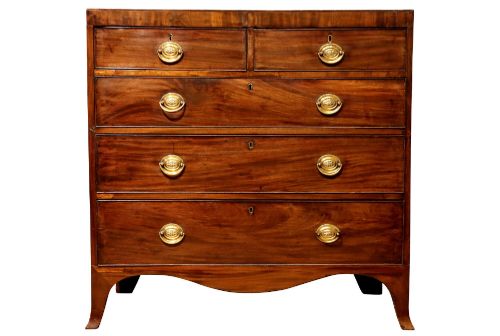
Drawer construction relied on hand-cut dovetails and oak linings, ensuring durability across multiple stacked sections. Brass hardware, ranging from simple ring handles to ornate backplates, secured the drawer fronts while complementing the dark timber tones.
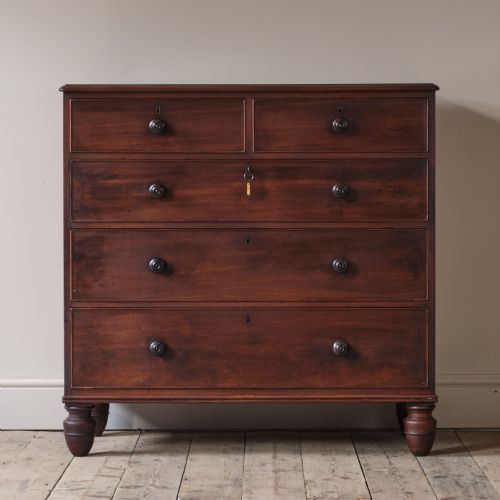
Keep your gloves ready: some early nineteenth-century drawers still conceal small working keys.
Judging Quality
The choice of veneer sets apart superior examples, particularly where flame mahogany is matched symmetrically across stacked drawer fronts. Subtleties in crossbanding and the precision of satinwood stringing indicate the tier of the workshop that produced the piece.
Proportion and secondary timbers dictate value and authenticity, with oak-lined drawers and original brass fixtures marking out better survivals. Pieces constructed in two distinct sections, such as traditional chest on chests, require careful alignment and clean joining surfaces.
T & G Seddon
The Regency Tallboy Drawers Glossary
- Tallboy
- A tall chest of drawers, often built as a chest on chest where a smaller upper section sits upon a wider base. This configuration provided high-capacity storage for linen and garments.
- Bow Front
- A convex curved front facade that softens the rectangular geometry of a case piece. Cabinetmakers used this shape extensively during the Regency period to catch the light.
- Crossbanding
- A narrow strip of veneer laid perpendicular to the grain of the surrounding surface. It frames drawer fronts and tabletops to create a neat border.
- Flame Mahogany
- Timber cut from the fork of the mahogany tree where the branch meets the trunk, producing a rippling, flame-like grain pattern. It was prized for principal display surfaces.
- Satinwood
- A hard, yellowish timber native to India and Ceylon used for contrasting inlays and banded borders. Its bright colour stands out vividly against dark mahogany.
Regency Tallboy Drawers: Frequently Asked Questions
What is a regency tallboy?
A regency tallboy is a tall storage unit, frequently constructed as a chest on chest, originating from the early nineteenth century. It provides deep vertical drawer space while maintaining the classical proportions of the Regency style.
These pieces were built in two stacked sections to make transport manageable and to accommodate large volumes of clothing in domestic bedchambers.
How do I spot flame mahogany?
Flame mahogany displays a distinctive feather-like or flickering grain pattern that resembles dancing fire. It comes from the junction where branches meet the main trunk of the tree.
Cabinetmakers reserved this prized veneer for prominent areas like drawer fronts, arranging the cuts to create symmetrical patterns across the piece.
Where were tallboys placed?
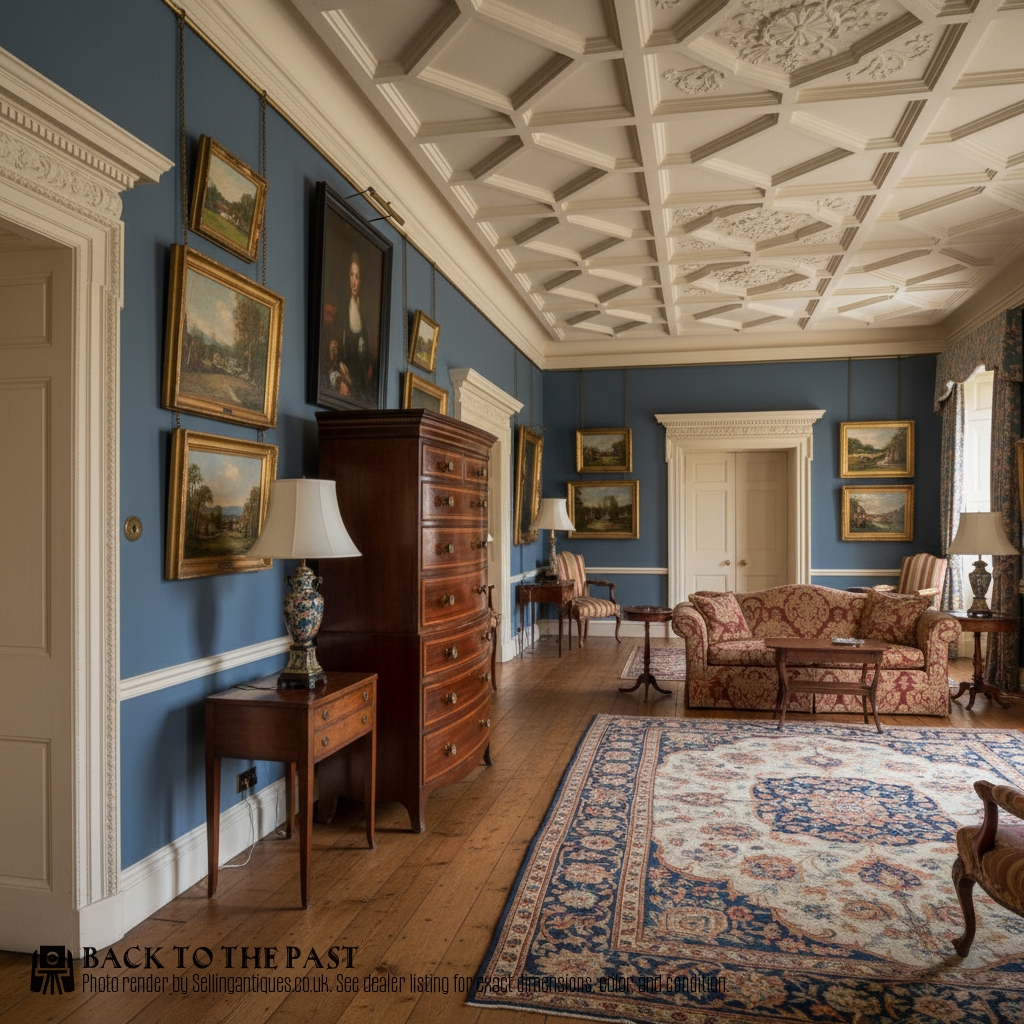
Tallboys were traditionally kept in bedrooms and dressing rooms where vertical storage was essential for bulky garments and linens. Their height allowed households to store extensive wardrobes without occupying excessive floor space.
Today, they function similarly in modern interiors, fitting well into alcoves or against blank bedroom walls where height draws the eye upward.
Are these pieces one solid unit?
Many tallboys and chest on chest designs are constructed in two separate modular parts that stack together. The upper chest rests securely on top of a lower, slightly deeper base section.
This two-part construction made it possible to move heavy furniture up narrow staircases and through historic doorways during delivery.