
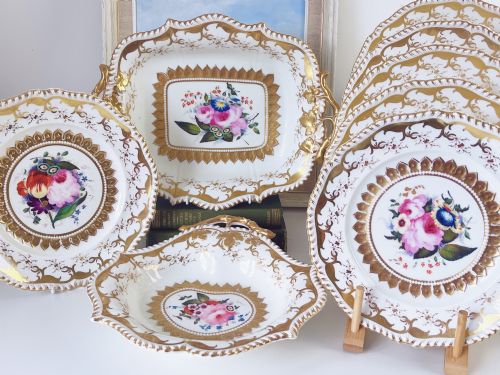
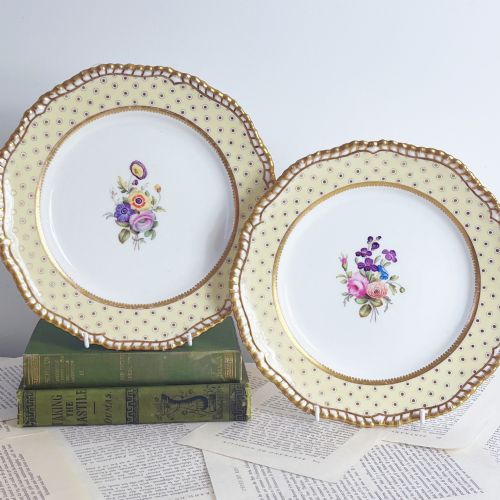
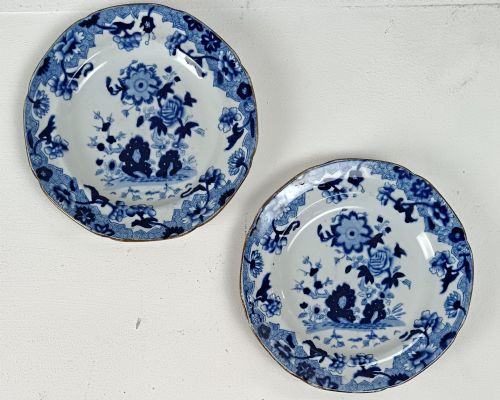
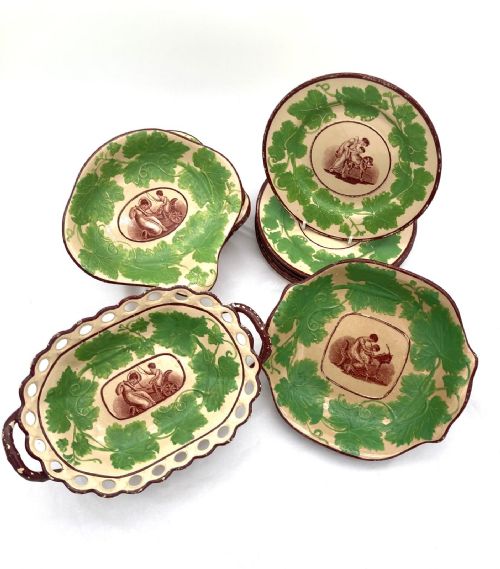


Regency Tableware Ceramic
Regency tableware ceramic pieces bring refined Georgian elegance to the dining table through handpainted porcelain, ironstone, and transfer-printed earthenware.
Regency Tableware Ceramic
Regency tableware ceramic items comprise dessert services, serving dishes, tureens, plates, and tea wares originating from the Georgian and Regency periods. Buyers seeking these items encounter specialised vessels intended for dining and display, ranging from single dessert plates to complete matched services.
The material forms on this page include ironstone tureens, porcelain dessert services, and transfer-printed earthenware platters dating from the late eighteenth century through to the early nineteenth century. These pieces reflect the dining customs of the period, providing both utilitarian function and decorative ambition.
Materials and Techniques
Potters of the period utilised durable ironstone alongside fine porcelain, felspar porcelain, and earthenware bodies to form heavy serving platters and delicate tea plates alike. Glazes provided a smooth, vitreous surface ready to receive intricate cobalt blue transfer printing or polychrome handpainting.
Makers applied surface decoration using handpainted enamels, gilt highlights in gold leaf, and printed patterns such as Chinoiserie, Imari, and botanical motifs. Firing techniques evolved to produce robust utility wares alongside translucent decorative porcelain.
Listings feature ceramics produced across the Georgian, Regency, and nineteenth-century periods, utilising earthenware, ironstone, and porcelain materials.
Standards of Execution
Quality in these ceramics rests upon the crispness of the transfer print and the precision of the handpainted enamel work. Superior pieces display masterly brushwork, vibrant colours that have adhered evenly through the kiln, and crisp relief moulding on ironstone bodies.
The sophistication of the design, such as armorial crests or complex patterns like the Bengal Tiger or Peacock, distinguishes elite factory output from standard domestic wares. The integrity of the glaze and the purity of the porcelain body further separate standard items from exceptional examples.
Grainger Lee And Co·Spode·Coalport·Chamberlain Worcester·Minton·Wedgwood·Flight Barr And Barr·Mason·Old Derby
The Regency Tableware Ceramic Glossary
- Ironstone
- A patented ceramic body developed to provide a hard, durable alternative to porcelain. This dense material resists chipping and forms the heavy base for many nineteenth-century tureens and platters.
- Sucrier
- A covered sugar bowl designed for use on the tea table. These vessels typically match the ceramic body and pattern of contemporary tea sets.
- Transfer print
- A decoration technique where an engraved copper plate transfers a design onto tissue paper, which is then pressed onto the ceramic biscuit before glazing and firing. This method allowed for consistent, detailed patterns like blue and white landscapes.
- Imari
- A decorative style inspired by Japanese export porcelain, characterised by a palette of iron red, cobalt blue, and gilt. Regency potteries adapted these bold motifs for domestic dessert services.
- Felspar
- A flux material added to porcelain paste to increase translucency and strength. Spode utilised this specific mineral composition to create improved ceramic bodies during the Regency era.
Regency Tableware Ceramic: Frequently Asked Questions
What distinguishes ironstone from porcelain in Regency tableware?
Ironstone is a heavy, opaque ceramic body designed for durability during daily dining use. Porcelain offers a lighter, more translucent quality reserved for fine dessert and tea services.
Potters developed ironstone to withstand rigorous household service while mimicking the refined appearance of true porcelain.
How were these ceramic services used on the dining table?
Dessert services and tureens were arranged centrally during formal meals for serving courses or displaying sweet dishes. Plates and bowls circulated among guests for individual portions.
Larger platters with gravy wells managed roasted meats, while specialised vessels held custards or butter.
What defines the Regency style in ceramics?
Regency ceramics combine classical neoclassical motifs with vibrant influences from Japanese Imari and Chinese Chinoiserie. Makers employed rich cobalt blues, green enamels, and heavy gilding.
The aesthetic values symmetry, botanical precision, and ornate crests suited to formal dining rooms.
How do you care for antique ceramic tableware?
Antique ceramics require gentle hand washing in warm water with mild soap. Avoid abrasive sponges or modern dishwashers to protect historic glazes and gold leaf.
Storing pieces with padded dividers prevents chipping along the rims of delicate plates and tureens.
What periods do these ceramic pieces represent?
The listings span the Georgian, Regency, and early Victorian eras, focusing on the decades around eighteen hundred to eighteen thirty. This timeframe covers the height of English porcelain innovation.
Stylistic shifts during these decades moved from neoclassical restraint to bolder polychrome patterns.