


White Porcelain Sauceboat
A white porcelain sauceboat brings eighteenth-century elegance to the table, combining soft-paste bodies with delicate hand-painted motifs for the serious collector.
White Porcelain Sauceboat
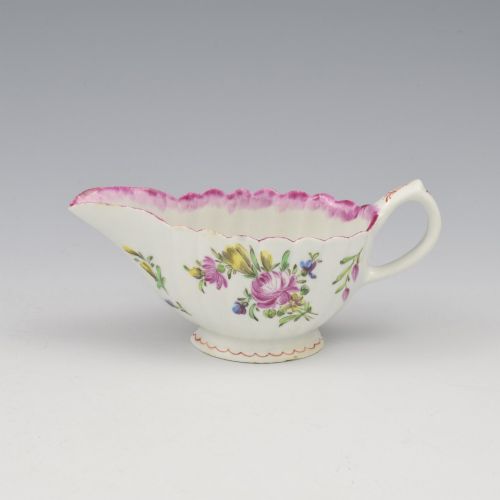
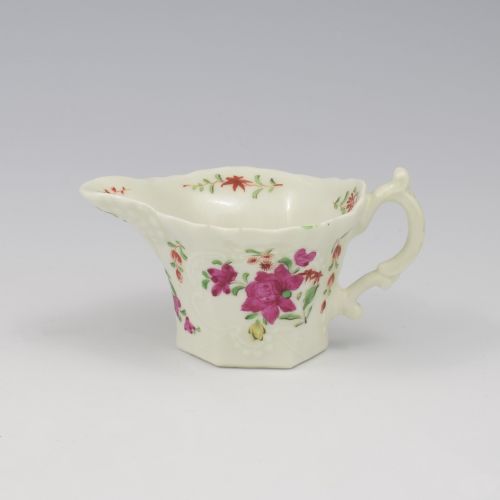
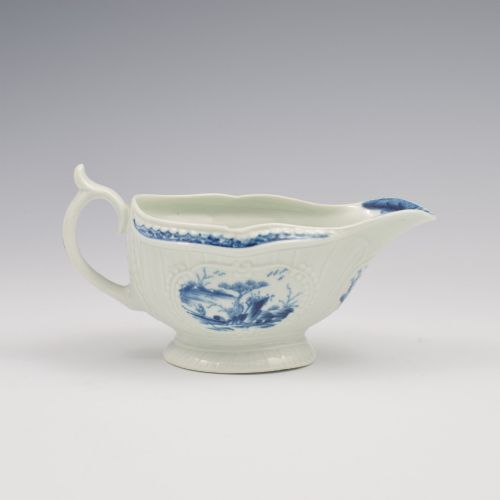
A white porcelain sauceboat is a small vessel designed for serving gravies, sauces, or cream at the dining table, appearing in forms such as sauceboats, cream boats, and jugs. The examples gathered under this search phrase span the eighteenth and nineteenth centuries, taking shapes influenced by Georgian Rococo, Georgian Chinoiserie, and Regency styles.
The buyer will most frequently encounter eighteenth-century pieces originating from English factories like Bow, Worcester, and Chelsea Derby. These early forms often feature fluted bodies, hexagonal or triangular platforms, and naturalistic shapes like lettuce leaves or lamprey handles.
Decoration on these pieces ranges from underglaze cobalt blue glaze and cobalt glaze to polychrome enamel, gilt, and gilding. Transfer-printed or hand-painted patterns frequently display Chinese figures, floral sprays like the rose, or traditional landscape scenes.
Materials and construction
These vessels are primarily formed from soft-paste porcelain, a vitreous composition developed by early English potteries before the widespread adoption of hard paste. Potters shaped the porcelain either by throwing on a wheel, pressing into moulds to create fluted or lettuce-form bodies, or casting specialised shapes like the dolphin ewer.
Surface decoration was applied using cobalt blue glaze under the glaze, or through overglaze enamel painting and gilding. Skilled artisans painted intricate scenes such as the Fisherman and Billboard Island or the Two Quails pattern directly onto the fired porcelain body before a final kiln fixation.
Some eighteenth-century potters ingeniously turned sea creatures into tableware, fashioning slippery lampreys into sturdy handles for porcelain jugs.
Assessment of quality
Quality in these porcelain vessels rests upon the crispness of the moulding and the clarity of the porcelain body. Pieces with sharply defined fluting, clean triangular platforms, or intricate naturalistic details like lamprey handles demonstrate superior craftsmanship.
The finesse of the hand-painting distinguishes finer examples, where delicate brushwork in cobalt blue or polychrome enamel remains precise and well-centered. The application of gilding and the uniformity of the glaze further separate standard production items from exceptional factory pieces.
Bow Porcelain·Worcester Porcelain·Chelsea Derby·Derby
The White Porcelain Sauceboat Glossary
- Soft-paste porcelain
- An artificial porcelain composition made from white clay, glass frit, and other minerals, fired at lower temperatures than true hard-paste porcelain. This material characterises the majority of early English factory production.
- Cobalt glaze
- A deep blue metallic oxide pigment applied under the glaze to create rich blue and white designs. It reacts to high kiln temperatures to produce varied shades of blue.
- Enamel
- Opaque vitreous colours applied over the fired glaze and fixed in a muffle kiln. This technique allowed factories to introduce vibrant polychrome palettes to their wares.
- Gilding
- The application of gold leaf or powdered gold to the surface of the porcelain for decoration. It is often found highlighting rims, handles, and moulded motifs.
- Fluted
- Having parallel vertical grooves or channels carved or moulded into the body of the vessel. This decorative technique adds texture and structural rigidity to thin porcelain forms.
White Porcelain Sauceboat: Frequently Asked Questions
What is a cream boat?
A cream boat is a smaller vessel akin to a sauceboat, historically used for serving cream at the tea or breakfast table rather than gravy at dinner. They share the same soft-paste porcelain materials and moulded forms as their larger counterparts.
These pieces often display similar decorative schemes, including blue and white floral patterns or naturalistic handles shaped like marine life.
How do I date a porcelain sauceboat?
Dating relies on identifying the factory style, paste composition, and painting techniques characteristic of specific periods like the eighteenth or nineteenth century. Early marks, stylistic influences such as Chinoiserie, and distinct manufacturing traits help narrow the production era.
Comparison with known factory patterns, such as early Worcester transfer prints or Bow figures, provides further chronological context.
Were these vessels used daily?
These porcelain pieces served practical dining functions in eighteenth and nineteenth-century households, holding sauces, melted butter, or cream during formal meals. Their survival in good condition suggests many were also kept as display items or used selectively for special occasions.
Handling requires care due to the delicate nature of soft-paste porcelain and delicate applied elements like handles or spouts.
What is Chinoiserie decoration?
Chinoiserie is a European decorative style that reflected imaginative interpretations of Chinese art and landscapes. Artisans painted motifs featuring Chinese figures, pavilions, and exotic flora onto porcelain bodies.
This style was particularly popular during the Georgian period across various English porcelain factories.