


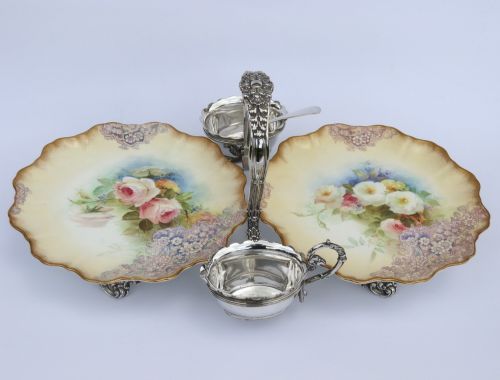
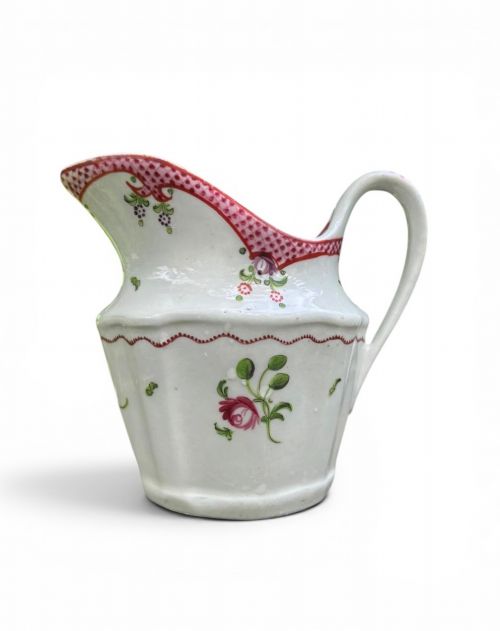


Porcelain Cream Jug
A porcelain cream jug brings the refined craft of eighteenth and nineteenth-century table ceramics into daily use.
Porcelain Cream Jug
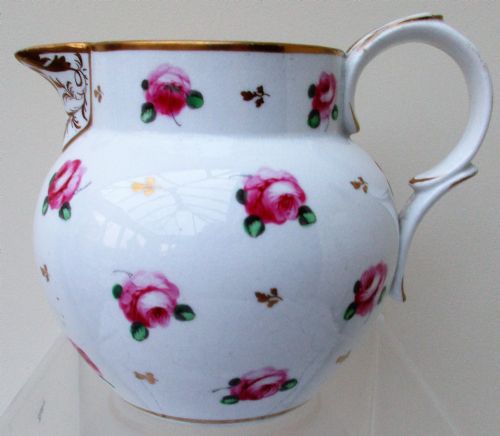
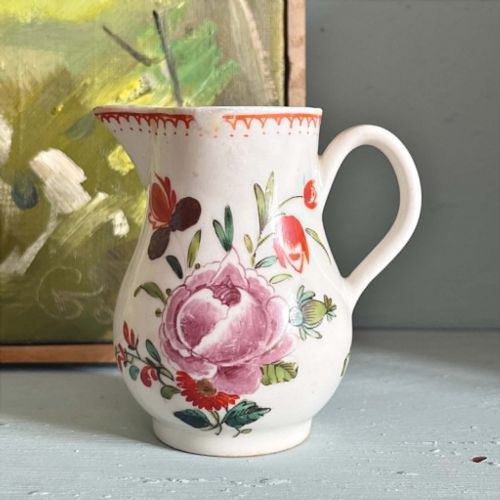
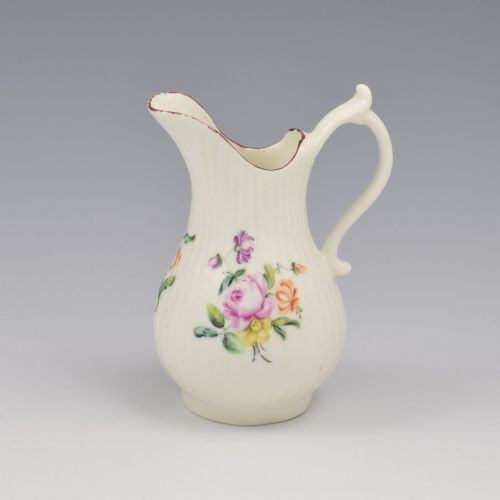
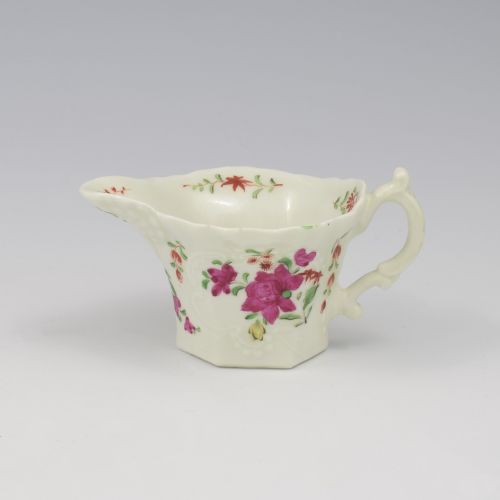
A porcelain cream jug is a small pouring vessel designed for milk or cream during tea service, appearing across eighteenth and nineteenth-century periods. The most common examples on this page are sparrow beak jugs and lobed or fluted shapes from Georgian factories.
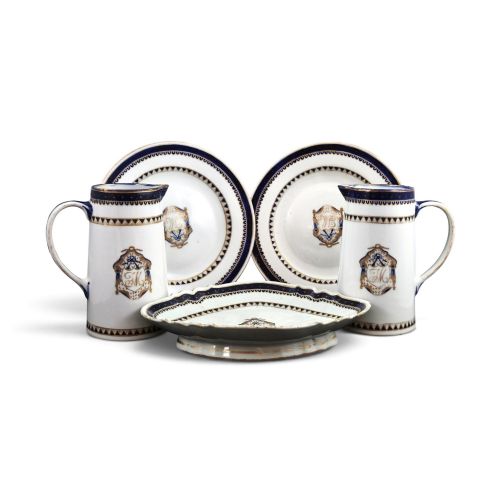
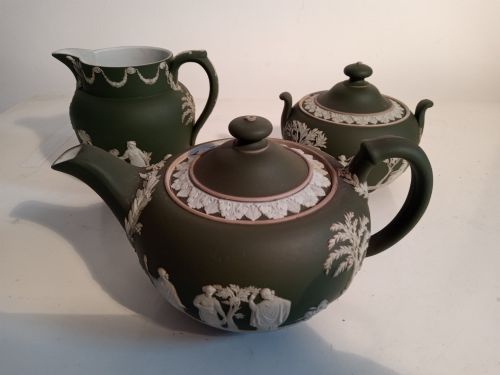
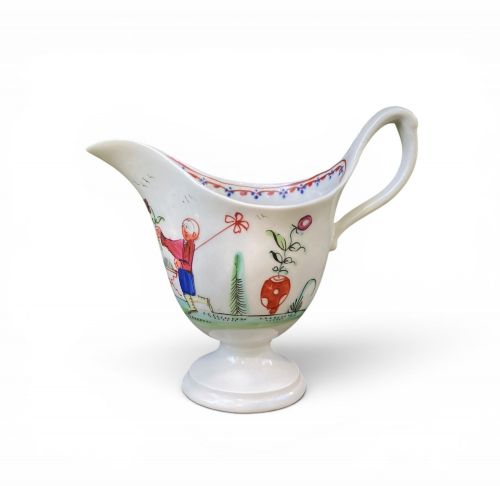
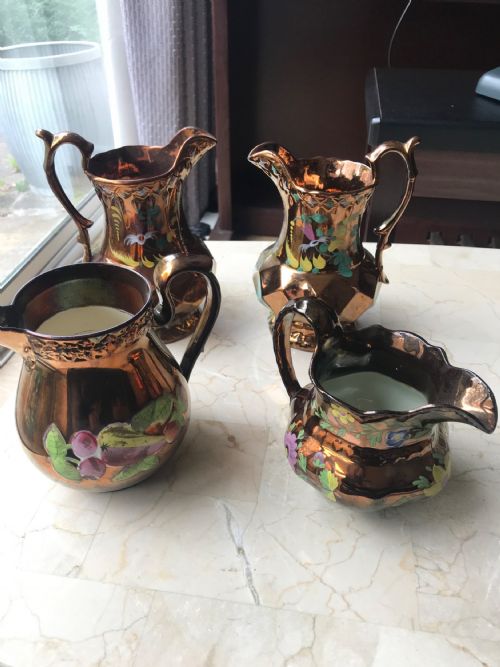
Makers from Bow, Worcester, New Hall, and Derby produced these pieces in soft-paste porcelain and earthenware, often decorated with hand-painted polychrome flowers, landscapes, or Chinese export motifs. Later Victorian examples transition into robust earthenware bodies with copper lustre and blush ivory finishes.
Forms range from simple clip-handled vessels to elaborate dolphin ewers and sauce boats, reflecting both utilitarian dining needs and ornamental display cabinets.
How they were made
Potters shaped early pieces using soft-paste porcelain clay bodies, firing them at lower temperatures to achieve a creamy translucent matrix that readily absorbed underglaze blue and overglaze enamel colours. Gilding and gold leaf accents were frequently applied by hand and fired in a muffle kiln to secure the metallic finish.
Mould-pressed techniques introduced ribbed, fluted, and shell-shaped profiles, while later factories utilised earthenware and bone china for enhanced durability during the Victorian era.
Porcelain Cream Jug Retail Price Guide 2026
Typical asking prices for porcelain cream jug among the pieces listed under this phrase on Sellingantiques today, from the lower quarter to the upper quarter. They describe what is for sale here now, not the wider market.
A fortunate duck or quail painted on the side often guards the cream.
What varies in quality
Quality rests in the crispness of the moulded form and the precision of the hand-painted decoration, where master artists achieved finer detailing in floral sprays and figure scenes. Early soft-paste bodies show subtle variations in glaze pooling and translucency that distinguish primary factory output from provincial work.
Preservation of original gilding and enamel vibrancy without excessive rubbing indicates how carefully a piece was handled and stored over centuries.
Dr Wall Worcester·New Hall·Royal Worcester·Meissen·Bow Porcelain·Derby Porcelain·Doulton Burslem·John Rose Coalport
The Porcelain Cream Jug Glossary
- Sparrow beak jug
- A small eighteenth-century cream jug featuring a characteristic pinched, beak-like spout. This form was widely produced by early English factories including Bow and Worcester.
- Soft-paste porcelain
- An artificial ceramic compound developed before true hard-paste porcelain was perfected in Europe. It provides a warm, slightly creamy glaze surface.
- Ewer
- A jug with a wide-spouted mouth and a decorative handle, often modelled on classical forms. These pieces served both functional pouring roles and ornamental display.
- Kakiemon style
- An asymmetrical Japanese enamelling style adopted by European potteries. It typically employs iron red, soft blue, green, and yellow on a white ground.
- Flight period
- A chronological phase of Worcester porcelain production dating from the late eighteenth century. Pieces from this era carry specific factory script marks.
Porcelain Cream Jug: Frequently Asked Questions
How do I identify an 18th-century cream jug?
Eighteenth-century pieces typically utilise soft-paste porcelain bodies that show a warm, translucent glow when held to the light. Look for hand-painted underglaze blue or polychrome enamel decoration rather than transfer-printed designs.
Factory marks from this early period are often hand-drawn crescents, crossed swords, or simple painter numerals instead of printed factory stamps.
Can I still use these jugs for serving cream?
While these vessels were originally created for daily dining use, antique porcelain requires careful handling due to its age and material composition. Hand washing in lukewarm water is essential to protect delicate enamels and gold leaf.
Thermal shock from boiling liquids should be avoided to prevent stress fractures in eighteenth-century soft-paste bodies.
What is a sparrow beak jug?
A sparrow beak jug is a specific eighteenth-century cream jug shape named for its small, sharply pointed pouring lip that resembles a bird's beak. These compact vessels were standard additions to tea sets of the period.
They frequently feature delicate loop handles and floral or export-inspired painted patterns across their bodies.
How do Worcester periods differ?
Early Worcester periods, such as the Dr Wall era, are defined by soft-paste porcelain bodies and hand-potted forms with rich cobalt blue painting. Subsequent periods under Flight and Chamberlains ownership introduced refined pastes and more formal neoclassical gilding.
Examining the base marks and the quality of the potting helps separate these chronological phases.