
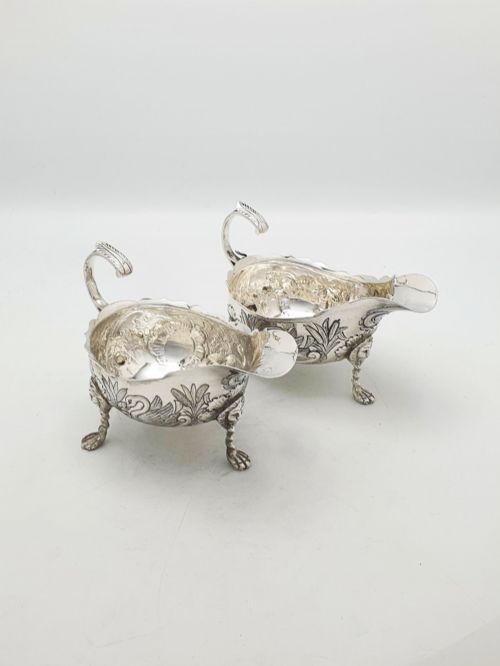
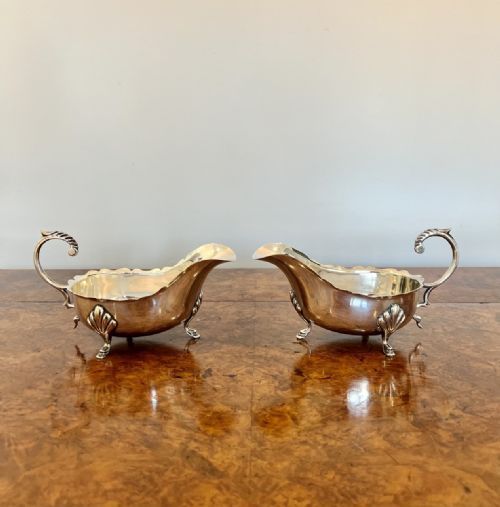
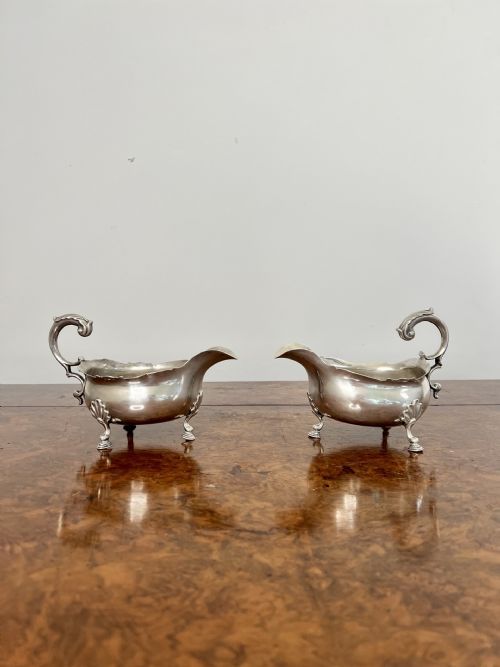


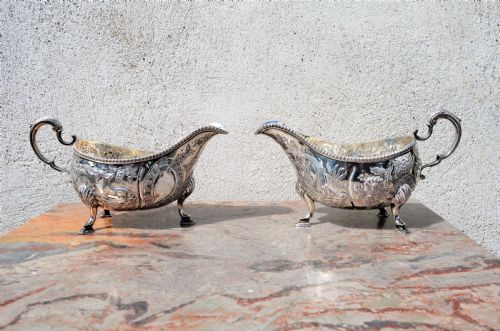

Vintage Gravy Boat Pair
These vintage gravy boat pair sets bring matched elegance to the table, offering practical charm for any serious dining spread.
Vintage Gravy Boat Pair
The pieces on offer span the eighteenth, nineteenth, and twentieth centuries, showing a clear preference for matched sets of two rather than isolated vessels. Many examples include integrated stands or matching ladles, reflecting the practical demands of historic dining rooms.
How they were made
Makers utilised sterling silver, silver plate, Old Sheffield plate, and ironstone to shape these serving vessels. Metal examples frequently feature chased or engraved surface decoration, while ceramic versions rely on moulded ironstone bodies.
Techniques range from early hand-hammered and soldered silver construction to later electroplating methods and durable ceramic firing.
Several sets include their original miniature ladles, ensuring nobody misses out on the parsley sauce.
What varies in quality
The distinction between standard examples and top-tier pieces rests on the weight of the metal and the crispness of any chased or engraved detail. Heavier gauge silver and thick Old Sheffield plating demonstrate superior craftsmanship compared to thinner later platings.
Provenance and stylistic purity also separate the range, as pieces adhering closely to Georgian or Regency forms hold greater interest than later mass-produced variants.
The Vintage Gravy Boat Pair Glossary
- Sauceboat
- A vessel shaped with a lip and handle for serving gravies and sauces. These often sit upon an attached or matching separate base plate.
- Old Sheffield Plated
- A fused composite material made by melting a sheet of silver onto a copper base. This historical technique produces a warm tone visible where the edges meet.
- Ironstone
- A heavy, durable type of earthenware developed in the nineteenth century. It provides a sturdy alternative to porcelain for everyday dining ware.
- Electroplated Nickel Silver
- A base metal alloy of nickel, copper, and zinc coated with a thin layer of pure silver using electricity. This process became widespread during the Victorian era.
Vintage Gravy Boat Pair: Frequently Asked Questions
What is a gravy boat pair used for?
These matched sets serve sauces, gravies, and melted butter evenly across large dining tables. Having two vessels allows hosts to place condiments at both ends of a long table.
They function as both practical tableware and decorative centrepieces during formal meals.
How do I clean silver plate sauceboats?
Clean silver plate and sterling pieces using a soft cloth and a dedicated silver polish designed to protect the thin metallic surface. Avoid harsh abrasive scrubs that can wear away the plating over time.
Store them in dry conditions to prevent tarnishing between uses.
How do I date an antique sauceboat?
Examine the manufacturing marks, base construction, and stylistic cues such as handle shape and footed mounts. Georgian pieces often display different proportions and weight compared to Edwardian or later twentieth-century examples.
Maker marks stamped underneath provide the most reliable clue to the exact period of origin.
Are ironstone sauce tureens durable?
Ironstone is a dense, hard-wearing ceramic designed to withstand regular domestic use without chipping easily. It offers strong resistance to thermal shock during food service.
Treat ceramic pieces with care to preserve their original glaze and any matched ladles.