



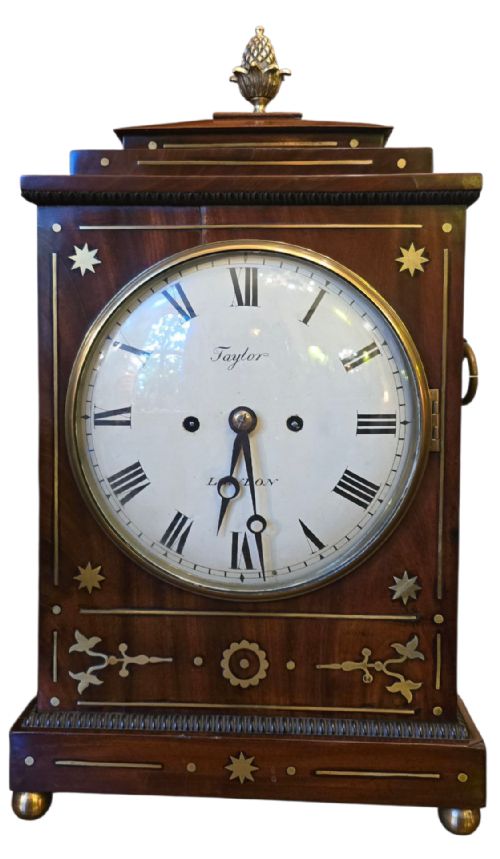


Regency Table Timepiece
A regency table timepiece sits with quiet authority on a surface, measuring the hours through precise mechanical art.
Regency Table Timepiece
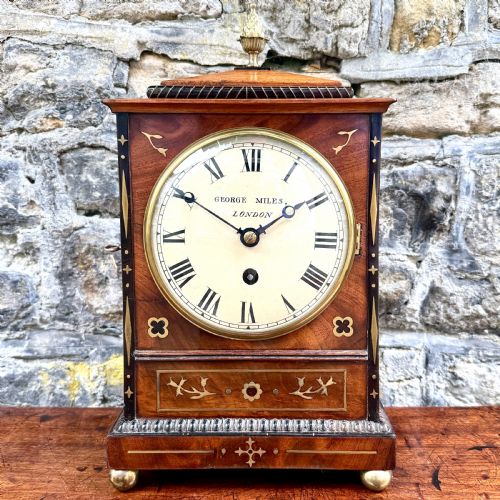
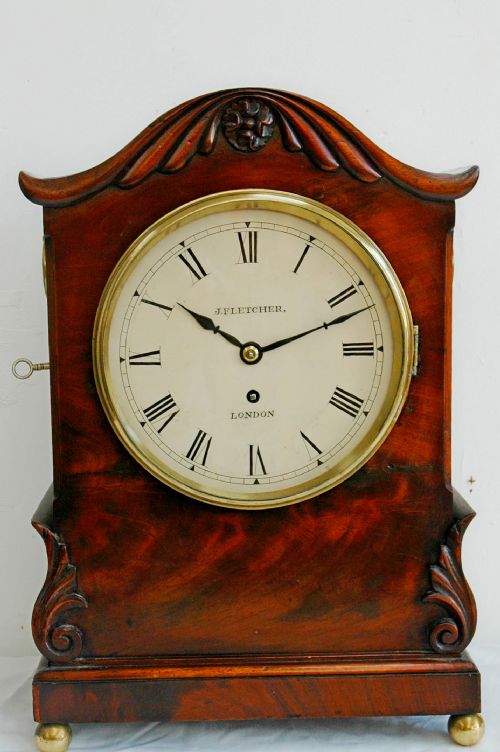
A regency table timepiece is a portable domestic clock designed for placement on a mantel, shelf or table, created primarily during the Regency and Georgian periods. These pieces serve to track time without necessarily striking the hours, focusing instead on pure mechanical movement and elegant proportions.
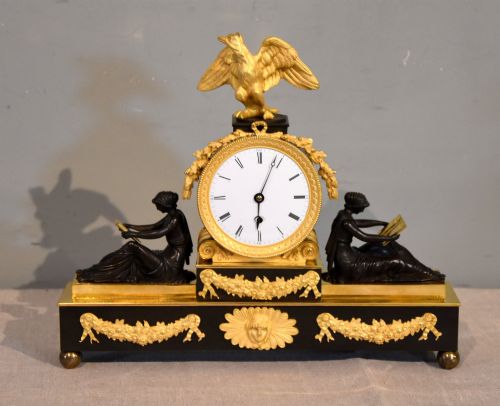
The versions most frequently met on this page combine timber cases such as mahogany and rosewood with metal mounts, or take the form of gilt bronze and ormolu figural objects. Provincial and London makers alike contributed to these domestic items, offering everything from miniature library clocks to architectural bracket clocks.
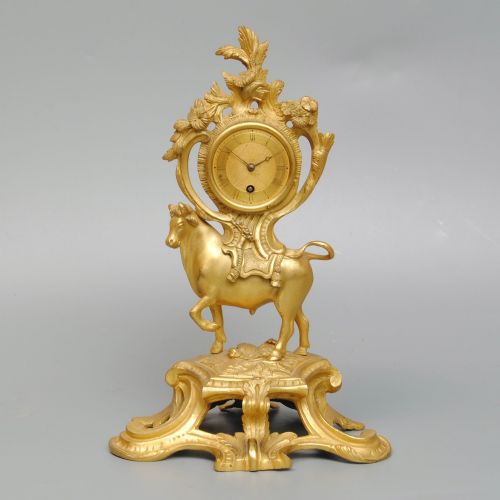
Makers housed these movements in diverse styles spanning English Regency, French Empire and William IV aesthetics. The resulting objects range from severe architectural mahogany designs to elaborate cast bronze pieces featuring animals and mythological figures.
Materials and construction
Cabinet makers utilised dense hardwoods like mahogany, rosewood and ebonised wood to build sturdy table clock cases, frequently embellishing them with brass inlay and fine mounts. Ormolu and gilt bronze provided striking contrast, cast into intricate shapes such as lions, goats and palm trees before being fire-gilded.
Goats, palm trees, poodles and cherubs occasionally populate the gilt bronze cases, guarding the passing hours with unexpected charm.
Distinctions in craftsmanship
Internal mechanics separate standard production from masterwork output, visible in the precision finish of the fusee movement components. The harmony between the proportions of the case and the decorative brass mounts dictates whether the finished object achieves a balanced, sophisticated presence.
Baetens London·Bush of London·Viner London·John Bull of Bedford·Arnold and Frodsham·Hyde of Salisbury·Taylor of London·Pons de Paul·Hessen Paris·Grimaldi and Johnson·William Hardy London·McCabe London·FB Adams London·Mitchell and Russell of Glasgow·Payne of London
The Regency Table Timepiece Glossary
- Fusee
- A conical pulley used in mechanical clocks to maintain even power as the mainspring unwinds. This device ensures consistent timekeeping accuracy across the power reserve.
- Ormolu
- Finely ground high-carat gold mercury-gilded onto a bronze base metal. This technique creates a rich, durable golden surface on decorative mounts.
- Bracket clock
- A portable table clock originally designed to sit upon a matching wall bracket. These pieces often feature brass carrying handles and glazed side panels.
- Library clock
- A compact timepiece intended for desk or table use within a private study. They frequently employ precise single fusee movements.
- Verge escapement
- An early timing mechanism that controls the release of the gear train. It relies on a crown wheel and a swinging balance to regulate speed.
Regency Table Timepiece: Frequently Asked Questions
What is a fusee movement?
A fusee is a conical drum inside the clock that regulates the pull of the mainspring. It ensures the mechanism receives steady power as the spring runs down.
This clever engineering keeps the clock running accurately over several days without losing time.
Where should I place a table timepiece?
These clocks belong on stable horizontal surfaces away from direct sunlight and drafts. A mantelpiece, side table or desk provides an ideal home where the mechanical action can be appreciated.
Ensure the surface is completely level so the pendulum or balance wheel beats evenly.
How do I wind the clock?
Winding requires a matching key inserted into the dial face to tension the mainspring gently. Care must be taken not to overwind the mechanism, stopping as soon as resistance increases.
Most traditional table timepieces require attention every eight days to maintain continuous operation.
Are these clocks loud?
Pure timepieces lack striking trains that chime the hours, making them remarkably quiet companions in a room. You will hear only a gentle, steady ticking sound from the escapement.
This quiet operation makes them suitable for bedrooms and quiet studies where chiming clocks might prove distracting.