
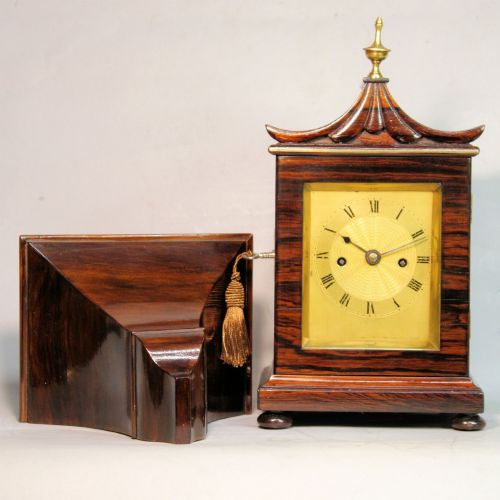


Victorian Library Timepiece
A victorian library timepiece is a compact clock designed for desks and reading rooms, prized for precision timekeeping and handsome cabinet timber.
Victorian Library Timepiece
A victorian library timepiece is a portable domestic clock intended for private studies, reading rooms and desks during the nineteenth century. These clocks arrive in several forms, including miniature bracket formats, carriage designs and architectural brass and glass models.
The versions most commonly met on this page are housed in rich timber cases made of rosewood or mahogany, alongside polished brass and glass enclosures. They bridge the gap between large floor-standing grandfather clocks and decorative mantel ornaments.
Makers housed these movements in robust rectangular or arched wooden boxes, occasionally employing ebonised wood or marble details. They reflect the domestic interior tastes of the Victorian period, combining functional timekeeping with understated desktop elegance.
How they were made
Clockmakers constructed the protective housings using solid timber boards of mahogany and rosewood, often polished to display the natural grain. Metal components incorporate brass for bezels and movements, alongside steel for delicate internal springs and gears.
Many examples utilise glass panels on multiple sides to reveal the mechanical movement within, supported by heavy brass frames. Workshops also applied ebonising techniques to wood surfaces and incorporated marble plinths for structural weight and visual contrast.
Listings feature nineteenth-century timepieces spanning the Victorian, Regency and William IV periods, constructed from rosewood, mahogany, marble and brass.
What varies in quality
The calibre of a victorian library timepiece rests upon the complexity of its internal escapement and the precision of the fusee movement. Clocks signed by known London makers demonstrate superior finishing in their gear train engraving and dial legibility.
Cabinetwork quality distinguishes standard production from finer pieces, seen in the selection of figured rosewood or flame mahogany veneers. The integration of five glass panels with heavy cast brass mouldings indicates a higher standard of manufacture.
Webster Cornhill London·Phillips Brothers·Arnold and Frodsham·McCabe London·John Massey Strand London
The Victorian Library Timepiece Glossary
- Fusee
- A conical pulley used in mechanical clocks to maintain even driving force as the mainspring unwinds. This mechanism ensures consistent timekeeping accuracy throughout the running period of the clock.
- Timepiece
- A clock that indicates the time without striking hours or quarters on a bell or gong. These mechanisms focus entirely on visual time display.
- Platform escapement
- A self-contained escapement unit mounted on a small platform inside the clock. It allowed carriage clocks and library timepieces to maintain accuracy in portable formats.
- Bracket clock
- A portable domestic clock originally designed to sit on a wall bracket or a tabletop. Many Victorian library clocks retain this traditional descriptive term.
Victorian Library Timepiece: Frequently Asked Questions
What is a library timepiece?
A library timepiece is a small mechanical clock designed for placement on a desk, table or bookshelf during the nineteenth century. They served as reliable desktop companions for scholars and gentlemen.
Unlike striking clocks, many timepieces simply recorded the hours quietly without sounding bells. Their compact proportions suited the private study or reading room.
How do I wind the clock?
Winding requires a matching key inserted into the dial face to tension the internal mainspring via the fusee or spring barrel. Care must be taken not to overwind the mechanism.
Most nineteenth-century movements require regular weekly winding to maintain consistent operation. Owners should consult the specific fusee setup before attempting adjustments.
Where were these clocks placed?
These clocks sat upon reading desks, library tables, mantelpieces or dedicated wooden wall brackets. Their portable nature allowed owners to move them between rooms as needed.
The glass and brass designs also functioned well on central tables where light could pass through the movement. Rosewood and mahogany cases matched the heavy desktop furniture of the period.
How do I identify a Victorian piece?
Victorian clocks often feature nineteenth-century timber choices such as rosewood, mahogany and ebonised wood alongside brass and glass. Maker signatures on the dial or movement provide direct historical attribution.
Stylistic cues draw from Regency, William IV and Victorian design traditions. Documented maker names from London firms help confirm the manufacturing era.