




Regency Style Side Cabinet
A regency style side cabinet brings classical symmetry and rich timber grain to a room, offering practical surface space and enclosed storage.
Regency Style Side Cabinet
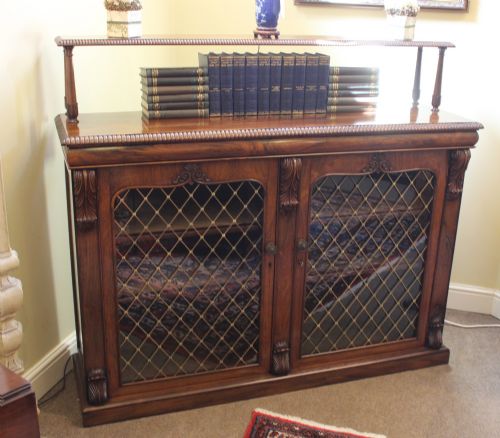
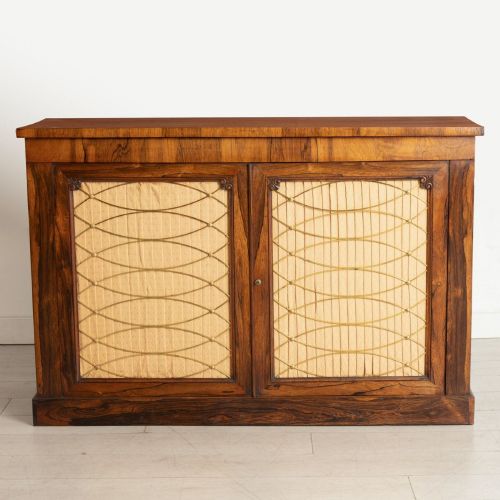
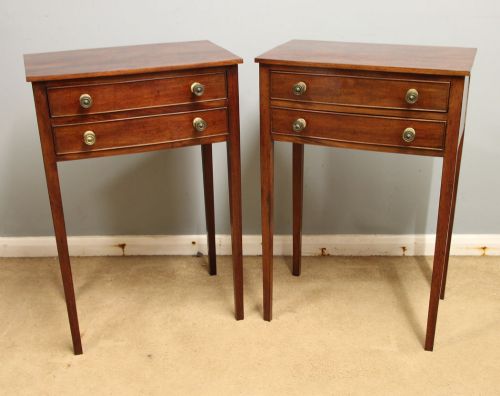
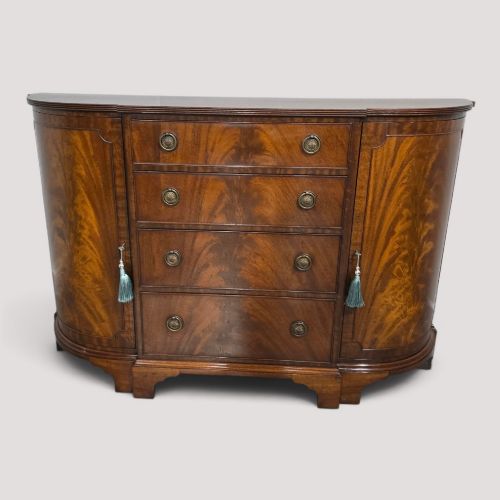
When searching for a regency style side cabinet, buyers encounter low-profile furniture designed for display and storage, often drawing on nineteenth-century forms. The pieces available span genuine period items alongside later revivals from the twentieth century, mirroring the classical proportions of the Regency era.
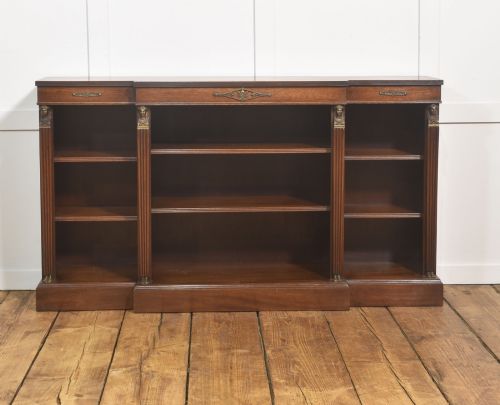
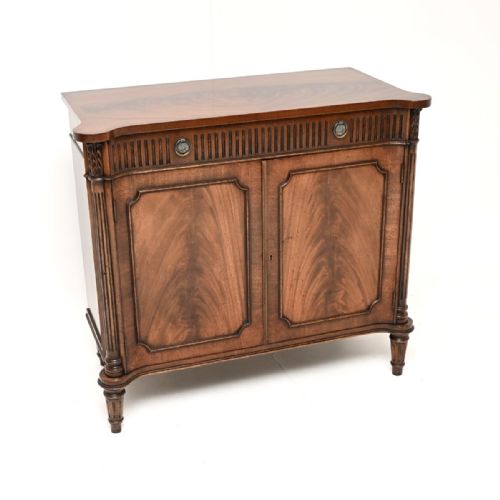
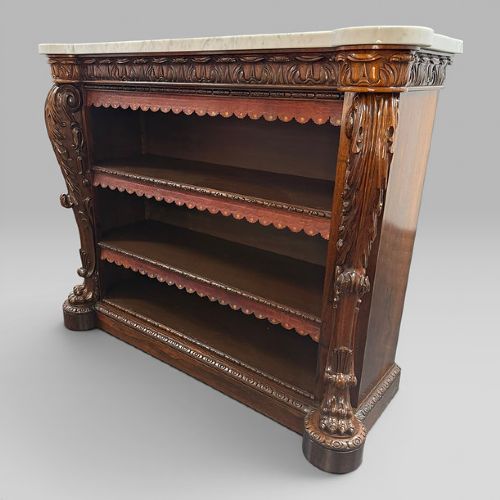
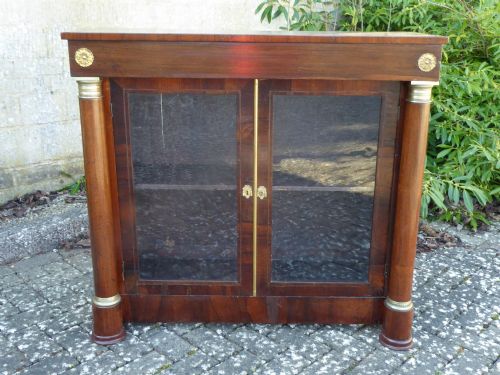
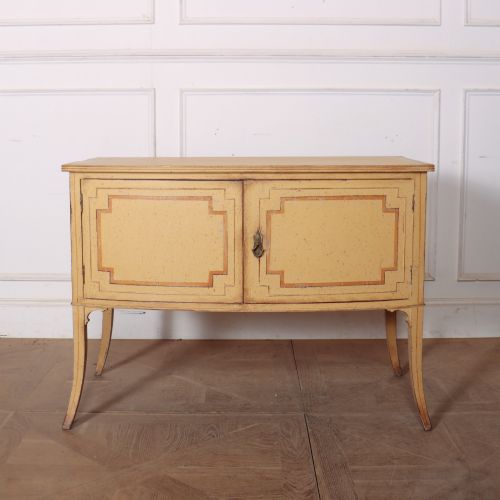
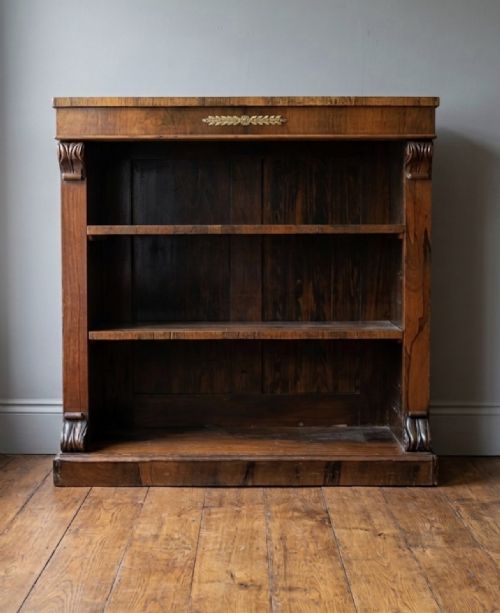
The selections on this page encompass side cabinets, open bookcases, and chiffoniers, frequently constructed in mahogany or rosewood. Many pieces show the characteristic low height and architectural lines associated with classical design, serving both domestic utility and formal display.
Makers and workshops of the period utilised figured timbers and restrained brass enrichment to create pieces that function as focal points in a drawing room or library. The variety ranges from strict period production to later interpretations in the Regency style.
Materials and Construction
Cabinet makers relied primarily on mahogany and rosewood, often applied as fine veneers over stable secondary timbers to achieve striking grain patterns. Walnut and satinwood also appear, providing lighter tonal variations for specific decorative schemes.
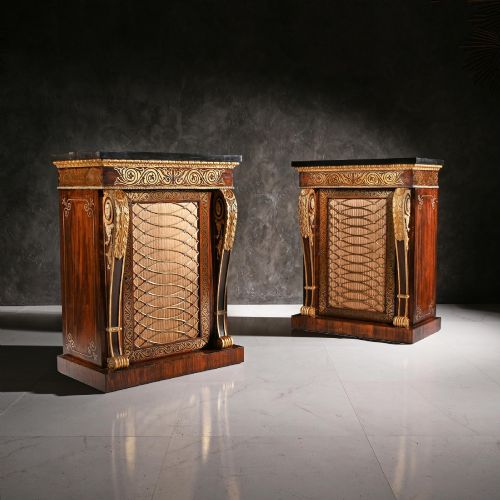
Brass inlay, gilt bronzes, and parcel gilding supplied the metallic contrast characteristic of the Regency aesthetic, while marble tops added a durable, cool surface to select cabinets. Interior components frequently integrated leather details, particularly in library furniture and open bookcases.
Several cabinets conceal leather dummy books behind their doors, keeping actual reading material entirely out of sight.
Distinguishing Quality
The upper tier of pieces demonstrates superior timber selection, where book-matched veneers and figured mahogany display symmetrical grain patterns across doors and panels. Poorer examples rely on plain timber boards or basic construction without attention to grain continuity.
Joinery standards separate standard cabinet work from superior production, evident in the precision of brass inlays, drawer linings, and the crisp execution of gilded mounts. Pieces attributed to prominent workshops show refined proportion and careful attention to structural harmony.
Louis Constantin Le Gaigneur·Gillows·S.Jamar
The Regency Style Side Cabinet Glossary
- Chiffonier
- A low sideboard or cabinet featuring shelves or enclosed storage beneath, popular during the nineteenth century for dining and drawing rooms.
- Breakfront
- A piece of furniture where the central section projects forward from the flanking wings, creating architectural depth.
- Parcel Gilt
- Partially gilded woodwork where gold leaf highlights specific carved details, mouldings, or mounts against a dark timber background.
- Demi-lune
- Having a half-moon shape, typically describing the semicircular top and footprint of console tables and side cabinets.
- Pedestal Cabinet
- A freestanding enclosed cabinet, often architectural in form, designed to stand individually or flank other furniture.
Regency Style Side Cabinet: Frequently Asked Questions
Where should I place a side cabinet?
A side cabinet suits entrance halls, dining rooms, and drawing rooms where surface display and enclosed storage are both required.
Their low profile allows them to sit beneath mirrors or artwork without overwhelming the surrounding wall space.
How do I care for rosewood surfaces?
Rosewood requires protection from direct sunlight and excessive heat to prevent timber shrinkage and fading.
Regular dusting with a dry cloth maintains the polish without the need for heavy chemical waxes.
What is the difference between Regency and Regency style?
Regency pieces date from the official Regency period and the reign of George IV, reflecting authentic nineteenth-century craftsmanship.
Regency style pieces are later reproductions or revivals, such as those from the Edwardian era or the nineteen-thirties, built to mimic classical proportions.
Can I use a side cabinet as a bookcase?
Many side cabinets feature open shelving or glazed doors specifically designed for housing books and journals.
Low open bookcases from the nineteenth century often double as side cabinets for surface ornaments.