


Painted Accent Cabinet
A painted accent cabinet brings colour and hand-finished character into a room, offering practical storage disguised as art.
Painted Accent Cabinet
A painted accent cabinet is a versatile piece of furniture designed to introduce decorative colour and surface pattern to an interior space. These pieces range from bedside tables and nightstands to commodes and small side cupboards, serving both display and storage functions.
The versions encountered on this page span the nineteenth century, the Victorian era, and the early twentieth century, incorporating diverse aesthetic traditions. Buyers frequently find designs drawing upon English country house simplicity alongside elaborate continental revivals.
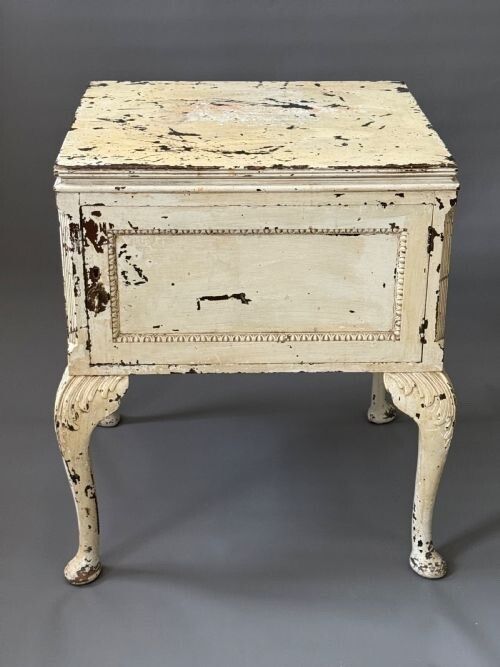
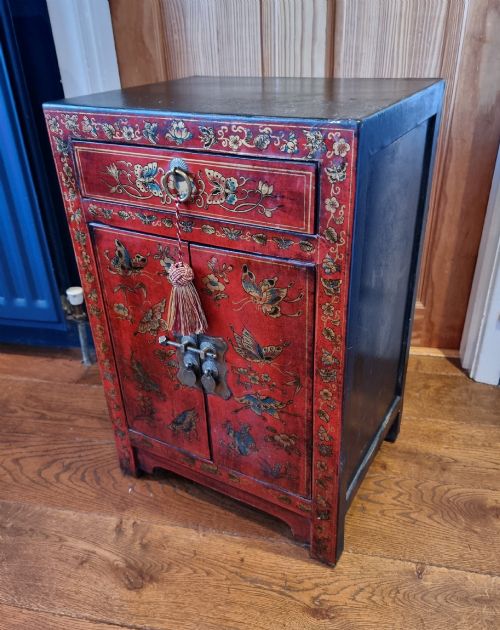
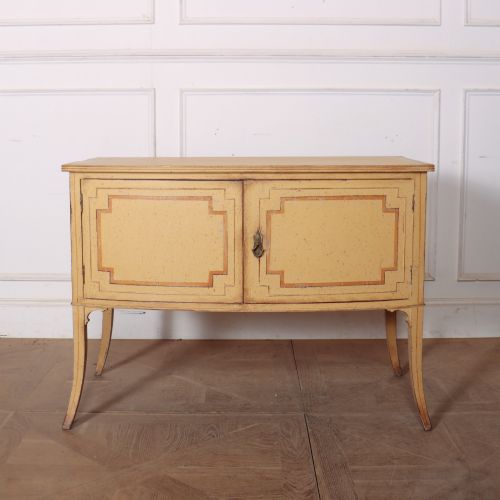
Forms vary from compact three-tier tables and bedside cabinets to two-door storage cupboards and grander petite commodes. Each piece relies on applied surface pigment, whether hand-painted ornamentation or distressed rustic finishes, to create an individual focal point.
Materials and construction
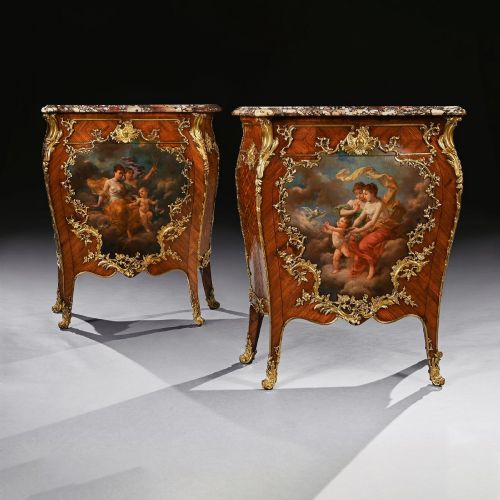
Makers constructed these cabinets using traditional timbers such as mahogany, kingwood, pine, and general hardwoods as foundational carcasses. Selected pieces utilise lacquered wood or feature applied brass and gilt bronze mounts to enhance their decorative appeal.
Surfaces were prepared and finished with specialist paint layers, occasionally incorporating vernis martin techniques or intricate hand-painted motifs. Marble tops appear on select continental forms, providing a durable and contrasting surface above the painted woodwork.
Listings feature items spanning the nineteenth century, the Victorian period, and the 1930s.
Assessing quality and execution
The distinction between standard and superior pieces rests largely on the fidelity of the decorative painting and the precision of the cabinetwork. Finer examples display meticulous hand-painted detail, whether executing Chinoiserie scenes, Pre-Raphaelite figures, or delicate floral motifs, rather than mechanical transfer work.
Quality also reveals itself in the integration of materials, such as finely cast gilt bronze mounts, well-fitted brass hardware, and genuine marble inserts. The structural integrity of the timber beneath the paintwork ensures that drawers run smoothly and doors hang true.
Melissa White
The Painted Accent Cabinet Glossary
- Chinoiserie
- European interpretation and imitation of Chinese and East Asian artistic traditions, often featuring scenic landscapes and figures on lacquered or painted surfaces.
- Vernis Martin
- A simulated Japanese lacquer developed by the Martin brothers in eighteenth-century France, prized for its translucent and luminous painted finish.
- Commode
- A low chest of drawers or cabinet originating in France, typically standing on relatively tall legs and serving a decorative as well as storage role.
- Kingwood
- A dense, richly grained South American timber often used in veneers for high-end European cabinetry during the eighteenth and nineteenth centuries.
Painted Accent Cabinet: Frequently Asked Questions
What is a painted accent cabinet?
A painted accent cabinet is a small piece of furniture finished with decorative paintwork, designed to provide storage while adding visual interest to a room.
These pieces function as bedside tables, side cupboards, or small commodes rather than large primary storage units.
How do I style one?
These cabinets work effectively in hallways, living rooms, and bedrooms where a splash of colour or decorative pattern is needed.
Their varied heights and surface finishes allow them to support lamps, books, or decorative objects while contrasting with neutral walls.
What styles are available?
The available styles range from English country house pine and rustic farmhouse pieces to ornate French Rococo revival and Italian giltwood designs.
Others draw upon specific artistic movements, incorporating Chinoiserie motifs or Pre-Raphaelite hand-painted compositions.
How are different periods told apart?
Nineteenth-century pieces often utilise solid mahogany and traditional joinery alongside formal revival styles like Louis XVI.
Early twentieth-century examples frequently showcase more experimental hand-painted finishes and lighter decorative interpretations.