

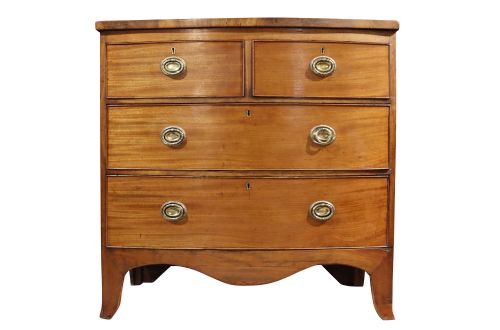


Regency Style Chest
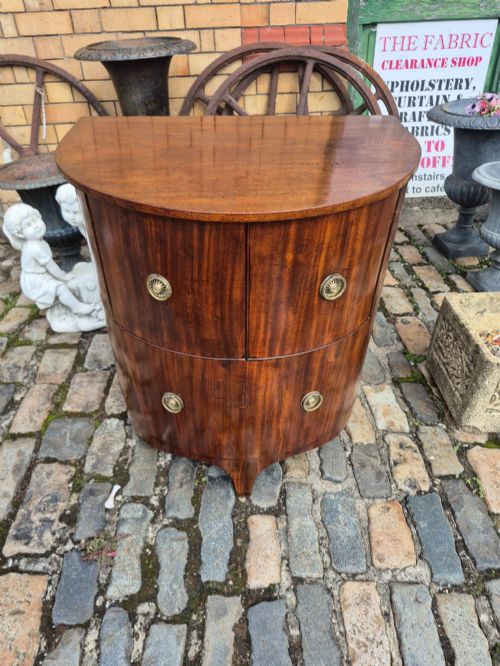
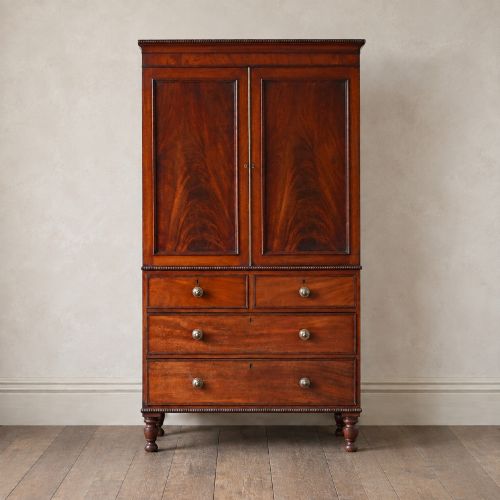
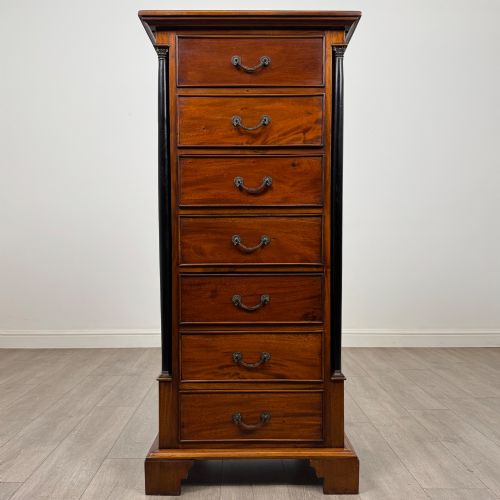
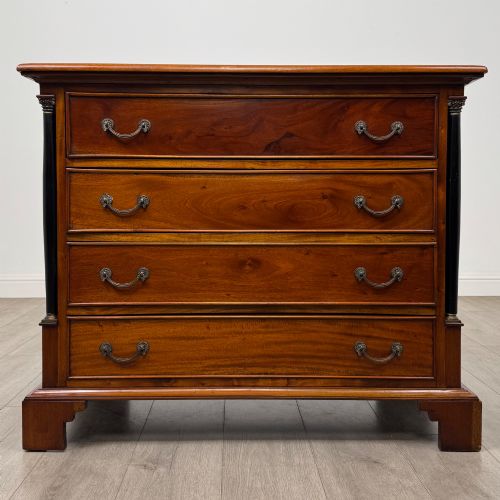
A regency style chest delivers classical proportion and rich mahogany grain to a room, offering practical storage with architectural presence.
Regency Style Chest
A regency style chest represents the balanced proportions and classical influence associated with the early nineteenth century. Buyers searching this phrase encounter case furniture built across multiple periods, including original pieces, later revivals, and twentieth-century interpretations.
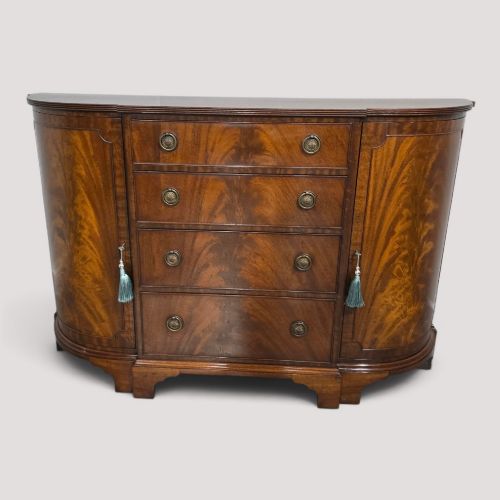
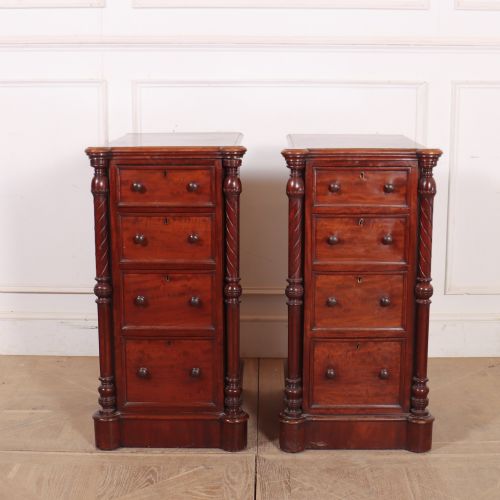
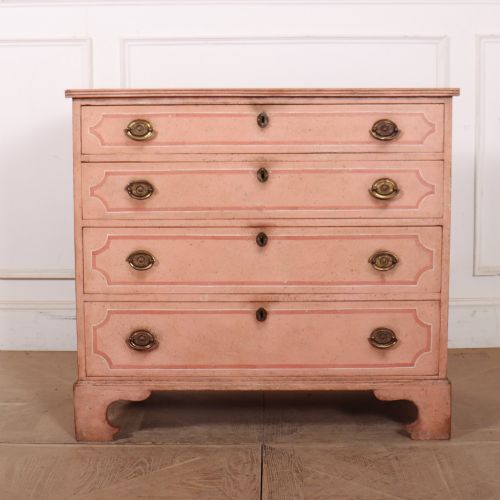
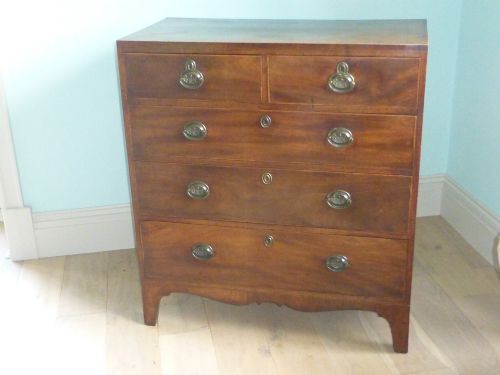
The selections span standard chest of drawers formats, bow fronts, serpentine shapes, and compact bedside variants. Mahogany remains the predominant wood, accompanied by flame mahogany veneer, painted finishes, and occasional birch or pine foundations.
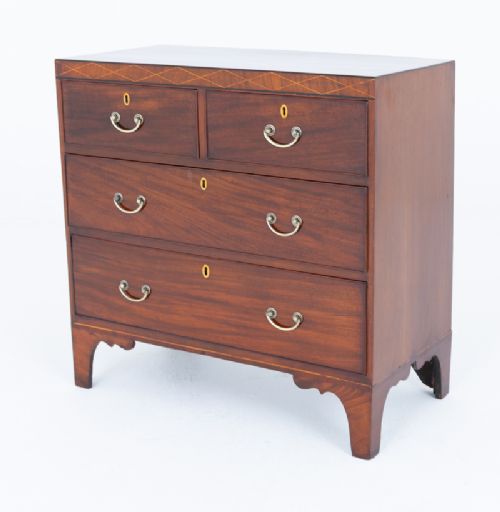
Makers and workshops across the nineteenth and twentieth centuries adopted these classical silhouettes, producing both simple domestic drawers and decorative statement pieces with brass inlays.
How they were made
Construction relies heavily on solid mahogany and flame mahogany veneers applied to secondary woods like pine and oak. Cabinetmakers selected timber for distinct grain patterns, often arranging veneers symmetrically across drawer fronts.
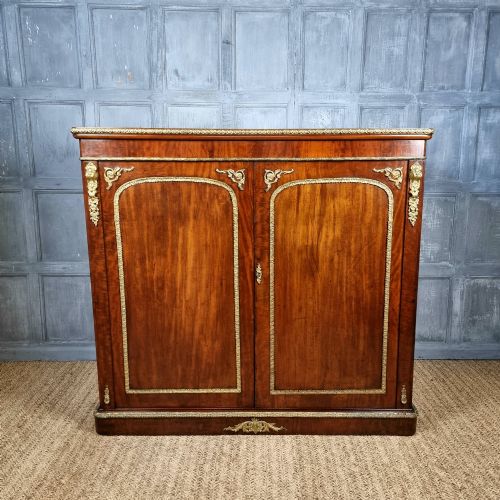
Details include brass inlay, ormolu mounts, simulated paint finishes, and hand-carved elements such as paw feet. Drawers feature traditional joinery suited to the period of manufacture, ranging from early nineteenth-century workshop methods to later revival techniques.
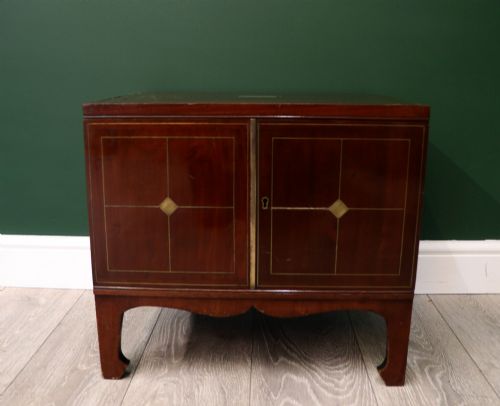
Some nineteenth-century collectors stored specimens inside miniature cabinets built with the same precision as full-sized furniture.
What varies in quality
Quality rests in the selection of cabinet timbers and the precision of the veneer work on the drawer fronts. Finer pieces demonstrate careful matching of flame mahogany figures and clean integration of brass inlays or decorative mounts.
The architectural integrity of the silhouette, from straight proportions to controlled bow fronts and serpentine curves, defines the standing of an individual cabinet within the range.
Gillows
The Regency Style Chest Glossary
- Bow front
- A convex curved cabinet front that projects outward in the centre. This shape softens the profile of a standard chest of drawers.
- Flame mahogany
- Timber veneer sliced to reveal a rippling, flame-like grain pattern. Cabinetmakers reserved this decorative wood for primary display surfaces.
- Commode
- A decorative low cabinet or chest of drawers. The term often describes French or continental pieces with elaborate mounts.
- Cellarette
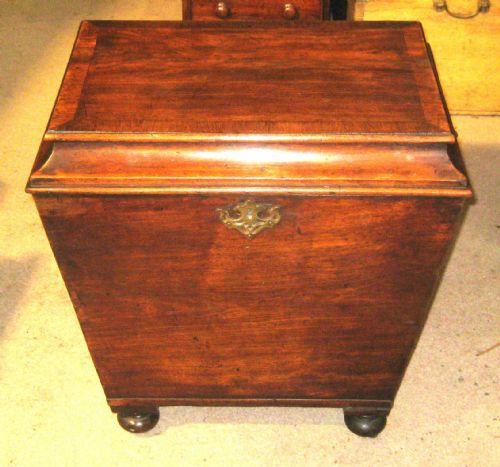
- A fitted cabinet or box designed to hold bottles. These containers often take architectural forms such as sarcophagus shapes.
- Serpentine
- A front shape curving outward in the centre and inward at the sides. This contour requires skilled carpentry to execute correctly.
Regency Style Chest: Frequently Asked Questions
What is a regency style chest?
A regency style chest is a set of drawers or cabinet built according to the classical design principles of the early nineteenth century. These pieces often feature clean architectural lines, mahogany timbers, and balanced proportions.
Such furniture encompasses authentic period items alongside later revivals and twentieth-century interpretations. They provide practical storage while serving as formal focal points within a room.
How do I style a mahogany chest?
A mahogany chest anchors a room with dark wood tones and classical silhouettes. Pair the piece with neutral walls to let the grain and form stand out clearly.
Use the flat top surface for lamps, mirrors, or decorative objects while keeping daily storage inside the drawers below. The versatile proportions allow placement in bedrooms, hallways, or living spaces.
Are these chests made of solid wood?
Many examples combine solid framing timbers with decorative wood veneers applied to the primary surfaces. Mahogany is the predominant material seen across these cabinet designs.
Secondary woods like pine and oak frequently appear in internal drawer linings and structural carcases. Premium versions often utilise figured flame mahogany veneer for visual depth.
How do I tell different periods apart?
Distinguishing periods involves examining construction methods, secondary timbers, and stylistic detailing. Earlier pieces display traditional workshop joinery and patination acquired over centuries.
Revival pieces and later twentieth-century interpretations exhibit different interior woods and standardised hardware. Comparing the specific veneer work and edge profiles helps clarify the date of manufacture.